17 Jun 2026
Private Equity Summit | M&A Community Netherlands
Navigating Liquidity in a Slower Private Equity Exit Market
Private equity firms across Europe are operating in a more complex and constrained environment. M&A activity has pulled back from its 2021 highs, exit timelines have lengthened, and distributions to LPs remain well below historical norms. Against that backdrop, GPs are being asked to do more with fewer readily available options and to think much more deliberately about how liquidity is generated and delivered across the fund lifecycle.
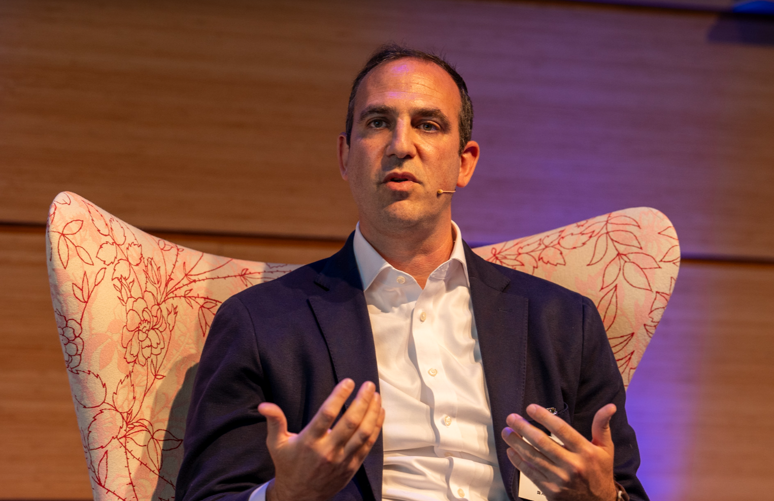
Those themes shaped the discussion at the M&A Community Netherlands Private Equity Summit 2026, held on Tuesday 9 June in Amstelveen, where Investec hosted a breakout panel examining how GPs are adapting to a market where traditional exit routes are less accessible, and liquidity management has become a strategic priority.
A market under pressure
Robert Bosch opened by setting out the forces behind the current slowdown, noting the continued macro uncertainty, higher-for-longer interest rates, entrenched bid-ask spread, volatile IPO market, risk averse stance of strategic buyers and AI disruption.
The data makes the trend clear. Private equity exit value increased by approximately 40% in 2025, but exit volumes fell by around 15%, reflecting concentration in larger assets while the mid-market remained subdued as opposed to prior years. Average holding periods have stretched to approximately 6.6 years (50%+ of companies in portfolio 4 years or longer), bid-ask spreads remain relatively wide, and with strategic buyers becoming more selective and the number of IPOs in 2025 still below the long-term average, viable exit routes have narrowed considerably.
Audience polling added an important nuance. When asked what the biggest constraint on their business is today, 40% of attendees cited geopolitical and macroeconomic uncertainty – ahead of slow exit markets at 24% and lack of quality assets at 20%. Debt cost barely registered at 4%. The result suggests the exit slowdown is less a structural problem with the M&A market than a symptom of a broader confidence deficit – one that time, more than financial engineering, will ultimately resolve.
Financing conditions: more refinancing, less new money
Alexandre Neiss noted that the financing market reflects this dynamic closely. With macro uncertainty dampening new deal activity rather than debt availability itself, the debt markets have remained open, but GPs are using them differently.
Debt issuance in the European mid-market has remained resilient, but its composition has shifted materially. New deal financings account for only approximately one third of total flow, with refinancings and add-ons making up the balance. Private credit continues to gain share from banks with 70%+ of mid-market deals financed by Private Credit lenders, with boundaries between syndicated and direct lending markets blurring further especially in the Large Cap space. A supply and demand imbalance has driven spreads lower since 2022, and while conditions remain accommodating for strong credits, certain sectors – notably technology – are attracting pricing premiums.
In this environment, GPs are refocusing key lending relationships: the ability to support borrowers’ financing needs remains important, but a long-term partnership approach, structuring flexibility and lending experience across multiple cycles matter just as much.
Continuation vehicles: genuine solution or deferred problem?
One of the longer discussions centred on continuation vehicles. Currently approximately 14% of PE exits are completed via this route, with expectations that this could rise to around 30% within five years.
Nicola Rodrigues noted that continuation vehicles have evolved into a core liquidity solution within the broader GP toolkit, reflecting a more structural shift in how managers approach exit timing and portfolio management. Rather than a traditional exit, they allow GPs to restructure ownership and create optionality for LPs – providing liquidity to some investors while allowing others to retain exposure to high-conviction assets.
She highlighted that their effectiveness depends on strong governance, transparency and alignment, particularly around pricing and process, and that their value ultimately lies in supporting genuine value creation rather than simply extending hold periods.
Alexandre Neiss added that from a financing standpoint, GPs are sometimes looking at financing solutions above Borrower level like Holdco debt to create additional liquidity. The broad consensus was that continuation vehicles, NAV facilities and GP-led solutions are becoming structural parts of the toolkit rather than exceptional measures.
Audience polling nevertheless suggested that, in practice, full exits still remain the default preference for many participants. Even as continuation vehicles become more established, their use remains selective rather than universal. The risk is misuse – deploying these instruments to defer difficult marking or exit decisions rather than to manage liquidity with genuine conviction.
Fundraising dynamics and the LP perspective
That exit pressure flows directly into the fundraising environment. While there remains significant value sitting in portfolios, it is not being realised and returned to LPs at the pace the model relies on. Global buyout distributions as a percentage of net asset value have fallen to approximately 14%, against a historical norm of 20–30%, constraining LP liquidity and their ability to recycle capital and slowing fundraising momentum, particularly in the mid-market.
Nicola Rodrigues noted that this is not just creating fundraising pressure – it is also changing what LPs prioritise. With distributions still well below historical levels, DPI and realised track record have become much more important in manager selection, particularly where re-up decisions depend on a clear ability to generate and return capital. In response, GPs are increasingly turning to a broader and more flexible toolkit – including continuation vehicles, NAV financing, hybrid structures and GP-level financing solutions – to create optionality around hold periods and exit timing while supporting liquidity outcomes for LPs.
In that environment, the managers that stand out will be those with a clear, repeatable strategy for turning portfolio value into realised outcomes for investors. Firms that can combine disciplined value creation with flexible liquidity management and thoughtful exit execution will be best placed to outperform.
Outlook
Audience polling at the close of the session offered a final read on sentiment. When asked how their company is most likely to generate liquidity over the next 24 months, 70% pointed to corporate M&A. This is a signal that trade sales remain the preferred route even if current market conditions make them harder to execute. Continuation vehicles were cited by 13%, sponsor-to-sponsor sales and dividend recaps each at 7%, and IPOs at just 3%.
The discipline argument runs through each part of the recovery ahead. In the M&A market, it means being selective about timing and exit route. In financing, it means maintaining structuring discipline as competition intensifies, and placing greater emphasis on partner selection – particularly as the lender base becomes more diverse and capital behaves differently through the cycle.
Fund solutions are now firmly embedded in the private equity model, with continuation vehicles, NAV and related tools forming a broader, more flexible toolkit that GPs are using selectively and with discipline to navigate liquidity constraints and deliver outcomes for LPs.
The European private equity market remains fundamentally attractive, but the path to liquidity is more complex than it was. As traditional exit routes remain constrained and hold periods continue to extend, liquidity management has become a more important component of portfolio strategy rather than simply an outcome of successful exits.
Success in the next phase of the cycle is likely to depend on more than asset selection alone. GPs that can combine disciplined value creation, financing flexibility and thoughtful exit execution will be best positioned to navigate a slower market and outperform as conditions improve.
Event Gallery