
How a professional dialogue is now moving companies forward
Interview with Thorsten Gladiator, Managing Partner of Investec about how a professional dialogue is now moving companies forward:
- Why companies should entertain a professional dialogue with their investors and lenders?.
- What other challenges are companies facing?
- As a financial expert and transaction specialist what advice do you have for companies when dealing with debt and equity investors?
- Giving an example.
This video answers these questions and give you an idea and overview in a few minutes.
Finding the right type of capital and investor to help grow your business
Our team has a long track record of successfully raising equity and debt capital and has the necessary expertise and networks:
- Raising capital to support business growth
- Securing capital from private equity and/or other Investors to support MBO/MBI projects
- Securing capital from private equity and/or other investors to manage changes in the shareholding structure (such as supporting the buyout of one or more shareholders and the reallocation of equity shares)
- Project financing: supporting companies in realizing essential investments or working capital
- Refinancing: supporting companies in reorganizing/reducing their debt burden
Good reasons for a sale
In the past, large practice structures in particular were virtually unsellable or could only be sold to a successor for a small fee. The entry of investors has fundamentally changed this situation.
There are many reasons for selling a practice. A decisive factor for many is to hand over the practice, and thus the employees and patients, to suitable successors. But what can be done if there are no internal successors?
In this case, the only option is to sell to a third party. In many cases, this can be and will be doctors who intend to continue running the practice in line with the previous owners’ vision. However, once the practice has reached a certain size, very few doctors feel able to pay an appropriate purchase price. This is where larger groups can fill the gap.

In many specialist areas, investor-financed groups are already active and consolidating the market. They usually pay a (significantly) more attractive price for the practice than other doctors could and also offer support in many administrative areas. However, the doctors remain fully responsible for patient care.
In addition to the financial aspects, choosing the ‘right’ partner for your life’s work is also crucial. According to legal requirements, selling doctors must generally remain employed at the medical care centre for three years, which must be established no later than the date of sale. Practice owners must plan for this time frame accordingly.
In addition, purchase price components are usually agreed in the purchase agreements that only come into effect after two or more years of cooperation.
Do you have questions regarding M&A or selling your business?
We would be happy to schedule a call to discuss further.
Click here to download the report.
The outpatient healthcare sector is changing rapidly. While the total number of medical practices is declining, leading software providers are growing by up to 90% annually.
An important driver of this development is mergers and acquisitions. With every practice sale, the likelihood of a change in practice software increases – and with it the opportunity for flexible, specialised providers to gain market share. Specialised solutions for radiology and ophthalmology are growing particularly strongly, despite high integration hurdles.

For our analysis, we compared the installation statistics of the National Association of Statutory Health Insurance Physicians (KBV) from 2016 with the latest data from Q4 2022. The analysis is based on publicly available billing data from the associations of statutory health insurance physicians – i.e. the very systems used for billing statutory health insurance. The figures were sorted by annual growth rates to highlight the most dynamic changes.
The result shows that the market is on the move and specialisation pays off. What developments do you see?
We look forward to hearing from you.
In the past, large practice structures in particular were almost impossible to sell or could only be sold to a successor for a small fee. The entry of investors has fundamentally changed this.
There are many reasons for selling a practice. For many, a decisive point is to hand over the practice and therefore the staff and patients to a suitable successor. But what to do if there is no internal successor?
In this case, the only option is to sell to a third party. In many cases, this can and will be a doctor who will continue to run the practice according to the previous owner’s ideas. However, if the practice has reached a certain size, very few doctors will feel able to pay an appropriate purchase price. This is where larger groups can fill the gap.
In many specialist areas, groups financed by investors are already active today and are consolidating the market. These groups generally pay a (significantly) more attractive price for the practice than other doctors could and also offer support in many administrative areas. However, patient care is still entirely the responsibility of the doctors.
In addition to the financial aspects, choosing the “right” partner for the life’s work is also crucial. Legislation stipulates that the selling doctors must generally continue to work for three years in the medical care centre to be established for the sale at the latest. A corresponding time horizon must be planned for by the practice owners. In addition, earn-out clauses are usually agreed in the purchase agreements, which only come into effect after two or more years of co-operation.
Valuing means comparing: We carry out a structured sales process with all relevant market participants in close consultation with you. The aim is to obtain as many different offers as possible in order to be able to select the most attractive offer.
Click below to read and download the full brochure.
Financial investors and strategists are increasingly targeting company owners directly with purchase offers
SMEs have increasingly been the focus of strategic and institutional investors for many years. By means of unsolicited offers, they try to circumvent a structured process and thus make a favourable deal. Here, the transaction advisor can optimise the result for the entrepreneur, for example, through a tailored strategy and by creating a competitive environment.
Medium-sized companies are sought-after targets for investors
For some time now, many private equity companies and large corporations have focussed on acquiring medium-sized companies in Germany, as these are usually seen as innovative as well as sustainable and responsible. These potential buyers often make unsolicited, tantalising offers or hints to this effect, which, however, do not always reflect the actual market value.
Interested parties often push for early exclusivity
The strategy of ‘pre-emptive bids’ is a common practice of these investors, in which they attempt to bypass a structured sales process and eliminate other bidders at an early stage. For a thorough company valuation, however, it is essential to know the alternatives. Professional M&A advisors can point out additional options and test these in the market together with you, initially on an anonymous basis. This allows you to maximise the price and identify the best investor for the company.
A competitive process optimises the result
When you are approached by an investor, it is important to ensure that you are not selling below value. Our experienced team will enable you to develop a customised sales strategy, maintaining the highest level of confidentiality, aimed at achieving the best possible value and keeping you in control of the sales process.
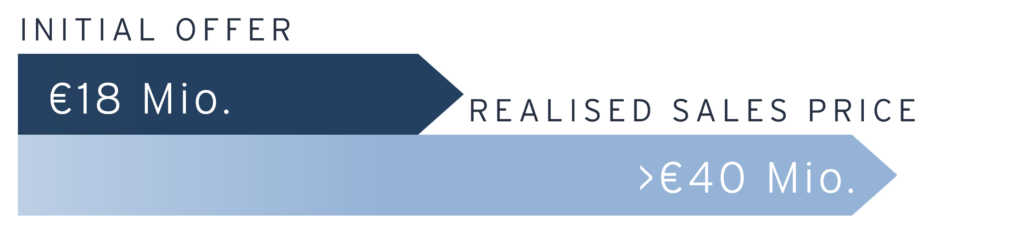
How a structured process can increase the sales price
Valuing means comparing: We carry out the complex sales process with all relevant market participants in close consultation with you. The aim is to obtain as many different offers as possible in order to be able to select the most attractive offer.
Introduction
INCREASING HEALTH AWARENESS AND CHANGING LIFESTYLES HAVE LED TO A SURGE IN DEMAND FOR DIETARY SUPPLEMENTS. THIS DEMAND HAS FURTHER INCREASED DURING THE COVID-19 PANDEMIC, WITH A STRONG GROWTH FORECAST FOR THE MARKET VOLUME IN EUROPE IN THE NEXT TEN YEARS.
In recent years, notable transactions and innovations have characterized the supplement market in Germany. The number of start-ups in the sector has been at a high level, as they were able to quickly gain significant attention and market share through targeted marketing, for example through social media.
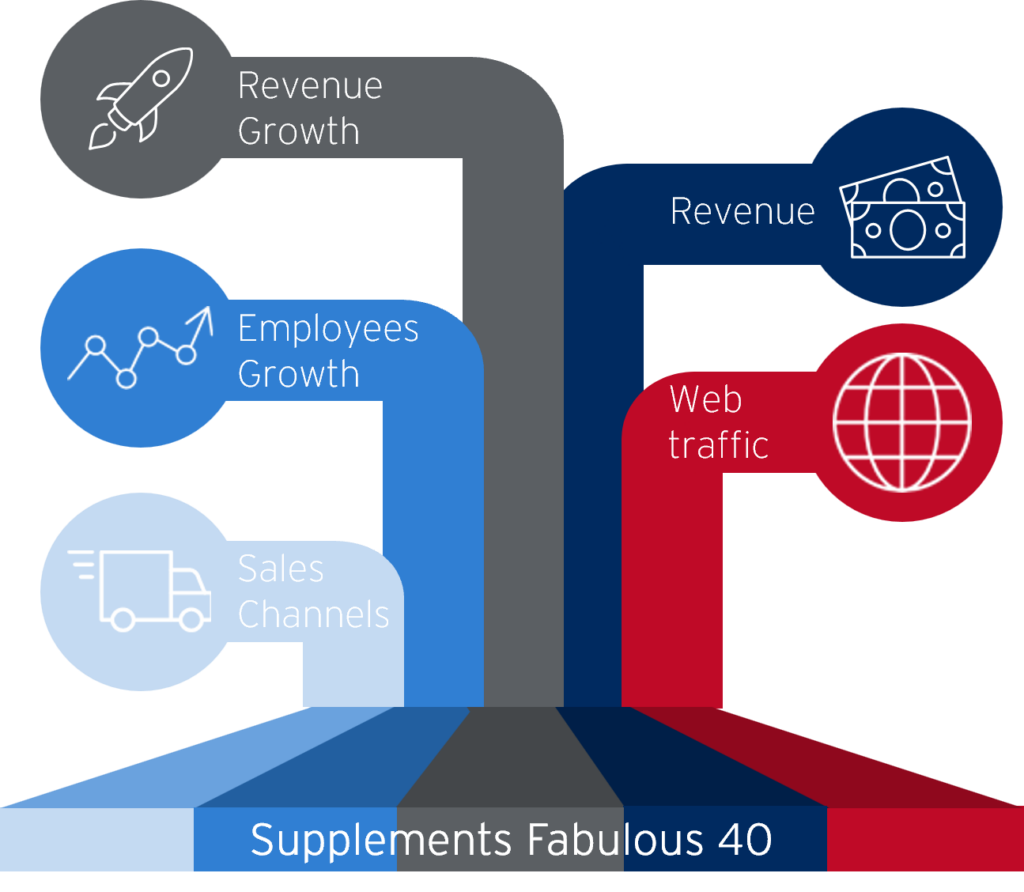
For Germany, we identified more than 400 relevant companies in the sector. From these, we have summarized what we consider to be the 40 most attractive in a ranking. To accomplish this task, a comprehensive review of all 400 companies was conducted, assessing them based on five key factors deemed relevant to our evaluation criteria: revenue, revenue growth, employee growth, web traffic, and diversity of distribution channels served. In all areas, a higher number correlated with a more favorable ranking.
In order to be included in our ranking, companies had to possess a unique characteristic that sets them apart from their peers. This could be anything from an extraordinary story or an emerging trend, to a unique market approach or growth pattern. Our Fabulous 40 list consists only of companies that have this unique quality. This means that even smaller companies have the potential to make it to the top of our Fab40 list. It is worth noting that all companies on our list are considered to be among the top 10% of companies in their sector.
Investec has acquired a strong expertise in the Healthcare sector by accompanying large groups, entrepreneurs, and mid-caps in their sales processes, acquisitions, and financings. Together with Investec as a significant majority shareholder, Investec has a global reaching network of M&A professionals.
Interview
As we enter 2024, the M&A landscape shows signs of recovery, albeit cautiously.
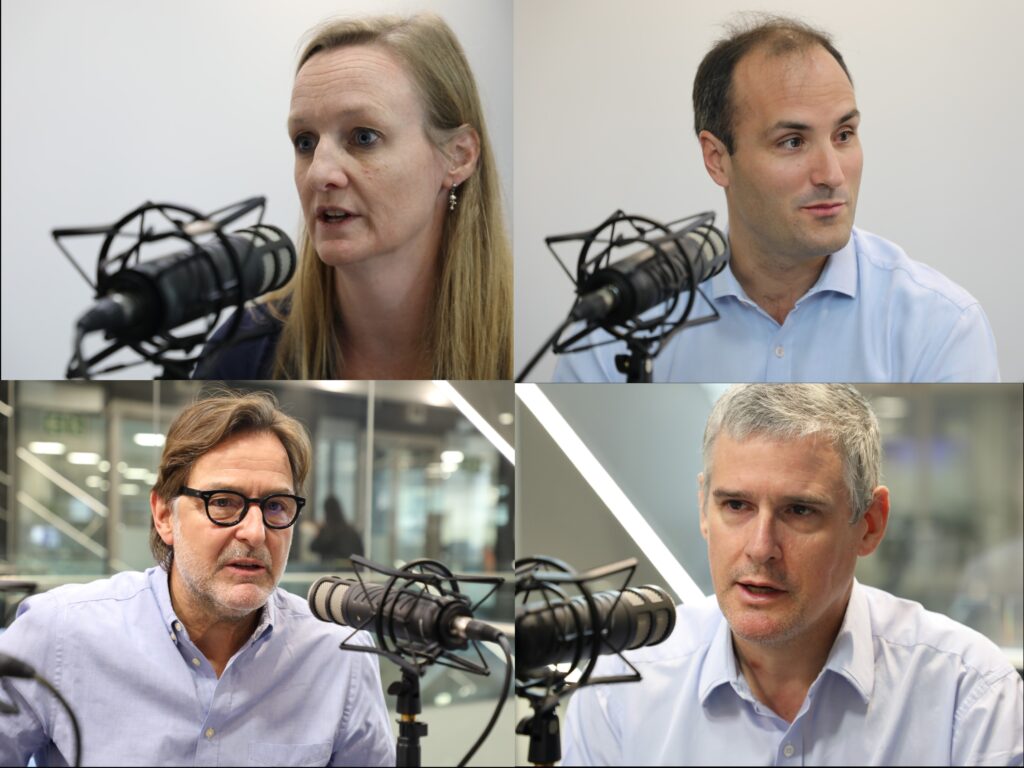
In the episode of the February 20, 2024 of No Ordinary Wednesday, Jeremy Maggs in conversation with Investec experts Jürgen Schwarz, Marleen Vermeer, and Kilian de Gourcuff, Investec’s Head of Cross-Border Finance and International Advisory Charles Barlow, on what key sectors, trends and risks to keep an eye on in 2024.
Click below to listen to the podcast:

Where does opportunity lie for dealmaking in 2024? (investec.com)
Hosted by seasoned broadcaster, Jeremy Maggs, the No Ordinary Wednesday podcast unpacks the latest economic, business and political news in South Africa, with an all-star cast of investment and wealth managers, economists and financial planners from Investec. Listen in every second Wednesday for an in-depth look at what’s moving markets, shaping the economy, and changing the game for your wallet and your business.
Listen to the best of No Ordinary Wednesday: https://www.investec.com/en_za/focus/no-ordinary-wednesday-with-jeremy-maggs.html
Extensive track record combined with deep industry knowledge
Interview with Matthias Holtmeyer, Managing Partner of Investec about the changing scenarios for medical practices:
- What are possible initial scenarios in which doctors want to sell their successful practice?
- Is the purchase price the decisive factor in the projects?
- What predestines Investec to advise physician clients on transactions?
- In which areas of medicine have you assisted clients with transactions?
- And how do you achieve the best result?
This video answers these questions and give you an idea and overview in a few minutes.
The large and rapidly growing Healthcare sector is offering dynamic business perspectives due to demographic tailwinds, increased chronic illness, and medical advancements that facilitate new diagnostic options. We advise private and public companies in this sector and focus on sub-sectors that show the best growth and/or consolidation opportunities. Most of our transactions are cross-border – within Europe and beyond – and are executed by an international team of experienced advisors with extensive sector expertise.
Thanks to our international presence, we are able to operate in all relevant European and non-European markets.
Understanding your organisation and your market environment are key factors for the success of your business.
Interview with Matthias Holtmeyer, Managing Partner of Investec about sector trends in Healthcare:
- Digitilization has been the buzzword for years. Why does it play such a big role in the health sector?
- Why is this sector so interesting for investors?
- What predestines Investec to advise on transactions in this area?
- Please describe a case.
This video answers these questions and give you an idea and overview in a few minutes.
The far-reaching changes in the international healthcare markets often require decisive entrepreneurial action in order to overcome the new challenges that have arisen. However, this also opens up a wide range of economic prospects for the players involved.
We advise companies in the inpatient and outpatient sectors, including clinics, laboratories and medical groups, on sales, succession solutions, acquisitions and financing issues. A particular focus of our advice is in the outpatient sector, where we support companies in the development and financing of group formation concepts.
Thanks to our international presence, we are able to operate in all relevant European and non-European markets.
Financial restructuring for Shareholders & Lenders
Helping clients to navigate uncertainties while putting their businesses back on track
Interview with Jürgen Schwarz, Managing Partner of Investec about Restructuring with the help of a M&A process:
- How did the market change in recent years?
- What is your approach?
- Giving an example
This video answers these questions and give you an idea and overview in a few minutes.
Sale from insolvency
Due to our pan-European presence and track record we are well placed to advise on international and cross-border restructurings.
Our international sector teams implement more than 50 transactions p.a. and in many sectors they know the active buyers, the acquisition criteria, the behaviour of individual decision makers. We also have an up-to-date overview of the market prices paid, which vary considerably over time and depending on the positioning in the sector.
Investec has direct access to numerous international equity and debt capital providers and has carried out numerous restructurings ranging from approximately 10 million Euros to several billion Euros.
Financiering en markttrends | 2023
Waarom de Duitse industrie grote behoefte heeft aan investeringen.
De Duitse industrie staat voor grote uitdagingen, waaronder de effecten van digitalisering, de verschuiving van analoge naar digitale bedrijfsmodellen, de behoefte aan milieubeschermende maatregelen en duurzame productieprocessen, evenals demografische veranderingen, die leiden tot een tekort aan geschoolde werknemers en een vergrijzende beroepsbevolking. Om deze processen succesvol te beheersen, zijn aanzienlijk hogere investeringsinspanningen nodig dan in het verleden.
Digitalisering en Industrie 4.0: Op dit moment staat Duitsland op zijn best in de middenmoot van de EU wat betreft het gebruik van digitale technologieën in de economie1. De Duitse industrie moet investeren in digitale technologieën en automatisering om concurrerend te blijven. Maar om de achterstand op vergelijkbare landen in te lopen, zouden de investeringen in IT en digitalisering in Duitsland moeten verdubbelen of verdrievoudigen van 49 miljard euro naar 100 tot 150 miljard euro per jaar. Alleen al in het mkb zouden de uitgaven voor digitalisering moeten stijgen van 18 miljard euro in 2019 naar 35 tot 50 miljard euro per jaar.
Duurzaamheid en milieubescherming: Bedrijven richten zich steeds meer op milieuvriendelijke technologieën en processen om hun duurzaamheidsdoelstellingen te halen en hun impact op het milieu te verminderen. Deze investeringen dienen niet alleen om het milieu te beschermen, maar dragen ook bij aan het concurrentievermogen op lange termijn. Een recente studie in opdracht van KfW schat de klimaatbeschermingsinvesteringen die nodig zijn om de doelstelling van klimaatneutraliteit tegen 2050 te bereiken op ongeveer 5 biljoen euro of ongeveer 190 miljard euro per jaar1. Dit enorme bedrag maakt duidelijk dat er aanzienlijk grotere inspanningen nodig zullen zijn om de doelstelling te halen dan tot nu toe het geval is geweest.
Lees de volledige insight hier.
Thorsten Gladiator, Managing Partner Investec: As corporate finance advisors, we see the importance of ESG in general and sustainability aspects in particular in almost every transaction, both in M&A situations and in financing mandates.
Equity and debt investors place a strong focus on ESG compliant investments in the interest of their financiers and / or due to investment criteria that are binding for them.
For business sellers as well as CFOs, this has pricing and process consequences:
- A clearly defined and documented ESG strategy creates confidence among investors and the company’s other stakeholders
- The same applies to the (early) implementation of legal requirements for sustainability reporting (CSRD)
- A focus on sustainability aspects provides positive differentiation features compared to competitors and can thus have a value-creating effect
- The lack of a corresponding strategy can lead to price discounts in the valuation as well as higher financing costs
- In the due diligence phase of a transaction, lack of ESG information leads to prolonged processes, higher management burden and the withdrawal of investors with clearly defined ESG investment criteria
The following article from AIM – Advice in Motion highlights the various aspects for medium-sized companies and shows examples of successful ESG strategies.
Opportunities and challenges of sustainability for smaller and medium-sized enterprises
The sustainability performance of a company today is the decisive factor for its competitiveness tomorrow. In this context, medium-sized companies in Germany in particular are faced with tasks whose extent has not yet been fully recognized in many cases and which involve major challenges in terms of resources, time and expertise.
Even though sustainability is a ubiquitous and much-discussed topic that is omnipresent both in the media and in public debate, it is by no means a new issue. Rather, sustainability has a long and exciting history that spans centuries and has been shaped by various actors and concepts.
Where do the roots of sustainability lie?
As far back as the Middle Ages, the moral ideal of the honorable merchant played a decisive role in promoting sustainable principles. Many a family entrepreneur rightly sees himself or herself in the tradition of the honorable merchant and aligns his or her business conduct with principles such as honesty, responsibility and sustainability.
In the 18th century, the Saxon chief miner Carl von Carlowitz coined the term sustainability in his work “Sylvicultura Oeconomica.” He introduced the idea that forest resources should be managed sustainably by cutting only as much wood as can naturally grow back. What was interesting about Carlowitz’s concept of sustainability was that sustained yield was precisely not antithetical to sustainability. Rather, forestry yield acted as the cornerstone for this oft-cited source of the concept of sustainability. The mining area of the Erzgebirge was simply dependent on the sustainable use of wood for construction, mining and smelting purposes.
Another significant milestone in the development of sustainability was the Brundtland Report, published in 1987 under the title “Our Common Future”. The report defined sustainable development as “development that meets the needs of the present without compromising the ability of future generations to meet their own needs.” Here, sustainability clearly went beyond a purely economic consideration. The report emphasized the need to integrate economic, social and environmental aspects to create a sustainable future.
Since then, the understanding of sustainability has evolved to encompass a variety of dimensions. One key concept is ESG (environmental, social, governance) criteria, which encompass environmental, social and governance-related factors. Differentiation of individual sustainable development goals is achieved through the United Nations Sustainable Development Goals (SDGs), which were adopted in 2015. The SDGs include 17 global goals to promote sustainable development at the economic, social and environmental levels by 2030. These goals range from poverty reduction, health, education and gender equality to renewable energy and sustainable cities.


The SDGs are an excellent framework for linking the principle of sustainability with economic, ecological and social development and provide a suitable orientation framework for a company’s sustainability strategy:
- SDGs as guidelines for sustainable management
- Alignment of products and services with the SDGs
- Business activities can contribute directly to achieving the SDGs
Nowadays, at the current edge of development trends around sustainability, so to speak, ESG expression is thus considered a leitmotif and fundamental approach for responsible and sustainable development. It is about combining economic, social and ecological aspects in order to create a world worth living in for present and future generations.
The individual SDGs are suitable targets for integrating ESG into corporate strategies, as they are more concrete and easier to measure using indicators than the more fundamental ESG concept.
Importance of the midmarket
As the backbone of the economy, the SME sector comprises a large number of companies that operate both regionally and internationally. It is of great importance for economic performance and employment in the country. Around 2.5 million companies in Germany belong to the Mittelstand, in the definition of a small and medium-sized enterprise (SME). These range from microenterprises to medium-sized companies with up to 250 employees, which generate around one-third of total sales for Germany and employ more than half of all employees.
Expectations around an ESG expression of the SME business model arise in a wide variety of internal and external stakeholder groups. Typical stakeholders include shareholder families, employees, customers and suppliers, financiers (EC and FC), NGOs and the media, and to an increasing extent regulatory policy.
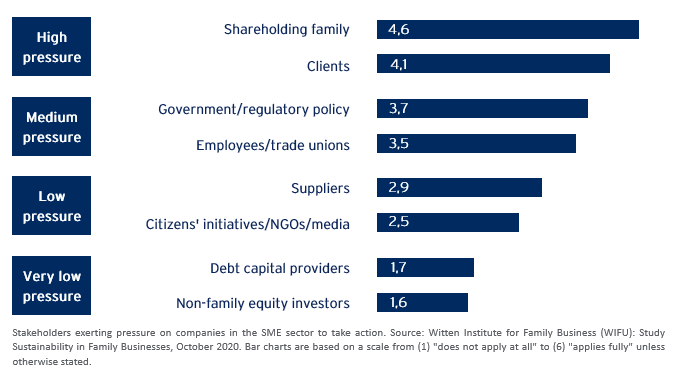
The reasons for which companies address ESG requirements also vary. The most common motives include:
- The assumption of ecological and social-societal responsibility,
- Ethical reasons and intrinsic motivation,
- Requirements of customers and employees,
- Cost reduction and expectation of increasing sales,
- Requirements of capital providers,
- And last but not least, the increasing regulatory requirements.
The majority of companies are in the early stages of sustainability management.
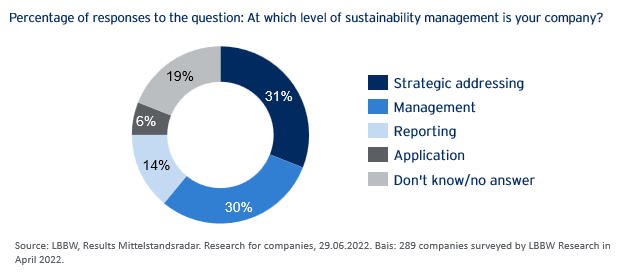
Pressure to act and status quo around ESG in SMEs
The pressure to develop and implement ESG strategies is immense and relevant stakeholders are demanding this. In addition to opportunities of an ESG orientation such as cost reduction, successful positioning of the company, revenue and profitability advantages, there are clear business risks of a lack of consideration of sustainability requirements up to the withdrawal of the “license to operate” (violation of regulatory requirements, exclusion from supply chains, lack of financing or perspective withdrawal of insurance coverage).
If, against this background, surveys come to the conclusion that, despite pressure to act and explicit expectations of the relevant stakeholders, only around half of the companies in the SME sector have developed and implemented ESG strategies, the question arises as to why.
A ´decisive factor is the lack of time and resources in many SMEs to deal with the challenges and requirements of sustainability. Time is traditionally a scarce commodity, especially in owner-managed companies. Teams and specialists for ESG strategies and sustainability cannot simply be plucked out of the ground: the market for ESG specialists is empty and salary expectations are correspondingly high.
Support from external consultants is the obvious choice, but here, too, capacities are stretched and for many a large consulting firm it is obvious and more lucrative to advise the large DAX companies with entire teams of consultants before they delve into the peculiarities of the business model of a geographically decentralized SME.
AIM – Advice in Motion GmbH
This is where AIM, as an independent sustainability consultancy and partner in the Investec network, can provide effective support. AIM thinks and speaks medium-sized. Their clients include medium-sized companies from a wide range of industries in Germany, France, Portugal, Luxembourg and Switzerland. AIM supports with:
- Creation, coordination and implementation of ESG strategies in medium-sized companies,
- Preparation for mandatory sustainability reporting (CSRD),
- Directive-compliant calculation of the carbon footprint of companies (CCF) and products (PC),
- Preparation of climate strategies, derivation of targets and measures from the climate footprint,
- Communication around ESG and climate protection: avoidance of reputation risks.
Examples of successful ESG implementation in medium-sized companies:
I. Initial situation: Sustainability requirements for a medium-sized company in the wood industry in Germany with around 1,200 employees. In addition to the intrinsic motivation of the shareholders, a major impetus for action arose from the initiative of the industry association, which demands the implementation of climate protection measures for all member companies. Another impetus for action was for the company, as a supplier in the value chain of a large trading house, to support its ambition (climate protection and other social goals throughout the supply chain). AIM supported the development of a climate strategy, the calculation of the corporate carbon footprint and the compensation of unavoidable emissions in order to achieve climate neutrality.
II. Initial situation: market positioning of a 5-star resort hotel in Provence with its own vineyard. A key impetus for action was to reconcile a luxury resort with sustainability requirements and climate change mitigation measures. AIM developed an ESG strategy for the resort. This was based on a selection of sustainable development goals (SDGs) to which the resort can contribute. Corresponding measures were defined and implemented. At the same time, climate neutrality was achieved for the resort by offsetting unavoidable emissions. (AIM has implemented a comparable project with a resort in Portugal, which has since been nominated for the Sustainability Award of the Portuguese Tourism Association).
III. Initial situation: product positioning for a manufacturer of high-quality competition racing bikes from Switzerland. The company wants to make competitive sports compatible with sustainability and climate protection in particular. In order to provide buyers and users of the competition bike with an assessment of the carbon footprint of the racing bike product, AIM calculated the product-related carbon footprint for the bike, taking into account all phases of the life cycle of the racing bike, from cradle to grave.
IV. Initial situation: A medium-sized holding company with around 1000 employees in Germany will be subject to mandatory sustainability reporting in accordance with CSRD for the first time from the calendar year 2024. The extended reporting affects around 15,000 companies in Germany. The company’s sustainability performance will be considered from two perspectives: the impact of sustainability aspects on the corporate business model and the impact of the company’s activities on the environment and stakeholders. At the same time, the company aims to create a comprehensive ESG strategy that brings together all the actions taken to date to support sustainability goals. AIM has worked with the company to develop an ESG strategy that is aligned and parameterized with metrics to best prepare for upcoming sustainability reporting.
The development of company specific ESG and climate strategies and the requirements associated with the expansion of sustainability reporting pose major challenges for entrepreneurs in the SME sector. We support your company effectively in the sustainable transformation to ensure together with you the future and the competitiveness of your company for you and future generations.
Author: Andreas Kuschmann, Founding Partner AIM – Advice in Motion GmbH.
THE PURSUIT OF SPEED, QUALITY, AND COST EFFECTIVENESS IN PHARMACEUTICALS
Summary
Outsourcing has become increasingly popular in the pharmaceutical industry due to its ability to reduce costs. Various large outsourcing services now cover the entire value chain, from discovery to sales, with a focus on research, development, manufacturing, packaging, and sales. Technology and service providers are now essential to pharmaceutical companies as they help speed up research and development, optimize time-to-market, and maximize commercial success. The outsourced pharma sector thrived during the COVID-19 pandemic and has shown resilience against harsh economic conditions.
Strategic buyers are driving merger and acquisition (M&A) activity in the outsourced pharmaceutical market, which is consolidating as participants acquire the necessary scale and capabilities to become more relevant to their biopharma customers. Financial buyers and strategic investors are showing increased interest in outsourced pharma service providers due to their attractive margins, and potential for expanding their product range and market share. These service providers boast healthy margins and trade at high multiples. The desire of pharma companies to deal with fewer and larger CDMOs and CPOs accelerates consolidation in the outsourced services sector.
Key Takeaways
Trends: As pharmaceutical companies seek to speed up research and development, optimize timing to market, as well as maximize commercial success, they increasingly rely on technology and service vendors.
M&A activity: Transactions in the outsourced pharma sector thrived under COVID-19 and show to be resilient against harsh economic conditions. M&A activity is dispersed over the globe. Healthy margins and low systemic risk make CDMOs attractive for private equity investors.
Buyer characteristics: While PE-backed investors follow buy-and-built strategies, most transactions are performed by strategic buyers who expand their global and services reach, accelerating consolidation.
Valuation: Over the past years, transaction multiples in the outsourced pharmaceutical industry have steadily increased, Listed providers trade at 15x EBITDA and above, reflecting higher valuations than the overall market, reflecting a strong interest in the industry’s potential for growth.
Click here to read and download the full report.
Unlocking Working Capital potential to fuel operational growth
Amidst the aftermath of the COVID-19 pandemic, geopolitical tensions, and persistent inflation, it is crucial for companies to prioritize efficient working capital management (WCM) in order to navigate near-term uncertainty and foster growth during the economic recovery. We identified four key reasons that make WCM crucial:
1. Economic headwinds are expected to be persistent: Despite the recovery of most advanced economies to pre-pandemic levels of output, growth in 2023 is projected to be sluggish. Recent downward revisions in growth forecasts highlight the challenges that lie ahead. For instance, the GDP growth forecast for the EU has been reduced to around 0.75%, a mere one-fifth of the previous year’s growth1. The IMF has also predicted that Germany will be the second weakest G7 economy next year, following the UK, with an anticipated GDP contraction of 0.11%1. Moreover, recent data reveals that the German economy contracted slightly for two consecutive quarters, by 0.5% in Q4 2022 and 0.3% in Q1 20232.
2. Inflationary pressure remains high until at least 2024: The Russian invasion of Ukraine has led to skyrocketing energy and food prices, resulting in persistent inflationary pressures. Additionally, rising material costs and supply chain challenges pose a threat to inventory levels, leaving businesses susceptible to supply shortages and price fluctuations. Although the IMF predicts a decline in inflation in Germany from 8.7% in 2022 to 6.1% in 2023, a return to the 2% target is not expected until at least 2025. Consequently, some companies have turned to forward buying and speculative upstocking. However, this strategy strains working capital and depletes cash reserves.
3. Interest rate peak has probably been reached: Central banks across the world have continued to tighten monetary policy and roll back quantitative easing to defeat red-hot inflation. In Europe, the ECB has raised its key interest rate by 0.25 percentage points to 3.5% in June, marking the eighth consecutive increase since July 2023. This rate-hiking cycle is the fastest in the ECB‘s history. ECB President Christine Lagarde announced further rate hikes in July, indicating an ongoing trend. According to a survey conducted by Bloomberg, it is projected that the peak will be reached at 4% in September 2023. Consequently, financing and working capital is becoming increasingly expensive.
4. Corporate cash flows are coming under increasing pressure: According to PwC, Days Cash on Hand of companies decreased by 10% in 20214. In 2022, the intensified efforts of central banks worldwide to combat inflation by raising interest rates have significantly impacted corporate cash flows. Mounting challenges stem from factors such as cost inflation, supply chain disruptions, and geopolitical events like the war in Ukraine, which have also influenced lender sentiment and global debt markets. In Europe, institutional loan issuance suffered a decline of 42% so far in 2023 compared to the previous year (as of July)5. As a result, the management of liquidity and working capital has become increasingly important.
Thorsten Gladiator, Managing Partner Investec: Supply chain issues and increasing (raw) material prices lead to higher funding requirements in working capital. A variety of working capital financing products allows for tailor-made solutions.
Nordic Healthcare & Life Sciences sector reaches highest deal activity over the last 6 years, with increasing appetite from private equity companies and public buyers looking to consolidate smaller clinics to create larger medical provider chains.
The Nordic Healthcare & Life Sciences sector continues strong M&A activity in H1’22 with deal volume up c. 4% from the record breaking H1’21 and significantly higher than previous years. Public buyers are the main driver in the Healthcare & Life Sciences space together with an increasing private equity appetite illustrated by a new high within platform investments and add-ons accounting for 39% of all transactions in H1’22. The Medical Providers segment is targeted in 3 out of 10 platform investments, whereof more than one third of these transactions involve companies working with Long-term care. The most active strategic buyer country, both public and private, is Sweden accounting for 37% of all strategic transactions, followed by Finland (20%), Norway (9%) and The US (8%). Financial sponsored buyers are often located in Denmark, accounting for 11% of these deals only exceeded by Sweden.
Key insights:
- 84 transactions were recorded during H1’2022, which is slightly above the volume as of H1’2021 (#81) and up c. 22% compared to H2’2021. Most transactions were recorded in the Medical Providers segment.
- 39% of H1’2022 transaction had PE-involvement, up from 35% in 2021 and significantly higher than the PE-involvement in 2017 (23%) and 2018 (26%). The increase in PE-involvement is the first since 2019-2020.
- Big consolidators continue to acquire smaller clinics to create larger medical provider chains within e.g., primary care, dental care, and long-term care. PE-firms are also backing leading providers in this space.
- We have seen a couple of headline deals during the first half-year of 2022: 1) Triton (UK) adds to their presence in the Nordic Medical Providers segment with the acquisition of Esperi Care (FI), 2) Axcel (DK) announced the acquisition of the Swedish dental care provider Oral Care AB (SWE) from Accent Equity, 3) Cochlear (AUS) acquired Oticon Medical (DK) from Demant for c. EUR 114m.
- PE platform investments tend to target the segments Medical Providers, Pharmaceuticals & Life Sciences and Medical Products & Services, accounting for 7 out of 10 deals involving new platform investments.
- The Publicly listed Pharmaceuticals & Life Sciences companies are experiencing the highest EV / NTM EBITDA valuation multiples (22.2x) on their rolling 3-month average together with Medical Products & Services (18.2x) and Health Care IT companies’ (17.1x), while Medical Providers trade at significantly lower multiples (7.5x).
You are welcome to access the entire report via the following link: Nordics Healthcare & Life Sciences M&A H1 2022 review (DocSend), or you can have it sent to you by contacting us.
Please do not hesitate to contact us.
You can find more information on our website at www.capitalmind.com/healthcare/
Both financial and strategic investors increasingly submit purchase offers directly to company owners. They are often completely unprepared for such an offer. Buyers try to take advantage of this surprise effect.
Both interested parties from the private equity segment and companies themselves are now once again directly approaching company owners or making indicative offers for the purchase of privately owned companies to an extent rarely seen. Due to the ongoing low interest rate policy of central banks, high valuations, attractive growth prospects and high liquidity available for investments, private equity companies are under considerable investment pressure and have therefore significantly increased their direct investment efforts. Similarly, large companies are seeking growth through acquisitions to gain access to technologies and user end markets or to support their record high share prices. Both types of buyers seek to avoid highly competitive and structured transaction processes led by M&A advisors. From the buyer’s point of view, this can optimise the transaction duration and the purchase price – to the detriment of the seller.
Optimise sale price
Recently, we were approached by a business owner who had received an unsolicited offer to buy his company from a larger industrial partner. This original offer was around EUR 28 million. The entrepreneur sought advice because he was unable to assess the offer due to the lack of an accurate idea of the value of his company. At the same time, no preparations had been made for a possible sales process. Although there was a certain curiosity about a sale in terms of long-term succession planning, the topic of a company sale was not (yet) on the agenda due to positive business prospects.
The company had a current EBITDA of around EUR 4 million, attractive margins, a good reputation, and long-standing relationships with an international customer base. As with many SMEs, there was a noticeable concentration on certain customer sectors in this case.
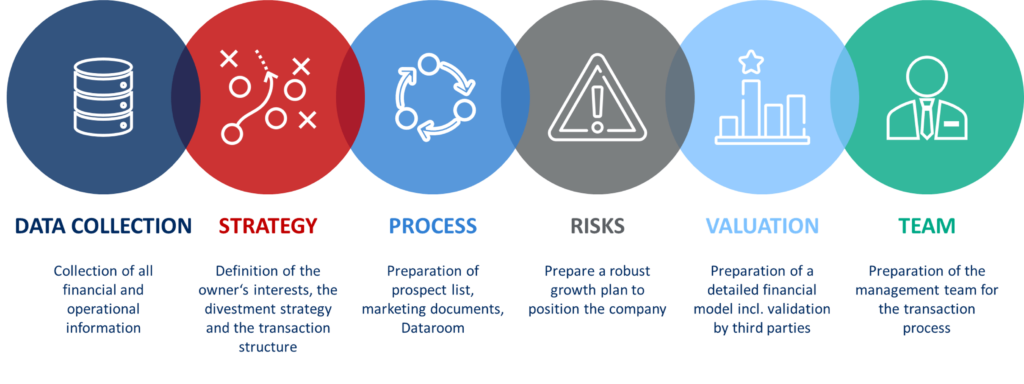
We were able to argue and convince the entrepreneur that a higher sales price usually could be achieved through a thorough preparation of information and documents as well as a competitive sales process. Special attention was paid to the formulation of an attractive “equity story”, which was derived from the positioning of the company, its unique selling propositions, and its growth potential. Equally important was a review and preparation of the financial history as well as the short- and medium-term corporate planning, ideally consisting of an integrated P&L, balance sheet and cash flow planning.
After preparing the sales documents, a multi-stage sales process was initiated and structured in which both potential strategic buyers and selected financial investors such as private equity companies and family offices were approached. Relevant company information was first made available to interested parties by means of a teaser and investment memorandum and, in a later step, via an electronic data room. The confidentiality and sensitivity of certain information was always taken into account through the gradual disclosure, which was adapted to the stage of the process or negotiations.
The company was ultimately sold to the original bidder for more than EUR 36 million. This represents a significant improvement over the initial bid – without any material change in the operational or financial situation.
Don’t get rattled
Buyers try to take advantage of the element of surprise by proactively making offers. Such offers are often not only below the achievable market price, but they address companies and owners unprepared. A professionally structured divestment process can increase the probability of success of a transaction and optimise the transaction terms, including the final purchase price, in favor of the seller.
Don’t reveal too much too soon
Sometimes, as advisors, we are only brought into a sales process when talks with the prospective buyer are already underway or – regrettably – deadlocked. By this time, a lot of information has often already been given to the prospective buyer, which tends to weaken the seller’s position. In such a situation, it is important to regain control of the transaction process. By preparing well for the due diligence and by including possible other interested parties in the divestment process, the seller’s negotiating position can be improved. The further process may or may not include the original bidder.
By proceeding in this way, business owners can be sure that they can optimise the valuation as well as better control the contractual arrangements of the final buyer. With a view to a careful preparation and structured implementation of a sale, it is in this respect helpful to involve or cooperate with specialised advisors as early as possible.
Cooperation with “business confidants”
We have been “in the market” since 1999, during which time Investec has built trusting relationships with numerous financial institutions, tax advisors, auditors, and other business confidants. We understand and respect the history of relationships, therefore clear agreements and responsibilities are important to us. As an advisor specialised in corporate transactions and financing, we rely on close cooperation with these players as well, in order to bring together expertise and drive for the benefit of the client.
Professional hygiene: a world of M&A opportunities
The cleaning and professional hygiene industry, with €28 billion in revenue generated worldwide, is in the grips of a sweeping consolidation movement. First of all, the fundamental trends are good, which keeps investor appetite strong. From 2018 to 2019, the sector grew by more than 3%, and this figure is destined to rise, thanks in particular to the Healthcare sub-segment, now soaring.
Europe, with almost one-third of the global market with €8 billion in revenue, is the ideal setting for this consolidation. Not only is the market still very fragmented with almost 85% of small and medium-sized enterprises, but it is also beset with a regulatory environment that is turning its organization on end. The Biocidal Products Regulation (BPR), which came into effect in 2013, adds to the constraints already weighing on disinfectant manufacturers. The latter have until 2030 to have the biocidal active substances used in preparations controlled and authorized. Thus far, only about 20 of them have been approved, and more than 70 are currently under evaluation.
This situation creates considerable financial pressure on European stakeholders, which are required to invest considerable amounts of money to stay in compliance with the legislation, which is difficult for smaller-scale companies to bear. Consequently, the most vulnerable of them have every interest in finding a partner with strong footing to survive.
Food Safety and Healthcare sectors leading the growth pack
The sectors connected with food safety and healthcare are very promising, in the long term, for cleaning and professional hygiene companies.
The former accounts for more than one-third of global industry revenues (€11 billion), and its three major components: food services (restaurants, cafeterias, kitchen appliances, floor space and surfaces, etc.), agri-food (food processing, beverages, dairy products) and agriculture (pork, poultry, dairy cows) all proved resilient in the face of the crisis.
As concerns specifically the impact of the Covid crisis, the agri-food segment did well for itself (improvements in the continuity of the food processing chain outweighed the drop in the production of consumables, itself kept under control by the increase in meals taken at home), while agricultural activity has, on its end, managed to fend off the consequences of the crisis (the cleaning protocols have been stepped up, but milk production has decreased). Only the food service industry bore the brunt of the Covid-19 crisis, to a greater or lesser extent depending on the geographical region, as a majority of restaurants and cafeterias simply shut down.
Meanwhile, the healthcare sector (hospitals, clinics, specialized practices, retirement homes, medical equipment makers, skin hygiene, etc.) is the industry’s main growth area, though it remains small in size (€2.5 billion in revenues). Before the crisis, from 2018 to 2019, this market already posted growth of around 20%. This growth is expected to remain significant in the coming months: hospital-acquired infections continue to be a prominent issue in a world where healthcare institutions are under extreme strain. Of course, professional hygiene sector players also operating in the healthcare sector are highly coveted by investors, and there is no doubt that their EBITDA multiple will continue to increase.
Larger M&A transactions and EBITDA multiples’ increase
Precisely, the EBITDA multiples in the cleaning and professional hygiene industries remain at a high level despite the crisis, particularly those of large multi-trade and multi-region structures. Only ten or so companies can boast such a position as well as turnover in excess of €200 million.
This competitive advantage – size – is the leading factor enabling them to record EBITDA margins of around 20-25%. And as these players are able to maintain such high levels of profitability, even improving on them as they invest, the multiples can only increase, barring an exogenous non-market cause.
Kersia, the French specialist in food biosecurity, has been valued at around 15 times its EBITDA by IK Investment Partners. Schülke & Mayr, its German neighbor with a stronger presence in the healthcare market, posted a comparable valuation multiple when it was acquired by EQT in the First Half of 2020. And at the very top stands the world leader water, hygiene and infection prevention solutions, the American Ecolab, with a reported EBITDA multiple that is over 20.
In contrast, the growth stories are lower-key for the remaining 85% of European SMEs (less than €30 million in annual revenues). Depending on their margins which are also smaller, their growth profile and their strategic positioning, EBITDA multiples are between 5 and 10 times on average. For consolidators, they are obviously prime targets.
Private Equity’s interest stays up
Embodying an industry that is globally on the rise, private equity funds are omnipresent amongst occupational hygiene specialists. Including the two transactions listed above, Kersia, taken over by IK Investment Partners and Schülke & Mayr by EQT, the last ten significant transactions on the market have directly (buy-out) or indirectly (build-up) involved a sponsor. Consequently, only three strategic acquisitions have been carried out between industrial players: the takeover of the Belgian player Cid Lines by Ecolab in early 2020, that of the American Arysta by its colleague UPL Corporation in 2019, and lastly, the acquisition of the German player PeroxyChem by Evonik at the end of 2018.
The investment funds’ strategy is, all in all, fairly classic and goes by the name of buy-and-build: taking over mid-market players, applying a sustained build-up strategy, and reselling them at the highest price, preferably to an industrial player.
This is precisely what happened with Laboratoires Anios Group, a professional in clinical and hospital disinfection, supported by the French management company Ardian for nearly five years, and sold to Ecolab in 2017, after having integrated competitors in Brazil, Turkey or Spain, for an amount exceeding €750 million. This was more than twice the price mentioned at the time of its acquisition by Ardian in 2013 (around €350 million).
Case Study Sale and Leaseback of Corporate Real Estate Purchase Price 20% +
Frequently, medium-sized companies fail to realize the value of the real estate in the context of a total sale and forego significant economic benefits. As the example “No sale-leaseback-back” below clearly shows, the EBITDA multiple applied by the buyer does not value the company’s real estate at its market value.
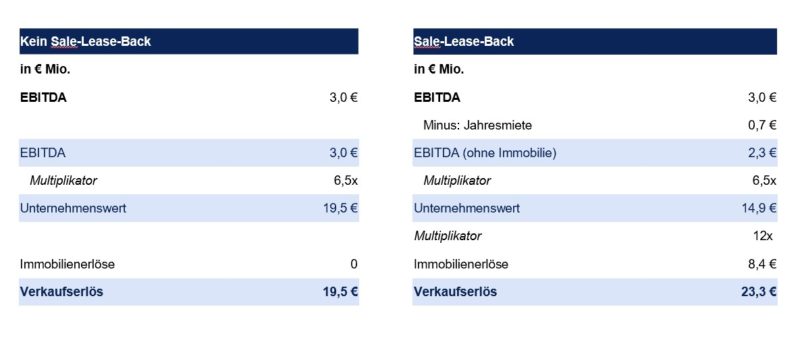
Also, a company with business premises is often less attractive for the buyer. In contrast to medium-sized companies, international listed companies and those in private equity ownership try to avoid tying up capital in real estate to a large extent.
Offer becomes more attractive through lower capital commitment and flexibility
Owners can therefore make their offer more attractive to a broader group of buyers by selling the property in the run-up to a transaction or parallel to it, for example to investors and/or real estate financiers specializing in corporate real estate.
High economic advantages reward the additional effort
In this example, we were able to achieve approximately 4 million (20%) higher revenues for one customer. Although the transaction was somewhat more complicated, the economic benefit shows that the effort was justified and that it was worthwhile.
Also, a financing alternative
In the case of refinancing, restructuring and growth and acquisition financing, the sale and lease back of real estate must be examined for its advantages. Please read our article “Sale & Lease Back as a financing alternative”.