
What needs to be considered?
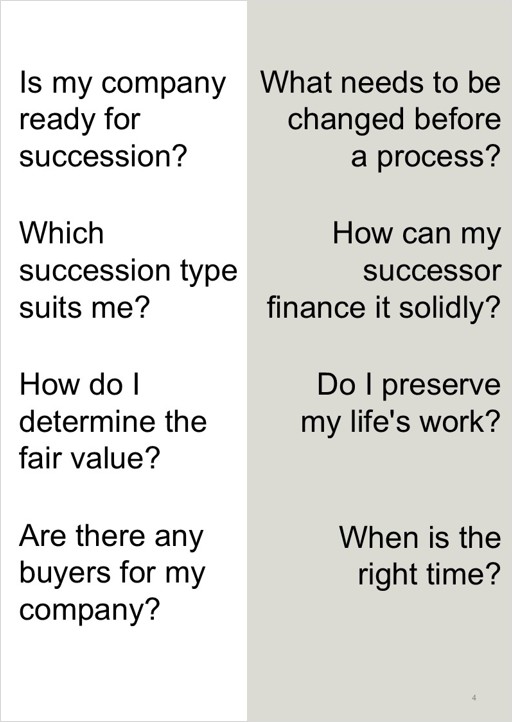
SUCCESS FACTORS
Plan your succession
Succession is one of the most important decisions in the life of an entrepreneur. It requires time, careful preparation and a clear plan.
The handover plan
Define clear goals: measure the extent to which you are financially and mentally ready for the exit and develop an understanding of the value of the chosen succession option.
A transferable company
Create a business model that works without you. This way you will find the best buyer and achieve the highest valuation.
Advisor
Choose advisors with industry expertise who have access to potential buyers worldwide and can implement all transaction options.
Prepare yourself! No success without preparation
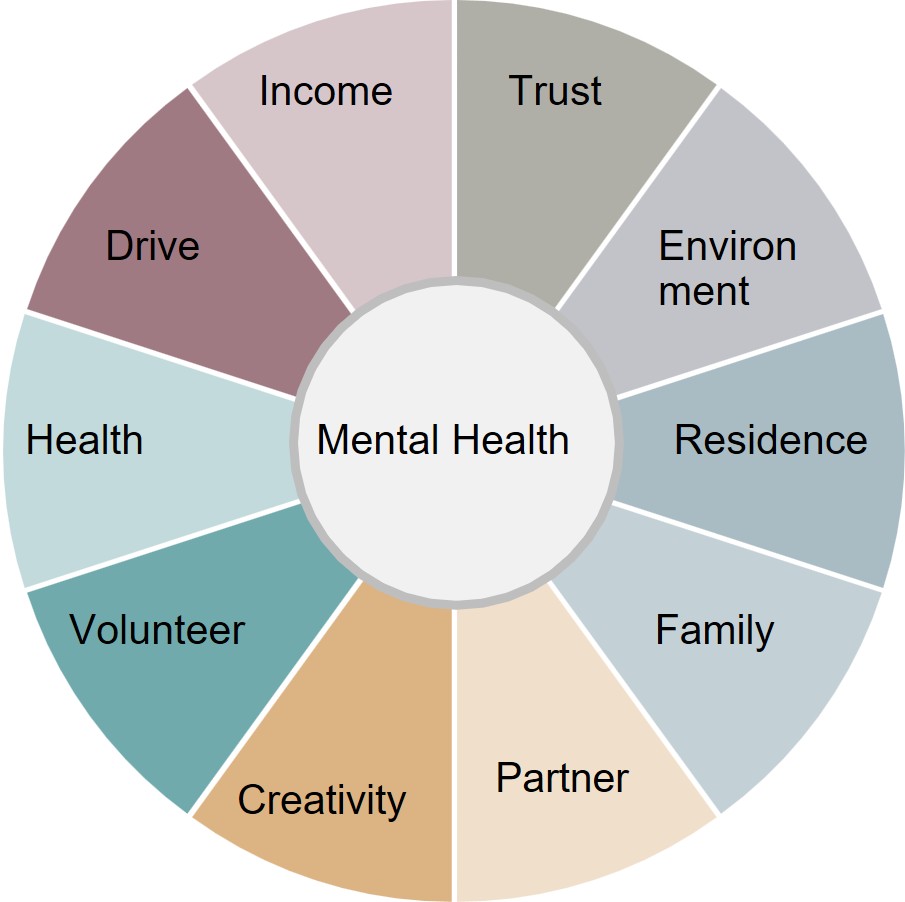
PERSONAL READINESS?
Some entrepreneurs want to continue working in the company, others don’t. How involved are you in the day-to-day business? How do you want to spend your free time after you leave? Can you let go?
Which interests are particularly important to you?
- Continued existence as an independent company
- Long-term and sustainable solution, especially with regard to a secure future for employees
- Financing necessary investments in technology, process efficiency, etc.
- Securing the company’s own asset position and realising the true value of the company
- Handing over the life’s work
- Supply security for family members
- Preservation of reputation as a good owner after the sale
FINANCIAL STATUS?
Entrepreneurs often have a lot of net assets tied up in the company and also like to overestimate the value of their own life’s work. Here it is not always easy, but it always makes sense to be objective.
Diversify your assets, create liquidity
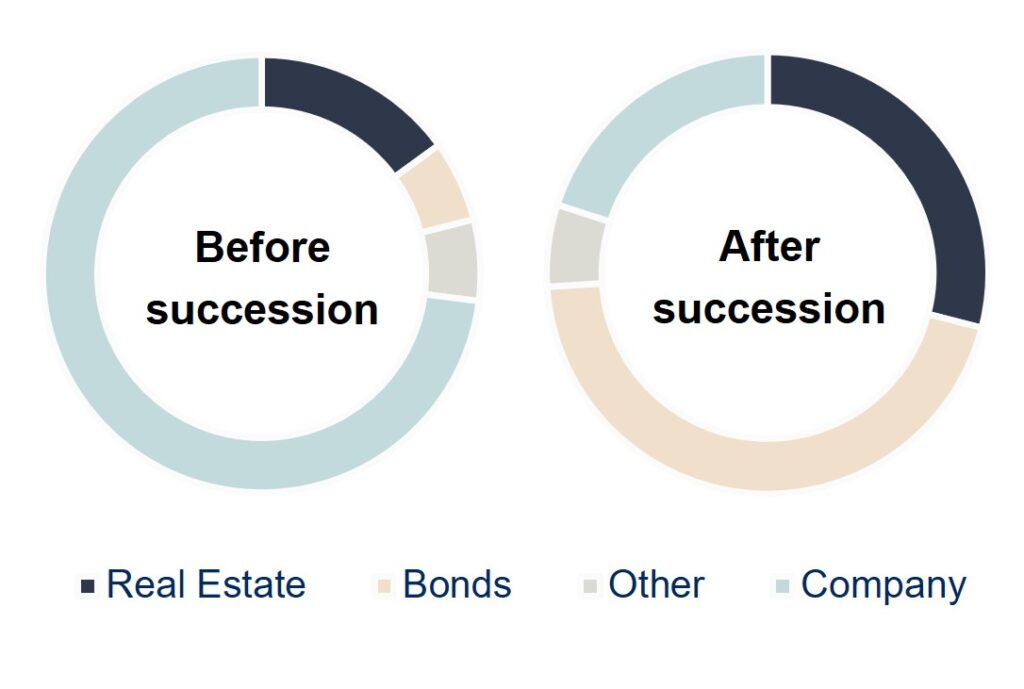
We observe that the value of an active entrepreneur’s own company often corresponds to over 70 percent of his total assets. Other defenses such as shareholder loans, personal liabilities for company loans and rental income from real estate are additionally observable. The lack of diversification, liquidity and dependence on one’s own labour and health represent a risk to be considered with increasing age.
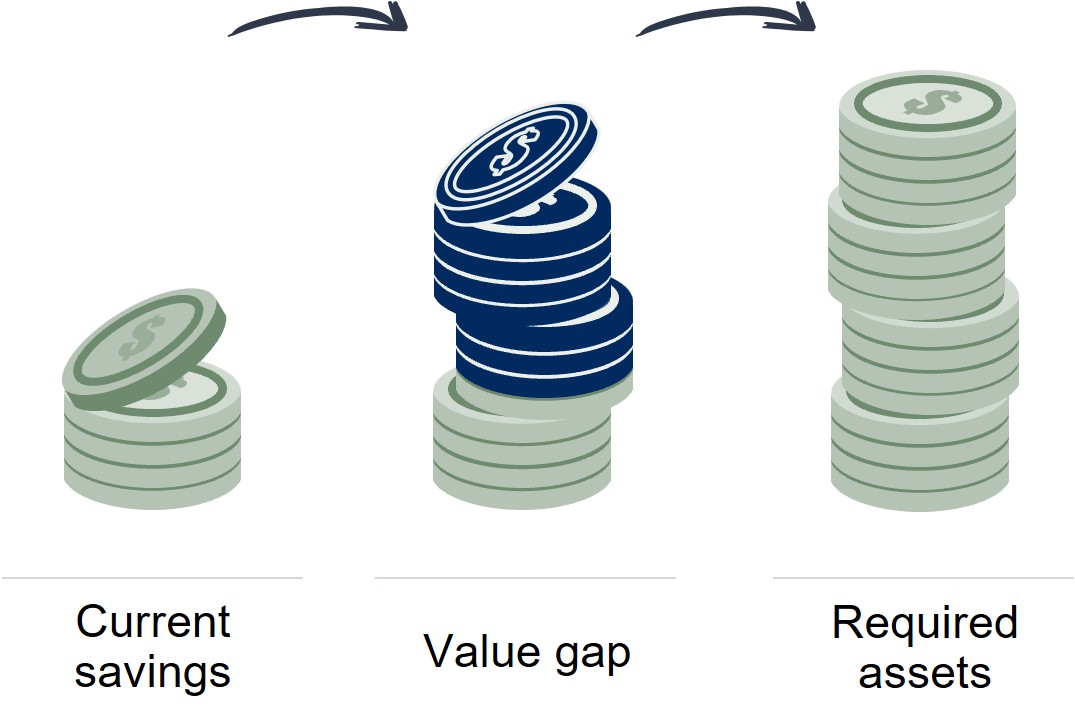
See value gaps in good time
Is it really realistic that in the last stage of your career you create growth in your company that you never managed? Often we hear I’m restructuring sales, I have a great idea, sometimes it works. But often we see entrepreneurs who at the same time take 50 days of holiday that is well deserved, need dividends, take high salaries for lifestyle etc. That doesn’t fit with the desired increase in value. What do you want?
COMPANY TRANSFERABLE?
Medium-sized companies are often strongly influenced by their owners. They are also often the bearers of know-how, have decisive contacts to customers and suppliers and are the person of trust towards the employees. They are the contact person for all major problems.
Transferability checklist
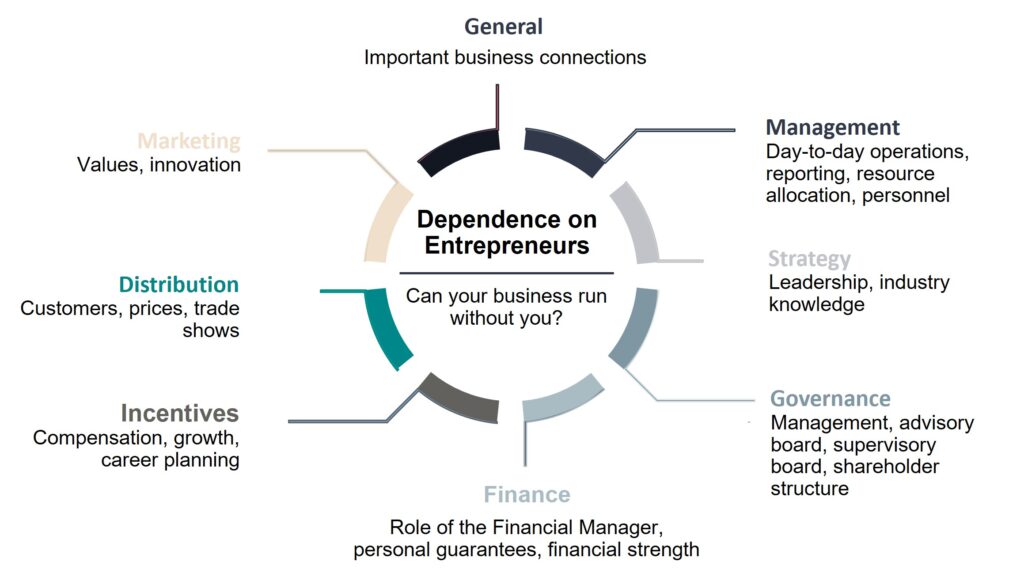
Successful successions require clarity. Often, both outside management and essential second-level functions are missing. However, it is often difficult to incentivize the right managers alone.
CHOOSE SUCCESSION SOLUTION
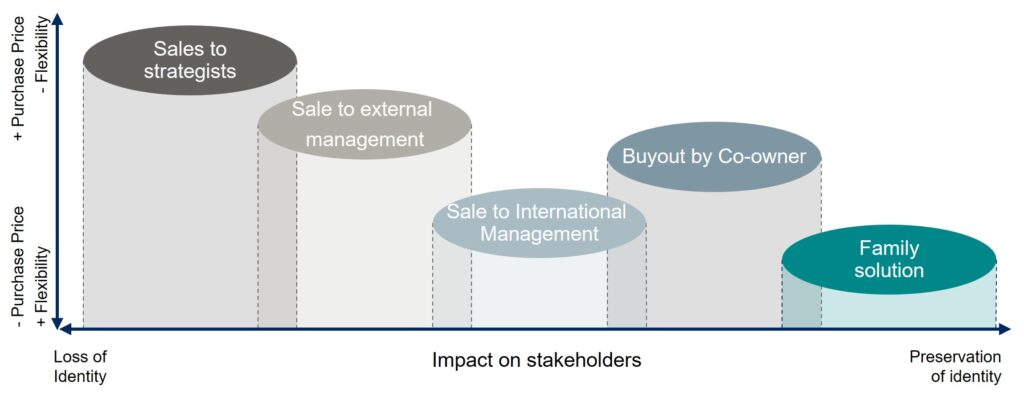
Who you transfer the company to depends on many factors that you should realistically assess before you initiate a process. It is important to do this in an unbiased way and not to follow any “beliefs”, such as the strategist is good, the financial investor is bad, and so on. All options should be considered realistically in relation to the achievement of objectives.
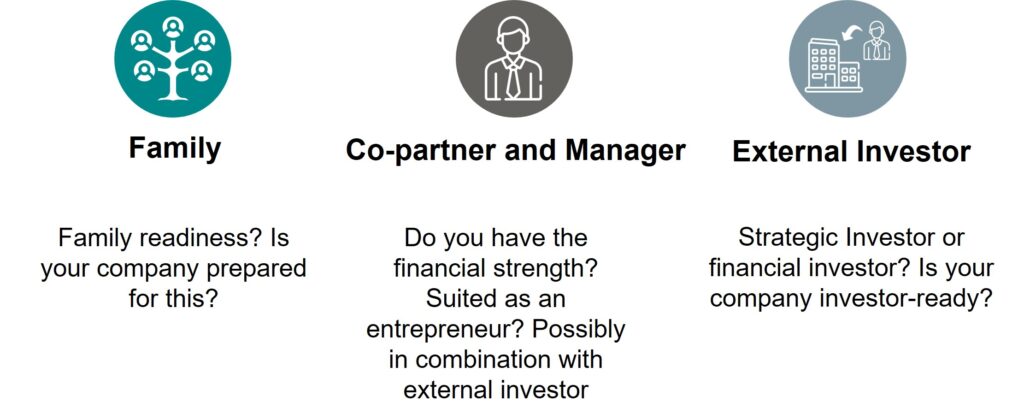
Succession solutions define various advantages and disadvantages
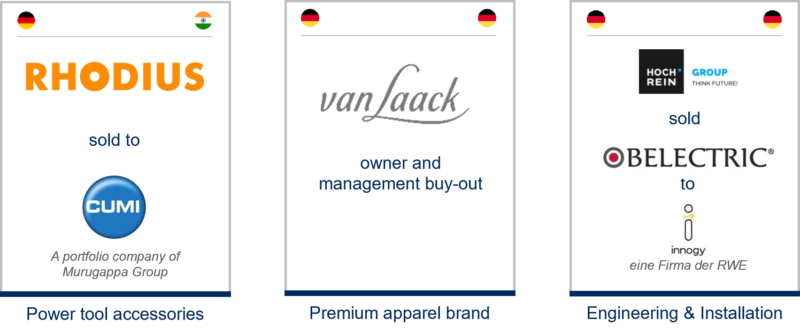
INVESTEC HAS MANY YEARS OF EXPERIENCE AND CUSTOMER RELATIONSHIPS
Would you like to learn more? Please feel free to contact us.
Ervin Schellenberg, Managing Partner: ervin.schellenberg@investec.com
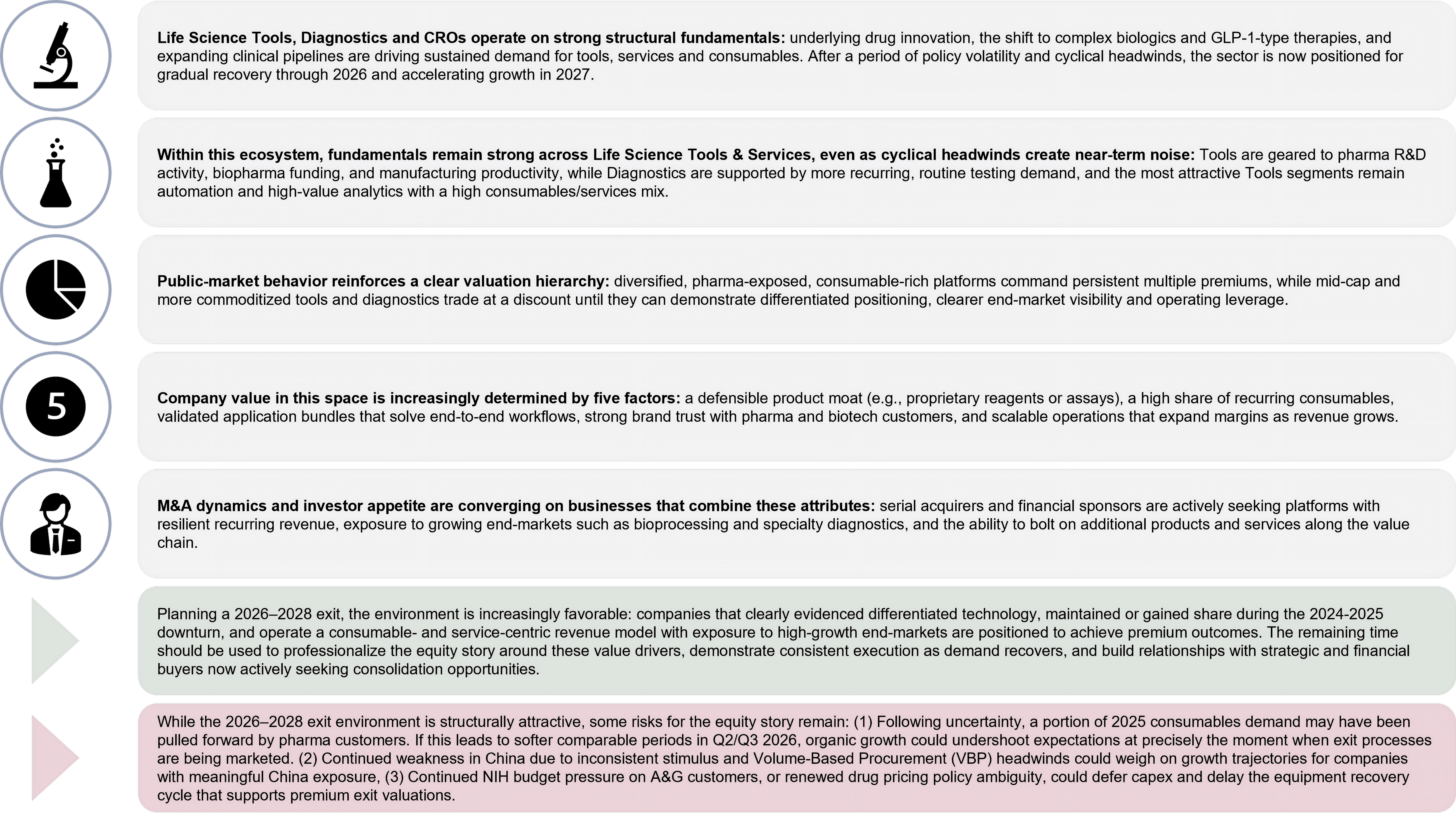
After two years of market volatility, the Life Science Tools sector is entering a recovery phase.
Strong structural fundamentals are driving the rebound: underlying drug innovation, expanding clinical pipelines, biopharma funding stabilization, and strategic acquirers actively seeking consolidation opportunities.
Demand is slowly coming back, now is the window for private mid-caps to professionalize the equity story ahead of a 2026 – 2028 exit.
The report covers the current state and near-term outlook of each subsector, including the structural drivers behind sustained demand such as the growth of complex biologics, GLP-1 therapies, and expanding clinical pipelines. It also examines how the market is recovering from the cyclical headwinds of 2024-2025, where we see growth accelerating, and what the M&A and deal activity landscape looks like heading into 2026-2028.
For a detailed discussion of our findings, feel free to contact Matthias Holtmeyer or Marcel Deutschmann.
Please click below if you would like to receive a copy of the full report.
Market overview and M&A activities in Germany
We are pleased to share our latest report on the market landscape and M&A dynamics in the “digitale Gesundheitsanwendungen” (DiGA) segment. The report provides a comprehensive market mapping, an overview of recent M&A transactions, and insights into exit opportunities for founders and investors.
Executive Summary
The still relatively young market for digital health applications already offers high consolidation potential today and clear exit routes to strategic investors
- Digital health applications (DiGA) have become a permanent part of the German healthcare landscape since their introduction in 2020. With over 1 million doctor-prescribed or approved applications by the end of 2024 and statutory health insurance (GKV) expenditures of around EUR 234m, a considerable sub-market for digital therapy forms has been established. Applications in the areas of mental health, metabolic diseases, and musculoskeletal disorders are in particularly high demand; together, they account for more than 70% of total service expenditures.
- Despite continued growth, it is becoming apparent that the market is entering a phase of consolidation and shake-out. Of a total of 72 approved DiGA, 15 have already been removed, and a growing number of providers are in financial distress. Several prominent insolvencies, including Cara Care, aidhere (zanadio), Mika and Kontina, highlight the structural challenges of a market that until now has been sustained primarily by seed funding and limited reimbursement amounts.
- At the same time, new opportunities are emerging in this phase: for pharmaceutical companies and healthcare service providers, attractive entry options are opening up to systematically integrate digital therapy offerings into existing value chains. Numerous M&A transactions over the past 18 months, such as those involving Selfapy, Sonormed or Mawendo, demonstrate the growing strategic interest of established players in digital therapy platforms.
- Clear and quickly achievable synergies, for example in sales and development or on the cost side in certification, administration, and support, between individual DiGA providers open up exciting platform-building opportunities for private equity. In addition, the larger market participants already show high margins and strong cash conversion.
- The market for digital health applications is comparatively young and therefore offers substantially higher growth opportunities than other sectors in healthcare. In addition, many applications are scalable internationally, as other countries have now also created conditions for the reimbursement of digital therapy formats
The DiGA market appears increasingly ready for consolidation, with some investors already building platforms through acquisitions while others continue to expand organically.
For a detailed discussion of our findings, feel free to contact Matthias Holtmeyer or Marcel Deutschmann.
Financial investors are interested in the healthcare sector. This is hardly surprising: the market is fragmented, hundreds of doctors in private practices are facing succession planning issues, the population is ageing and therefore becoming sicker, and new diagnostic options are emerging – a dynamic environment that promises private equity good prospects and return options.
However, transactions in the healthcare sector have slowed significantly since the end of 2022. In this episode with Editor & Host Isabella-Alessa Bauer, Managing Partner Matthias Holtmeyer and Director Marcel Deutschmann from Investec Advisory explain the reasons for the slump and why the number of deals is now expected to rise again.
The key questions:
- What is the current level of activity in the market? What has it been like over the last 24 to 36 months?
- To what extent is the new regulatory certainty ensuring that the market is picking up again?
- Is there still sufficient potential and attractive targets after the first wave of consolidation?
- Which sub-sectors are attractive? Where is there the most build-up potential?
- How interesting are deals outside the regulated markets?
Click here to listen to the podcast:
What’s up, Corporate Finance? is a blog & podcast from the Finance Think Tank Network. With regular analysis and deep dives on topics related to private equity, private & venture debt, corporate & investment banking, M&A, financing and restructuring, they explain the world of corporate finance with expertise and journalistic passion.
Listen to the 🎙Podcast, which can be found wherever podcasts are available:
🎧 Web-Player
🎧 Apple Podcasts
🎧 Spotify
🎧 Amazon Music
🎧 Deezer
Strategic M&A drives growth across curative and preventive clusters
The global animal health industry remains a resilient and growing market, with strategic players leveraging acquisitions to unlock value across traditional curative portfolios and high-growth preventive platforms.
Driven by regulatory evolution, rising pet ownership, and the shift toward comprehensive health management, animal health has transitioned from a defensive play to a growth-oriented strategic opportunity.
Key Growth Clusters
The animal health sector presents distinct investment opportunities across complementary segments:
- Preventive Solutions (CAGR: 8-10%): Vaccines, feed additives, and diagnostics are outpacing the market through mRNA and AI innovation
- Curative Pharmaceuticals (4-5%): Antibiotics and therapeutics are providing stable cash flows to fund growth investments
- Companion Animals: Premiumisation trends are driving faster growth in developed markets
- Livestock: Representing 60% of total market value, growth is supported by food security needs and operational efficiency demands
M&A Activity
Strategic M&A activity accelerated over the past 18 months, spanning biotech innovators, pharmaceutical companies, and diagnostics specialists. Europe and North America lead transaction volumes, with buyers pursuing geographic expansion, portfolio diversification, and innovation pipeline access.
Leading players adopt dual-portfolio models, using mature curative assets as cash engines to fund targeted acquisitions in high-growth preventive categories. This enables earnings stability while shifting toward innovation-led growth.
The sector’s fragmentation offers compelling consolidation opportunities, ideal for buy-and-build strategies across European and North American markets.
Financial investor momentum accelerates
Private equity funds are actively deploying capital across both clusters, attracted by the sector’s resilience, strong cash generation, and above-economy growth rates. Interest focuses on companion animal and preventive medicine businesses, though curative platforms remain attractive for their margins and regulatory defensibility.
Looking ahead
M&A activity will accelerate as companies optimise portfolios across the curative-preventive spectrum. Both strategic and financial investors recognise animal health’s exceptional blend of defensive characteristics, innovation potential, and consolidation opportunities in a fragmented market.
This is why, at Investec, we view animal health as one of the most compelling sectors in the European and North American mid-markets. For more information and our full 2025 Animal Health Report, please contact Jan Willem Jonkman, Bart Jonkman or Thom Deckers.
How a professional dialogue is now moving companies forward
Interview with Thorsten Gladiator, Managing Partner of Investec about how a professional dialogue is now moving companies forward:
- Why companies should entertain a professional dialogue with their investors and lenders?.
- What other challenges are companies facing?
- As a financial expert and transaction specialist what advice do you have for companies when dealing with debt and equity investors?
- Giving an example.
This video answers these questions and give you an idea and overview in a few minutes.
Finding the right type of capital and investor to help grow your business
Our team has a long track record of successfully raising equity and debt capital and has the necessary expertise and networks:
- Raising capital to support business growth
- Securing capital from private equity and/or other Investors to support MBO/MBI projects
- Securing capital from private equity and/or other investors to manage changes in the shareholding structure (such as supporting the buyout of one or more shareholders and the reallocation of equity shares)
- Project financing: supporting companies in realizing essential investments or working capital
- Refinancing: supporting companies in reorganizing/reducing their debt burden
Good reasons for a sale
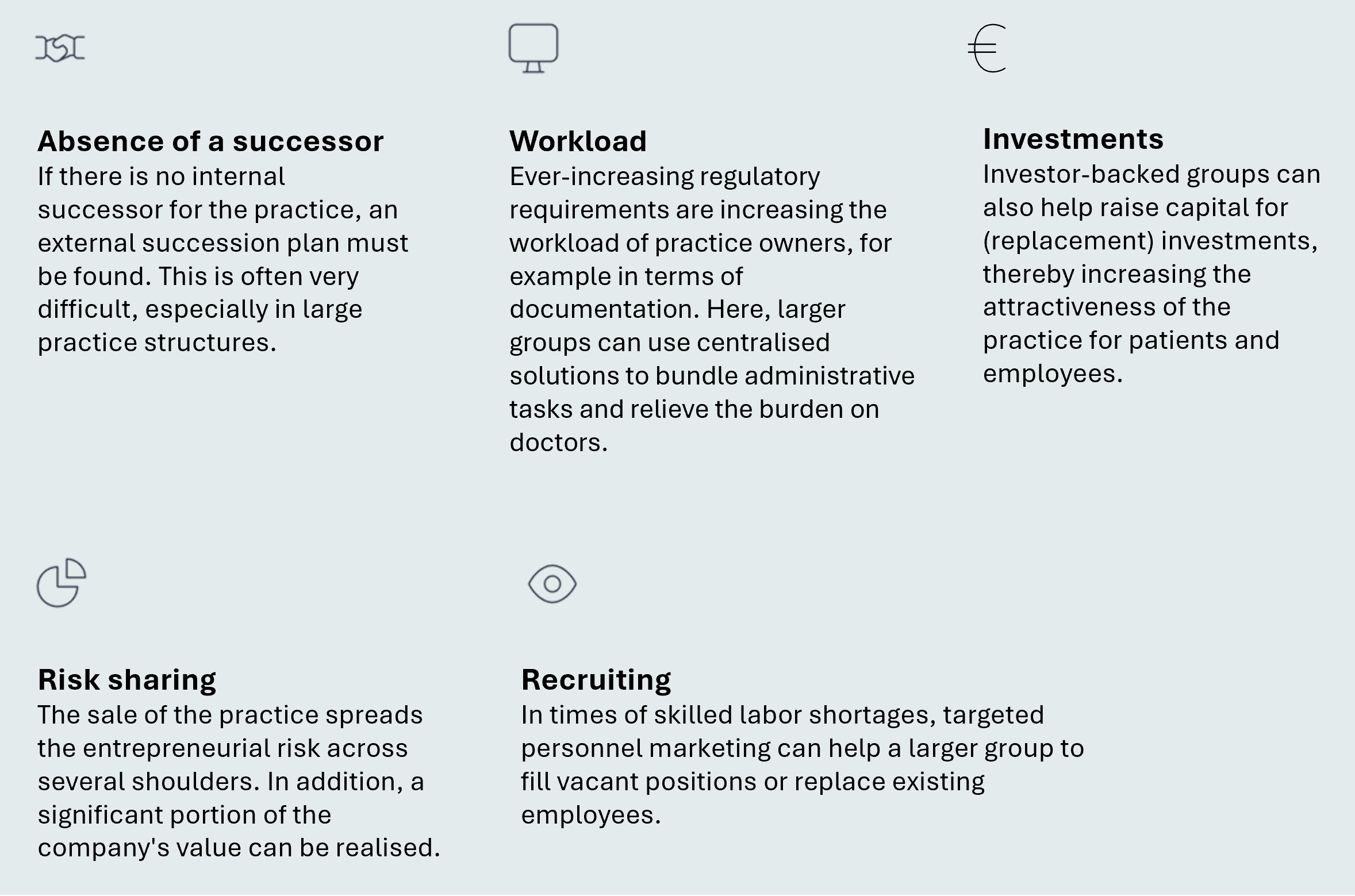
In the past, large practice structures in particular were virtually unsellable or could only be sold to a successor for a small fee. The entry of investors has fundamentally changed this situation.
There are many reasons for selling a practice. A decisive factor for many is to hand over the practice, and thus the employees and patients, to suitable successors. But what can be done if there are no internal successors?
In this case, the only option is to sell to a third party. In many cases, this can be and will be doctors who intend to continue running the practice in line with the previous owners’ vision. However, once the practice has reached a certain size, very few doctors feel able to pay an appropriate purchase price. This is where larger groups can fill the gap.

In many specialist areas, investor-financed groups are already active and consolidating the market. They usually pay a (significantly) more attractive price for the practice than other doctors could and also offer support in many administrative areas. However, the doctors remain fully responsible for patient care.
In addition to the financial aspects, choosing the ‘right’ partner for your life’s work is also crucial. According to legal requirements, selling doctors must generally remain employed at the medical care centre for three years, which must be established no later than the date of sale. Practice owners must plan for this time frame accordingly.
In addition, purchase price components are usually agreed in the purchase agreements that only come into effect after two or more years of cooperation.
Do you have questions regarding M&A or selling your business?
We would be happy to schedule a call to discuss further.
Click here to download the report.
The outpatient healthcare sector is changing rapidly. While the total number of medical practices is declining, leading software providers are growing by up to 90% annually.
An important driver of this development is mergers and acquisitions. With every practice sale, the likelihood of a change in practice software increases – and with it the opportunity for flexible, specialised providers to gain market share. Specialised solutions for radiology and ophthalmology are growing particularly strongly, despite high integration hurdles.

For our analysis, we compared the installation statistics of the National Association of Statutory Health Insurance Physicians (KBV) from 2016 with the latest data from Q4 2022. The analysis is based on publicly available billing data from the associations of statutory health insurance physicians – i.e. the very systems used for billing statutory health insurance. The figures were sorted by annual growth rates to highlight the most dynamic changes.
The result shows that the market is on the move and specialisation pays off. What developments do you see?
We look forward to hearing from you.
The healthcare clinics market in the Netherlands is a dynamic sector, where clinics play an essential role in the overall healthcare ecosystem. Some key insights and trends include:
- The healthcare sector is considered non-cyclical and has proven resilient during recent economic crises.
- The Dutch health market is the second-largest sector, with an average spend of € 7,129 per person on healthcare.
- Private equity firms continue to show strong interest in the healthcare industry, with their acquisition activity steadily increasing.
- Increased reliance of the general healthcare system (including public hospitals) on private clinics
- Significant consolidation, particularly in the private clinics market, with most private clinics falling under general healthcare insurance, ensuring covered care.
- Variations in investment levels from private equity across different clinic segments.
- Political scrutiny over private equity investments in the healthcare sector.
To receive a complete copy of our insights, feel free to reach out!
DOWNLOAD PREVIEW
Helen Lucas | UK
Jonathan Harvey | UK

Our 14th report comes at a crucial time for the industry, as GPs get back to the business of selling portfolio companies and raising new funds.
2024 was a tough year for private equity and the overriding view from our survey of 253 general partners (GPs)* is that 2025 will be different.
Our findings show an industry which, despite challenges over the past few years, is resilient, adaptable, and anticipating a more favourable period ahead.
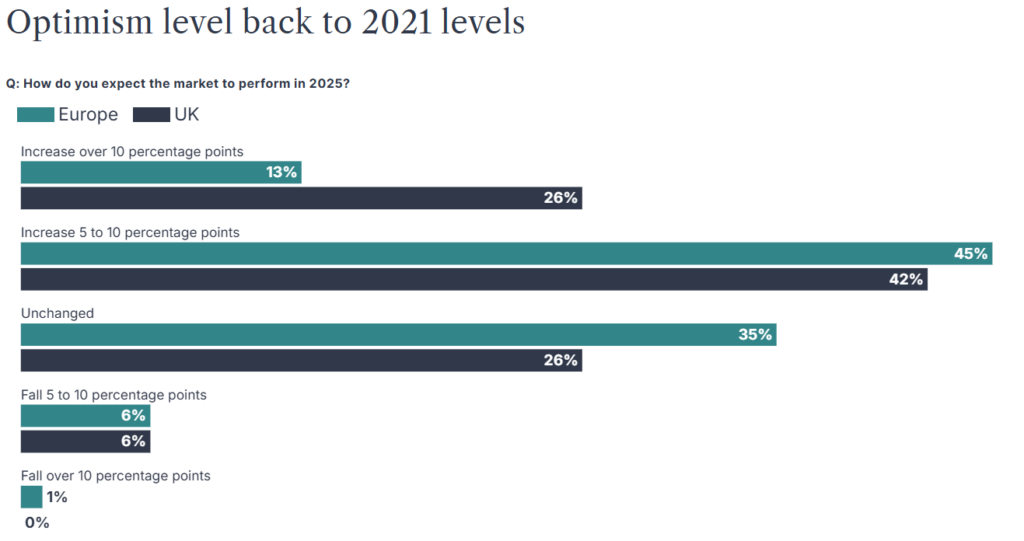
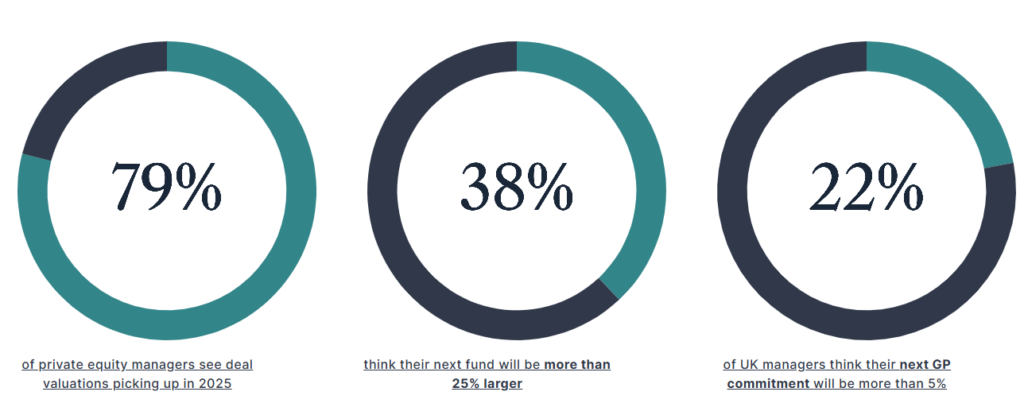
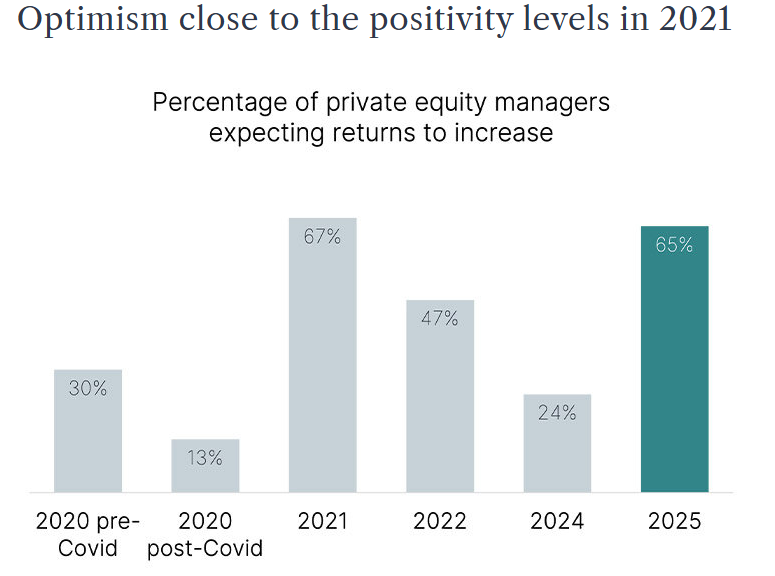
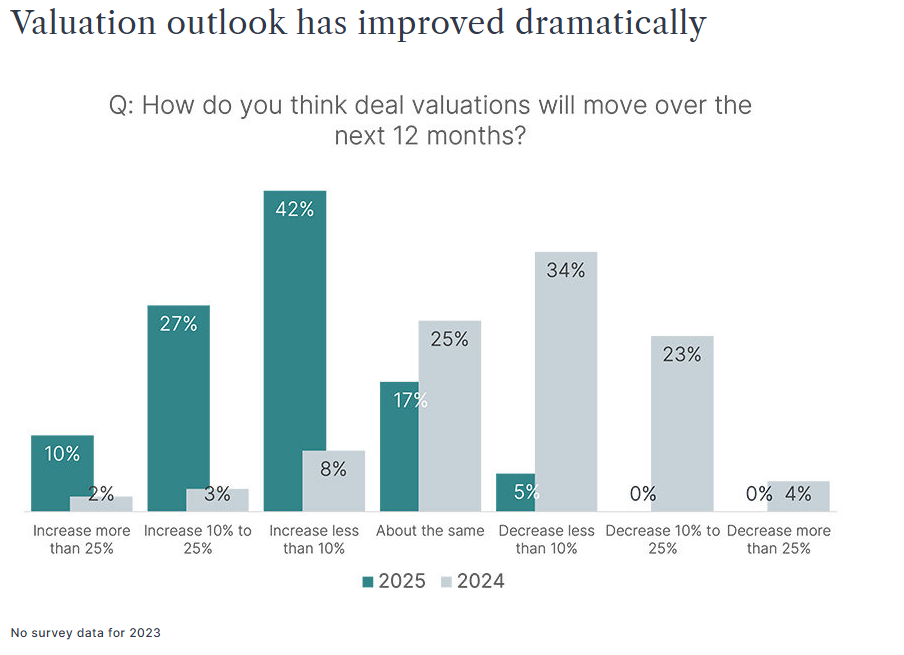
Four in five GPs expect deal valuations to increase in 2025 as interest rates come down, helping to clear exit bottlenecks and accelerate investors’ distributions. The outlook for returns is also brighter, with improvements registered across geographies and fund sizes. Close to two thirds (65%) of investors see returns improving in 2025, up from only 24% in 2024.
Dealmakers still must navigate ongoing geopolitical and macroeconomic risk, as trade tariff tit-for-tats continue and conflicts in the Middle East and Ukraine remain unresolved. It is a complex market, but the backdrop for M&A is better than it was a year ago.
Jump to a section:
Future fundraisings
GP commitments
New world of debt
Innovations and exits
GPs at a crossroads
Future fundraisings
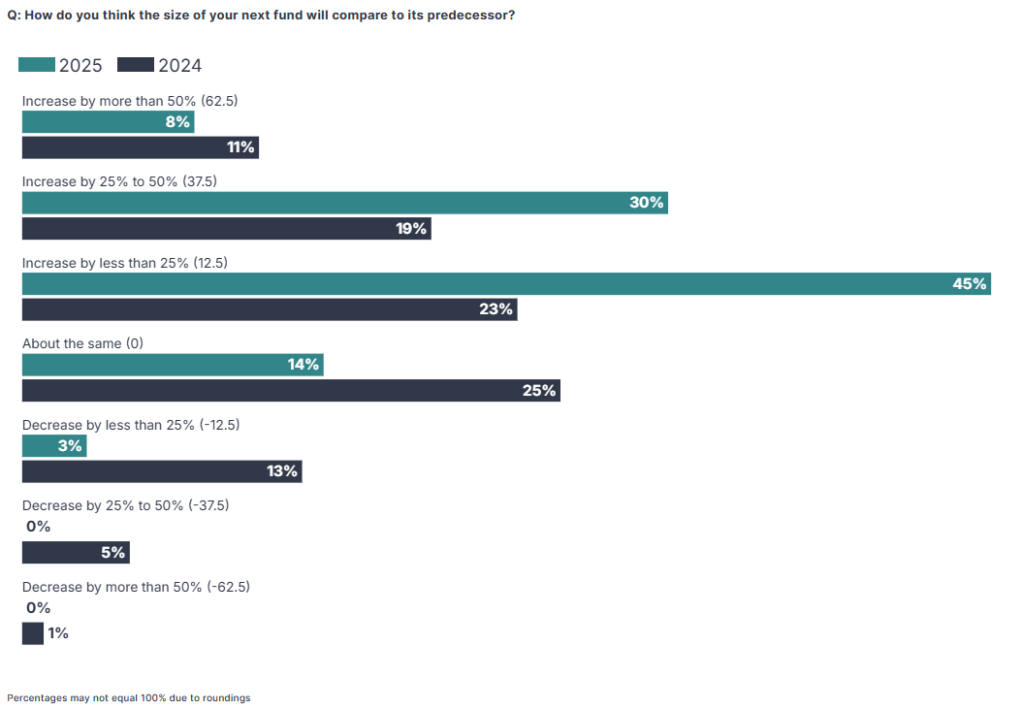
In 2024, 21% of respondents expected a down raise for their next fund: the 2025 research shows only 3% anticipating the same scenario.
There is also a large cohort of super-optimists – 38% expect their next raise will be a blockbuster increase of 25% or more over their previous fund.
Limited partners (LPs), however, are expected to remain highly selective in 2025. In 2024, according to PEI figures1, the ten largest funds to close in 2024 all secured more than $10 billion and absorbed more than a fifth of total fundraising allocations while a Coller Capital LP survey2 showed that the top focus for 98% of investors is that a new manager has a team with a strong track record.
Our survey findings tie in with this theme – close to a third of respondents (31%) expect an increasing number of GPs to move into wind-down. However, this does not mean the opportunity for new managers has passed; just 26% agreed that “very few new GPs will be launched”.
Although fundraising conditions are improving, LPs continue to consolidate GP relationships, focusing on managers of scale and mid-market specialists with differentiated investment strategies and exceptional returns.
Fundraising optimism surges
Jump to a section:
Deal valuations
GP commitments
New world of debt
Innovations and exits
GPs at a crossroads
GP commitments
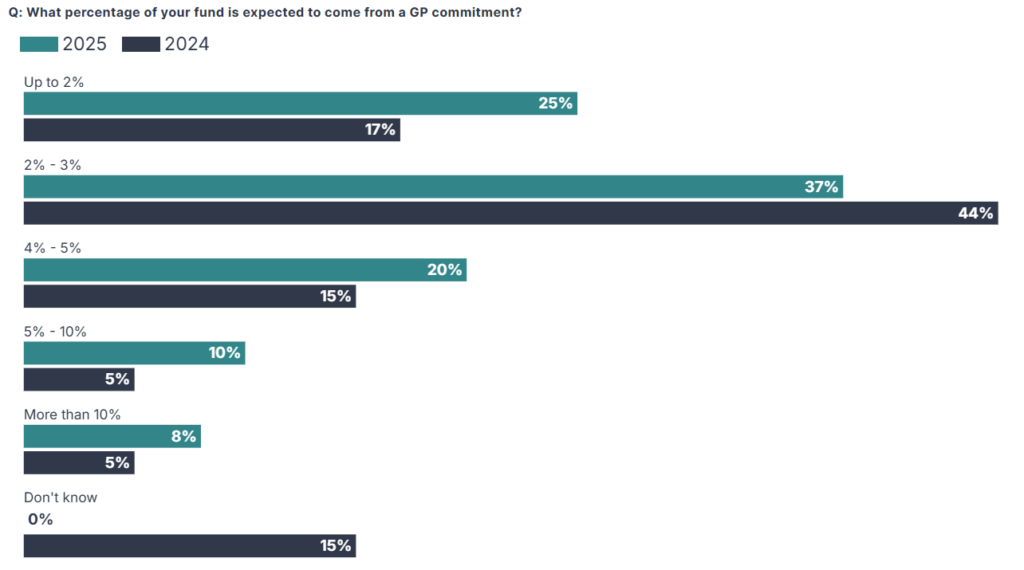
The survey shows GPs are planning to up their commitment from the typical 2% to 3% to strengthen alignment with investors and boost fundraising momentum.
- One in five GPs expect to commit 4-5% of their next fundraise.
- One in ten expect their next commitment to be 6-10%.
- 8% expect to commit more than 10% in 2025.
Managers are taking a blended approach to financing these higher commitments including existing resources, reinvesting carried interest and external debt, which is gaining favour. Most are using two options to fulfil their obligations, with 13% expecting to use three options.
Where are commitments highest?
The findings reveal interesting regional variations when it comes to GP commitments.
UK managers are more likely to be asked for a big commitment: 22% were asked for more than 5% versus just 8% of managers in Europe. Managers in France, meanwhile, seem to be asked for a particularly slim commitment, with more than half expecting to be asked for less than 2%.
Overall, a significant minority of investors expect to up commitments in the future.
Jump to a section:
Deal valuations
Future fundraisings
New world of debt
Innovations and exits
GPs at a crossroads
New world of debt
Debt markets are open for business with a substantial number of new lenders entering the market to provide GPs with enhanced financing optionality.
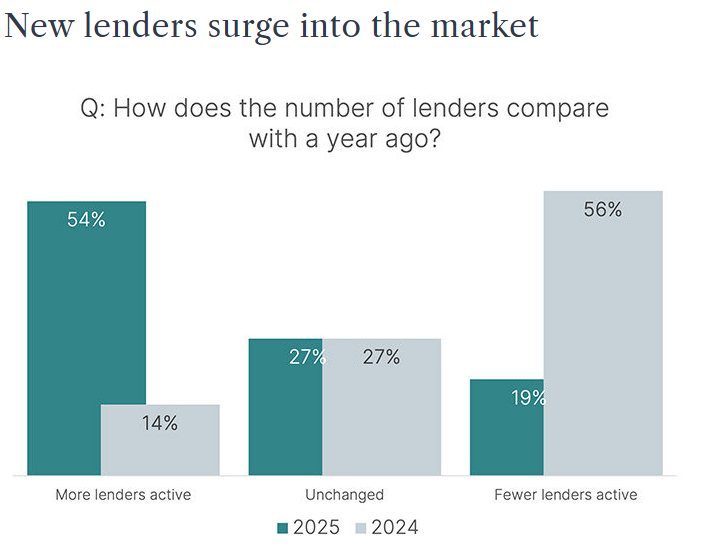
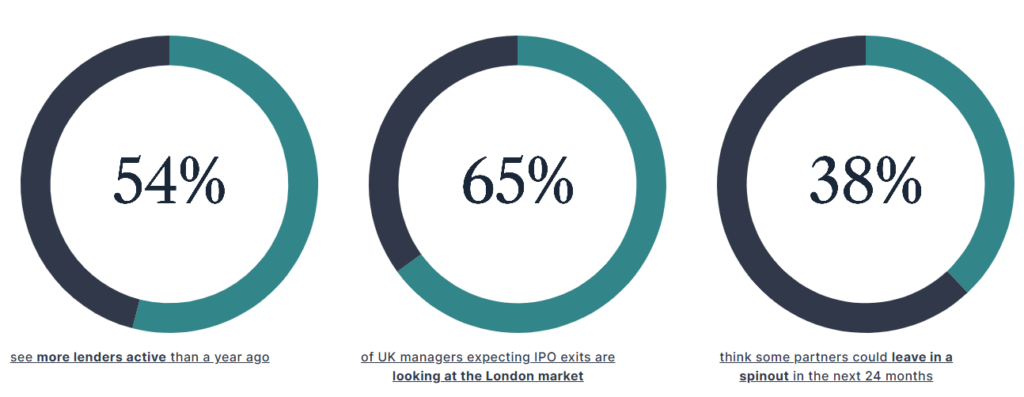
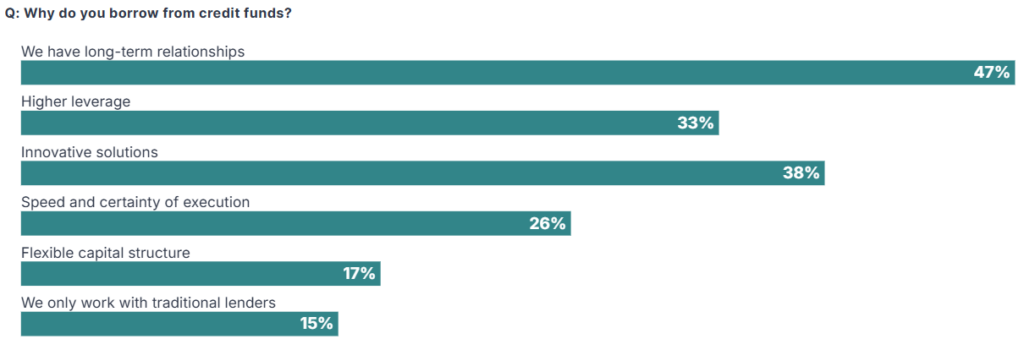
More than half (54%) of GPs say they will have new lenders to work with in 2024. This marks a shift from last year’s findings, when 56% of respondents saw a contraction in new lender activity. The majority of GPs who took part in our survey are working with credit funds and the top three reasons cited for working with a private credit included higher leverage levels and innovative financing solutions.
UK managers are hopeful that increasing competition will result in looser terms, with 54% of UK managers reporting either private debt narrowing margins or terms loosening generally. Outside of the UK, however, GPs are more cautious, with only 35% forecasting looser terms.
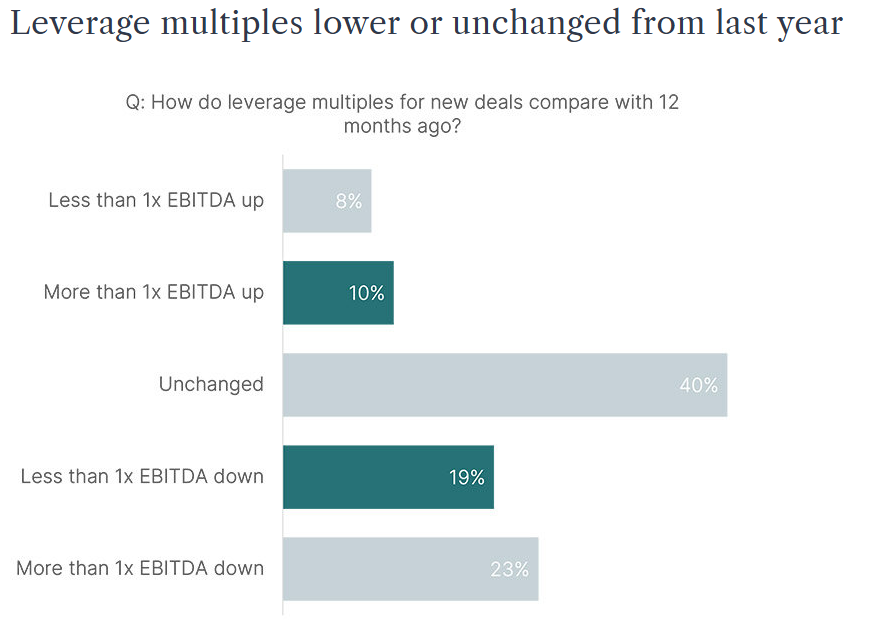
Despite these expectations, lenders are remaining disciplined. Well over a third of respondents (43%) report that leverage multiples have lowered from a year ago.
Competition is fierce for trophy assets in certain sectors, and these companies will be able to negotiate more favourable terms, but lenders will be highly selective.
Interest rates may have come down, but the risk-free rate remains elevated when compared with recent years, making additional leverage costly to service. Debt is available (European leveraged loan issuance climbed by more than 90% in 20243 and private debt managers have $126.4 billion of dry powder available to invest4), but the survey findings on leverage multiples show that capital structures remain relatively conservative.
Covenant flexibility
Even as interest rates have come down, GPs have still had to work hard to protect portfolio companies.
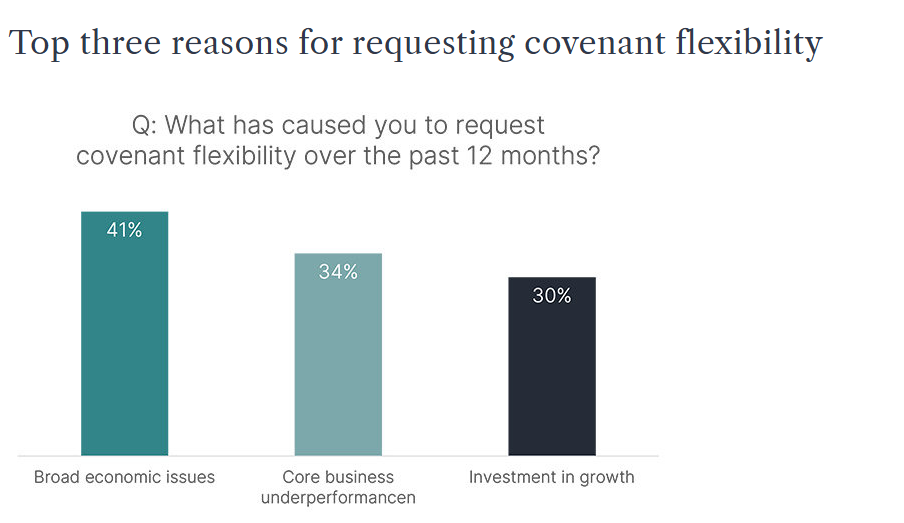
Some 87% of respondents say they have gone to lenders to request covenant flexibility for one or more portfolio companies. Broad economic issues (cited by 41%) and business underperformance (cited by 34%) are the main reasons for requesting flexibility.
Interestingly, close to a third of respondents (30%) have requested covenant flexibility to fund growth as GPs hold some portfolio companies for prolonged periods.
“We will always be open to a conversation about covenant flexibility. If a business is growing and wants to re-lever, or the sponsor wants to hold an asset for longer, loosening covenants can have a positive impact on supporting growth.” – Helen Lucas, Co-Head of UK Origination, Direct Lending, Investec
Lending landscape
As more lenders entered the private equity space, there has also been increased use of some newer debt products. Innovation continues; survey respondents expect ESG-linked lending, fund-level finance and asset-based lending to increase market share.
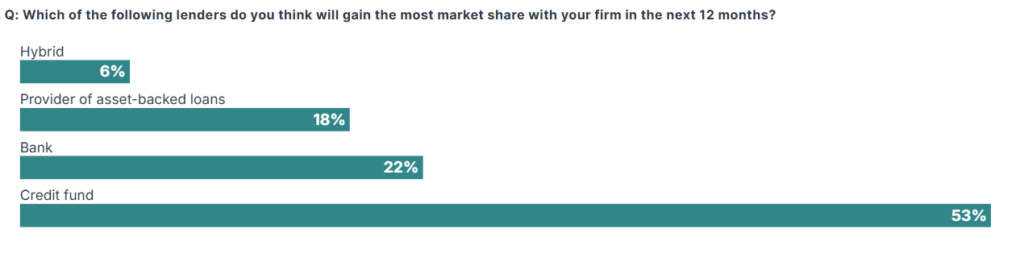
Around half of the respondents expect credit funds to do more business with their firm during the year, but banks remain highly competitive; almost a quarter (22%) say they expect to place more lending with banks in the next 12 months. Hybrid capital is gaining particular traction for smaller managers with assets of $250m or less, with a quarter of these saying this type of lender will gain the most market share at their firm in the next year.
NAV lending
Net asset value (NAV) finance has proven particularly popular with managers in an environment where liquidity has been constrained.
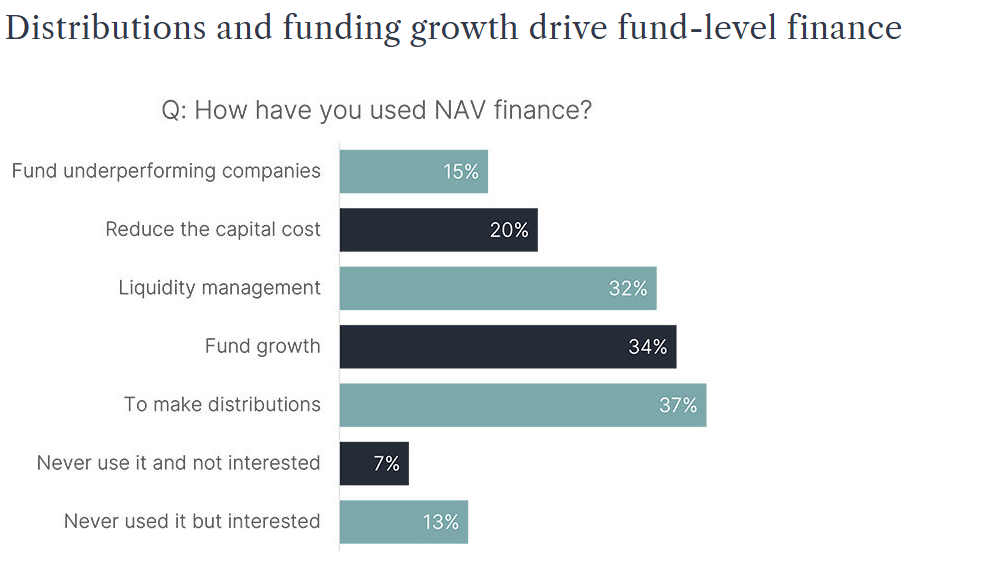
Four in five GPs said they used NAV finance in the last year, with distributions the most-cited use case (37%).
Uptake of NAV finance looks set to continue accelerating, with two thirds (65%) of respondents who had not used NAV finance previously saying they were interested in taking up NAV loans.
Deployment and operations
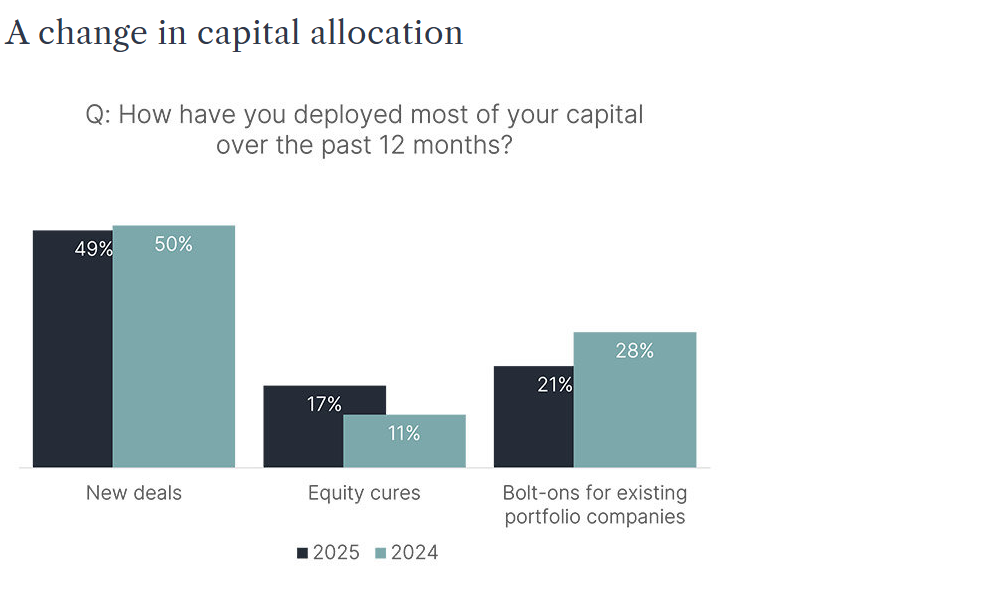
Less than half of GPs (49%) have deployed most of their capital in new deals during the past 12 months, with just over a fifth (21%) focusing efforts on smaller bolt-on acquisitions to support buy-and-build portfolios – down from 28% in our previous survey. An increase in the number of GPs deploying most of their capital in equity cures – up to 17% from 11% last year – further highlights the tough backdrop for managers during the past year.
The improving outlook means that the next 12 months should be more favourable for deployment. Somewhat surprisingly, the public-to-private outlook is mixed and not much changed from last year despite low stock market valuations, most notably in the UK5. Some 50% say they expect to look at more public-to-privates but 40% expect to look at less.
Big-ticket take-private deals during 20246 have ensured that P2P remains on the managers’ radars and may result in activity in this area.
“Private equity managers are ready to deploy, but it is taking much longer to originate deals. GPs will be forming relationships with management teams up to three years ahead of a formal process. During the last two years we have seen a number of processes fall over, and it does take time to rebuild before businesses come back to market.” – Kate Gribbon, Head of Financial Sponsor Coverage & Origination, Investec
Jump to a section:
Deal valuations
Future fundraisings
GP commitments
Innovations and exits
GPs at a crossroads
Innovations and exits
One of the single biggest challenges for private equity managers through the rising interest-rate cycle has been to sell portfolio assets at valuations that deliver adequate returns.
In tepid IPO and M&A markets, GPs often opted to sit tight rather than offload assets at lower-than-hoped-for multiples. Hold periods remain above long-term averages, with the backlog of private equity-backed companies sitting at record levels7.
This has had repercussions on fundraising – slowing distributions to LPs have limited their ability to allocate to new funds.
Managers looking at exits will explore all options to crystallise returns, with the survey findings ranking expectations for different exit routes in a narrow band.
More than half of GPs (54%) think trade sales will be the busiest exit route during the next 24 months. But after a long barren spell the IPO is back in the frame again, with the typical manager optimistic that two portfolio companies could be an IPO candidate over the next two years.
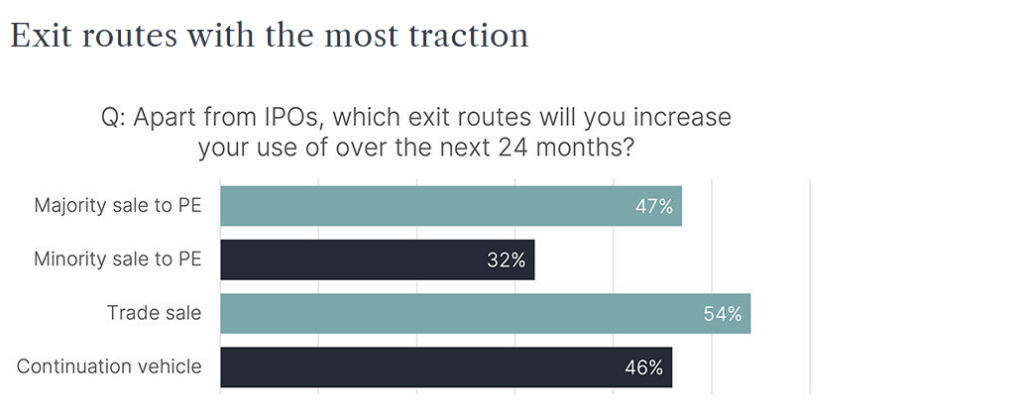
The squeeze on other exit routes meant there has been greater use of continuation vehicles which are here to stay as a mainstream exit path: more than 40% of GPs say a continuation fund will be an exit option they are more likely to use in the next 12 months.
The UK IPO question
Private equity-backed portfolio company IPOs haven’t always been crowd-pleasers, particularly on UK markets8, but the survey findings show managers warming to the UK stock market – albeit with some reservations.
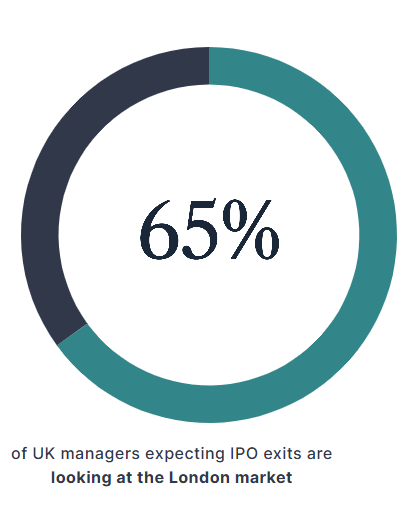
Some 65% of UK managers who expect to list a portfolio company in the next two years consider the UK a potential venue – although they will also look at other venues such as Amsterdam or New York.
The size of the manager and portfolio is a factor in stock market selection. Larger managers with bigger assets to float think a UK IPO is less attractive, indicating that larger IPOs are considered more challenging for UK public markets.
Jump to a section:
Deal valuations
Future fundraisings
GP commitments
New world of debt
GPs at a crossroads
GPs at a crossroads
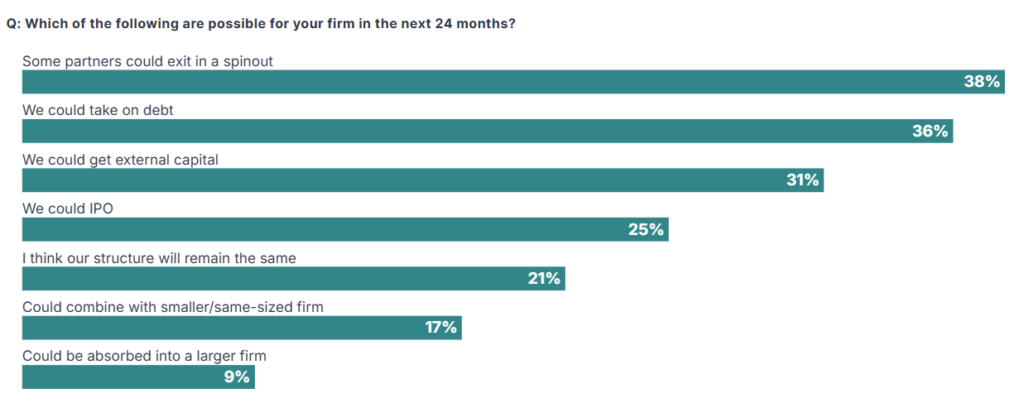
According to Pitchbook figures, GP-to-GP M&A reached record highs at the end of 20249 and the survey points to a long runway of further deals, with 79% of respondents expecting some kind of change to their firm’s structure.
In addition to GP consolidation deals, new teams are forming in spinouts and minority stake investment is proliferating.
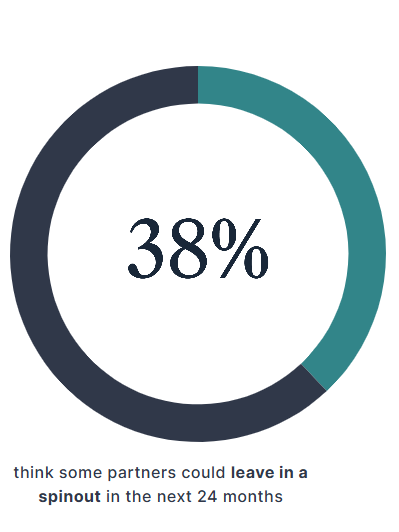
Indeed, 38% of GPs say some partners could leave their firm via a spinout in the next 24 months. This is reflective of a tougher fundraising environment, particularly for smaller managers with assets under management (AUM) below $1bn, where spinouts are more likely as junior partners explore other options when fundraisings stall.
Getting ready to capture growth
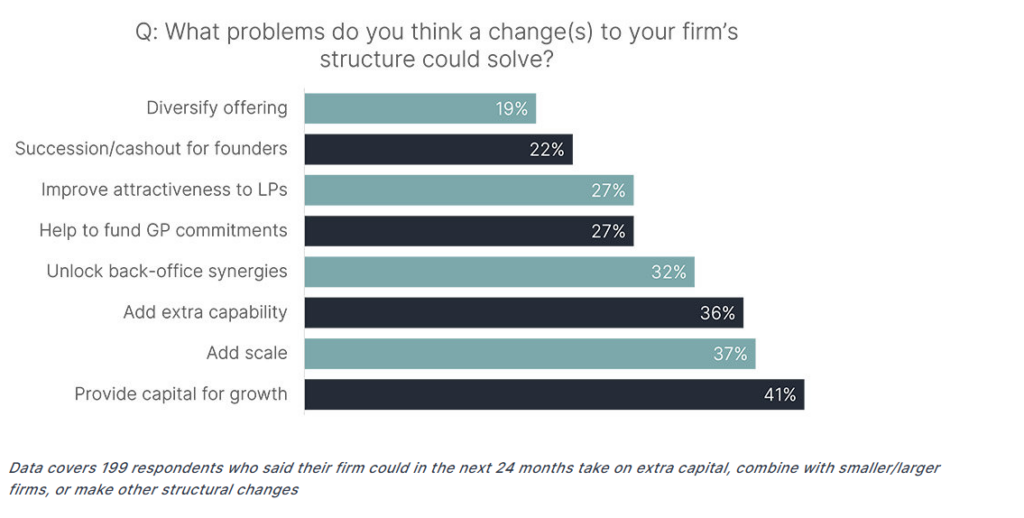
Historically, the main driver for taking on third-party capital or merging with another firm was likely to unlock liquidity and facilitate succession. While this reason was selected by 22% of respondents, the majority see a transaction as a tool to provide capital for growth or expand service lines and scale.
Ideally, twice as many managers say they would like to be the acquirer rather than target in a consolidation scenario.
What is also worth noting is that when it came to continuation vehicles, our survey showed that 40% of GPs think there will be more single-asset continuation vehicles over the next 24 months and over 25% thought they are likely to become more specialised. Single-asset continuation vehicles allow GPs to remain invested in a prized portfolio company and could potentially lead to a spin-out by a manager.
Jump to a section:
Deal valuations
Future fundraisings
GP commitments
New world of debt
Innovations and exits
* Demographic info
This report is based on 253 responses to an online survey conducted between 7 January and 22 January 2025. Respondents were sourced from a prequalified panel and no PE firm was represented more than once.
178 were based in the UK, 75 in Europe including 22 in Germany, 14 in Spain and 11 in France. Some 34% of respondents were investment directors, other eligible job titles were CFO, VP of finance, director of finance, principal and manager of finance/investments.
Footnotes:
2 https://www.collercapital.com/41-barometer-winter-2024/
4 https://www.muzinich.com/opinions/corporate-credit-outlook-2025-private-markets
6 https://www.ft.com/content/ec9aa2ae-f56a-4373-8c4b-88effc01a25d
7 https://www.mckinsey.com/industries/private-capital/our-insights/global-private-markets-report
9 https://pitchbook.com/news/articles/blackrock-hps-purchase-record-year-gp-consolidation
R&D to grow or just to be?
Animal health: Is R&D required for growth or survival?
Review of our animal health conference, which explains how the humanisation of animals, success of novel therapeutic approaches and technologies in human health, as well as the increased drug resistance will continue to underpin focus on R&D.
Watch highlights from the 2024 conference:
The humanisation of companion animals, demand for sustainable food sources for livestock, as well as requirements for improvements in animal welfare are driving innovation and consolidation in the animal health sector.
These three trends were at the centre of discussions at our inaugural Animal Health conference, where industry leaders and advisors discussed whether the R&D investment is a prerequisite for survival or is it still predominantly undertaken for growth.
Animal health market comprises multiple categories, such as:
- vaccines & medicines,
- veterinary services,
- pet supplies & serves,
- feed additives.
The sector, which was valued at approximately £130 billion in 2023, has a forecast compound annual growth rate (CAGR) of 5-8% per annum until 2030.
Companion animals to remain a key segment driving future growth
Increased pet ownership in developed economies, the growing importance owners place on their pets, and higher awareness around animal health and wellbeing have boosted spending on veterinary treatments, preventative health measures, and wellness products for companion animals. Pet owners’ primary focus on quality of life and longevity is driving innovation in disease and symptom control. As pet ownership has been shown to have physiological and emotional benefits for humans, the positive impact on global human health cannot be underestimated. However, conversely, 75% of over 30 new human pathogens identified in the last few decades, originated in animals1.
Continuous R&D focus on translating advanced human technologies to animal health
Success of novel therapeutic approaches and technologies in human health are among key drivers of increasing animal health R&D spend. Clinical drivers behind the trend are potential to translate novel treatment benefits from human to animal health (e.g., monoclonal antibodies and mRNA vaccines), growing scientific basis for the use of new technologies to address animal disease (e.g., gene therapies and stem cell therapy), and evolving treatment paradigms due to microbial resistance concerns (including increasing focus on proactive prevention).
Further underpinning the trend are non-clinical drivers such as:
- growing willingness to spend disposable income on pets,
- emerging role of technological advancements in healthcare (e.g., across spectrum of big data and artificial intelligence),
- increasing government and non-government investment into sustainable animal health (e.g., sustainable agriculture / farming)2.
What is clear is that as the animal health market is becoming more specialised and sophisticated. Therefore, investors and operators must carefully consider which are the most appropriate areas and specialties to drive their business forward.
Our guest speakers

David Hallas,
CEO, ECO Animal Health plc

Laurent Flaus,
Co-Founder and CEO, Axience Group

Simon Middleton,
Partner, L.E.K. Consulting

Sources
1 World Health Organization ‘One Health’ guide 2019
2 L.E.K. Consulting
In the past, large practice structures in particular were almost impossible to sell or could only be sold to a successor for a small fee. The entry of investors has fundamentally changed this.
There are many reasons for selling a practice. For many, a decisive point is to hand over the practice and therefore the staff and patients to a suitable successor. But what to do if there is no internal successor?
In this case, the only option is to sell to a third party. In many cases, this can and will be a doctor who will continue to run the practice according to the previous owner’s ideas. However, if the practice has reached a certain size, very few doctors will feel able to pay an appropriate purchase price. This is where larger groups can fill the gap.
In many specialist areas, groups financed by investors are already active today and are consolidating the market. These groups generally pay a (significantly) more attractive price for the practice than other doctors could and also offer support in many administrative areas. However, patient care is still entirely the responsibility of the doctors.
In addition to the financial aspects, choosing the “right” partner for the life’s work is also crucial. Legislation stipulates that the selling doctors must generally continue to work for three years in the medical care centre to be established for the sale at the latest. A corresponding time horizon must be planned for by the practice owners. In addition, earn-out clauses are usually agreed in the purchase agreements, which only come into effect after two or more years of co-operation.
Valuing means comparing: We carry out a structured sales process with all relevant market participants in close consultation with you. The aim is to obtain as many different offers as possible in order to be able to select the most attractive offer.
Click below to read and download the full brochure.
Financial investors and strategists are increasingly targeting company owners directly with purchase offers
SMEs have increasingly been the focus of strategic and institutional investors for many years. By means of unsolicited offers, they try to circumvent a structured process and thus make a favourable deal. Here, the transaction advisor can optimise the result for the entrepreneur, for example, through a tailored strategy and by creating a competitive environment.
Medium-sized companies are sought-after targets for investors
For some time now, many private equity companies and large corporations have focussed on acquiring medium-sized companies in Germany, as these are usually seen as innovative as well as sustainable and responsible. These potential buyers often make unsolicited, tantalising offers or hints to this effect, which, however, do not always reflect the actual market value.
Interested parties often push for early exclusivity
The strategy of ‘pre-emptive bids’ is a common practice of these investors, in which they attempt to bypass a structured sales process and eliminate other bidders at an early stage. For a thorough company valuation, however, it is essential to know the alternatives. Professional M&A advisors can point out additional options and test these in the market together with you, initially on an anonymous basis. This allows you to maximise the price and identify the best investor for the company.
A competitive process optimises the result
When you are approached by an investor, it is important to ensure that you are not selling below value. Our experienced team will enable you to develop a customised sales strategy, maintaining the highest level of confidentiality, aimed at achieving the best possible value and keeping you in control of the sales process.
How a structured process can increase the sales price
Valuing means comparing: We carry out the complex sales process with all relevant market participants in close consultation with you. The aim is to obtain as many different offers as possible in order to be able to select the most attractive offer.

Introduction
INCREASING HEALTH AWARENESS AND CHANGING LIFESTYLES HAVE LED TO A SURGE IN DEMAND FOR DIETARY SUPPLEMENTS. THIS DEMAND HAS FURTHER INCREASED DURING THE COVID-19 PANDEMIC, WITH A STRONG GROWTH FORECAST FOR THE MARKET VOLUME IN EUROPE IN THE NEXT TEN YEARS.
In recent years, notable transactions and innovations have characterized the supplement market in Germany. The number of start-ups in the sector has been at a high level, as they were able to quickly gain significant attention and market share through targeted marketing, for example through social media.
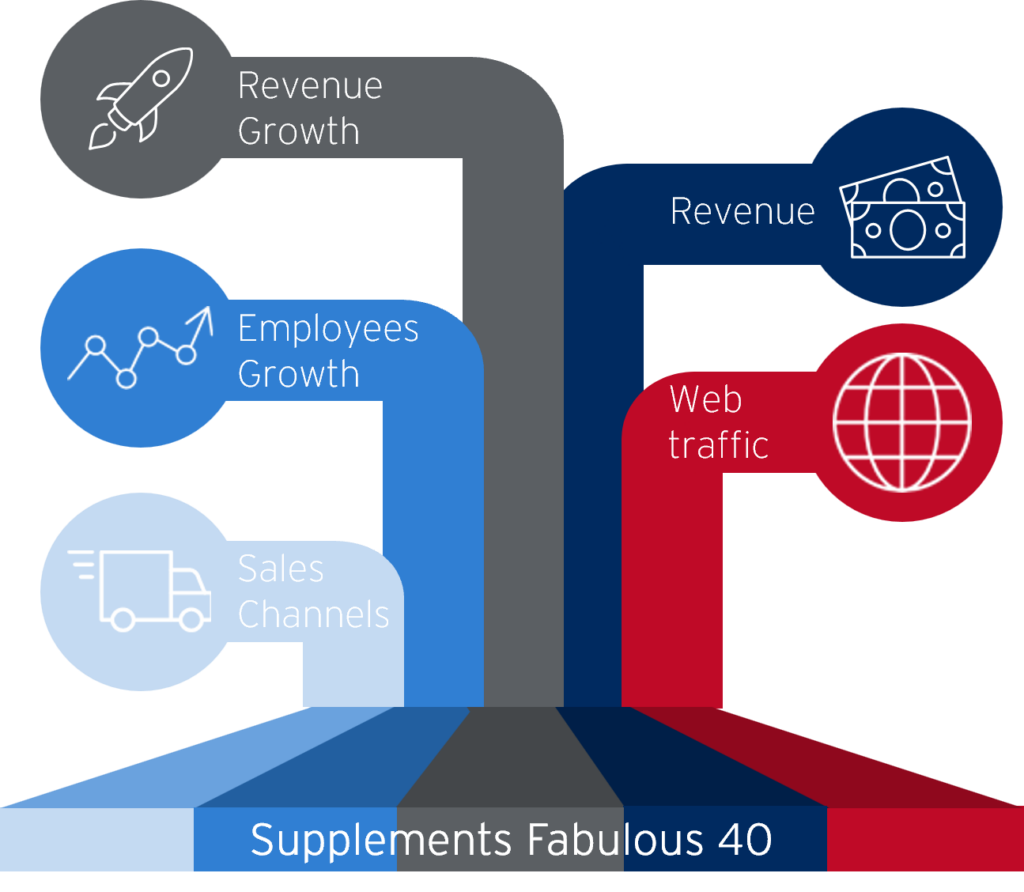
For Germany, we identified more than 400 relevant companies in the sector. From these, we have summarized what we consider to be the 40 most attractive in a ranking. To accomplish this task, a comprehensive review of all 400 companies was conducted, assessing them based on five key factors deemed relevant to our evaluation criteria: revenue, revenue growth, employee growth, web traffic, and diversity of distribution channels served. In all areas, a higher number correlated with a more favorable ranking.
In order to be included in our ranking, companies had to possess a unique characteristic that sets them apart from their peers. This could be anything from an extraordinary story or an emerging trend, to a unique market approach or growth pattern. Our Fabulous 40 list consists only of companies that have this unique quality. This means that even smaller companies have the potential to make it to the top of our Fab40 list. It is worth noting that all companies on our list are considered to be among the top 10% of companies in their sector.
Investec has acquired a strong expertise in the Healthcare sector by accompanying large groups, entrepreneurs, and mid-caps in their sales processes, acquisitions, and financings. Together with Investec as a significant majority shareholder, Investec has a global reaching network of M&A professionals.
Interview
As we enter 2024, the M&A landscape shows signs of recovery, albeit cautiously.
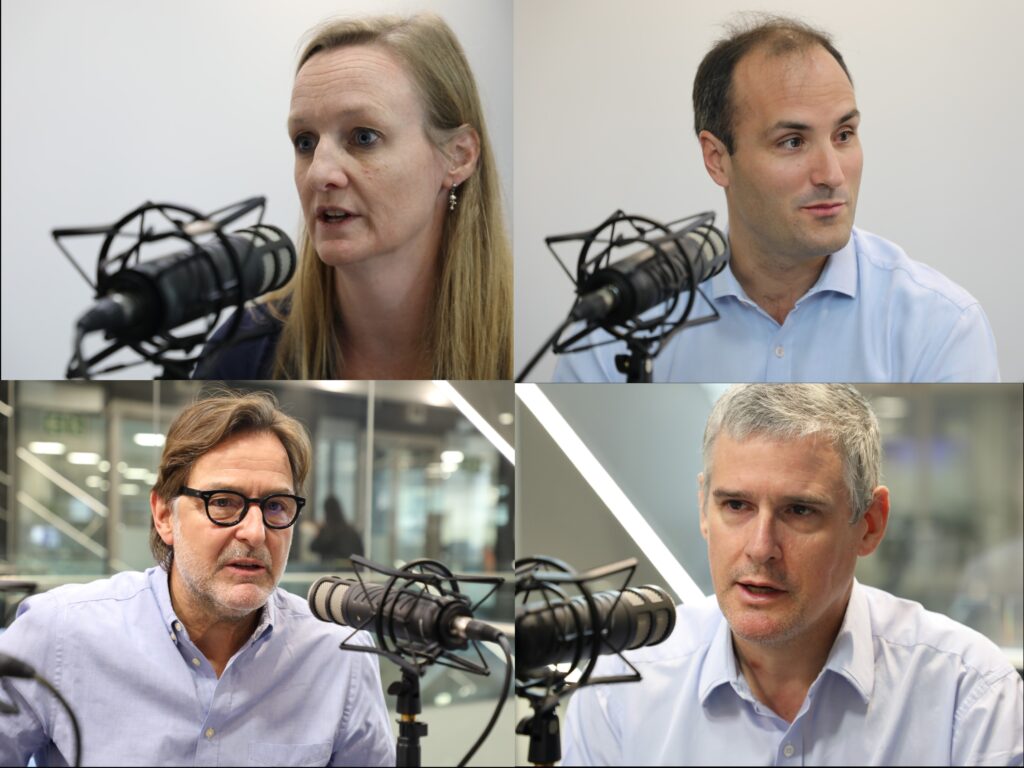
In the episode of the February 20, 2024 of No Ordinary Wednesday, Jeremy Maggs in conversation with Investec experts Jürgen Schwarz, Marleen Vermeer, and Kilian de Gourcuff, Investec’s Head of Cross-Border Finance and International Advisory Charles Barlow, on what key sectors, trends and risks to keep an eye on in 2024.
Click below to listen to the podcast:

Where does opportunity lie for dealmaking in 2024? (investec.com)
Hosted by seasoned broadcaster, Jeremy Maggs, the No Ordinary Wednesday podcast unpacks the latest economic, business and political news in South Africa, with an all-star cast of investment and wealth managers, economists and financial planners from Investec. Listen in every second Wednesday for an in-depth look at what’s moving markets, shaping the economy, and changing the game for your wallet and your business.
Listen to the best of No Ordinary Wednesday: https://www.investec.com/en_za/focus/no-ordinary-wednesday-with-jeremy-maggs.html
Extensive track record combined with deep industry knowledge
Interview with Matthias Holtmeyer, Managing Partner of Investec about the changing scenarios for medical practices:
- What are possible initial scenarios in which doctors want to sell their successful practice?
- Is the purchase price the decisive factor in the projects?
- What predestines Investec to advise physician clients on transactions?
- In which areas of medicine have you assisted clients with transactions?
- And how do you achieve the best result?
This video answers these questions and give you an idea and overview in a few minutes.
The large and rapidly growing Healthcare sector is offering dynamic business perspectives due to demographic tailwinds, increased chronic illness, and medical advancements that facilitate new diagnostic options. We advise private and public companies in this sector and focus on sub-sectors that show the best growth and/or consolidation opportunities. Most of our transactions are cross-border – within Europe and beyond – and are executed by an international team of experienced advisors with extensive sector expertise.
Thanks to our international presence, we are able to operate in all relevant European and non-European markets.
Understanding your organisation and your market environment are key factors for the success of your business.
Interview with Matthias Holtmeyer, Managing Partner of Investec about sector trends in Healthcare:
- Digitilization has been the buzzword for years. Why does it play such a big role in the health sector?
- Why is this sector so interesting for investors?
- What predestines Investec to advise on transactions in this area?
- Please describe a case.
This video answers these questions and give you an idea and overview in a few minutes.
The far-reaching changes in the international healthcare markets often require decisive entrepreneurial action in order to overcome the new challenges that have arisen. However, this also opens up a wide range of economic prospects for the players involved.
We advise companies in the inpatient and outpatient sectors, including clinics, laboratories and medical groups, on sales, succession solutions, acquisitions and financing issues. A particular focus of our advice is in the outpatient sector, where we support companies in the development and financing of group formation concepts.
Thanks to our international presence, we are able to operate in all relevant European and non-European markets.
Financial restructuring for Shareholders & Lenders
Helping clients to navigate uncertainties while putting their businesses back on track
Interview with Jürgen Schwarz, Managing Partner of Investec about Restructuring with the help of a M&A process:
- How did the market change in recent years?
- What is your approach?
- Giving an example
This video answers these questions and give you an idea and overview in a few minutes.
Sale from insolvency
Due to our pan-European presence and track record we are well placed to advise on international and cross-border restructurings.
Our international sector teams implement more than 50 transactions p.a. and in many sectors they know the active buyers, the acquisition criteria, the behaviour of individual decision makers. We also have an up-to-date overview of the market prices paid, which vary considerably over time and depending on the positioning in the sector.
Investec has direct access to numerous international equity and debt capital providers and has carried out numerous restructurings ranging from approximately 10 million Euros to several billion Euros.