
We are pleased to present you the Q2 2026 edition of our M&A and valuation update on the food and beverage sector.
With over 300 professionals and 150+ transactions worldwide in 2025, we have a very good overview of the M&A market, valuations and relevant buyer interest in the food and beverage sector.
We recently appeared on the M&A podcast “CLOSE THE DEAL” (a German language format) to discuss the topic of M&A in the food and beverage industry as well as key considerations for maximizing valuations in a sale process. Click here to listen
Do you have questions regarding M&A or (growth) financing?
We would be happy to connect for an informal exchange on potential areas of collaboration.
We are pleased to present you the Q1 2026 edition of our M&A and Valuation Update on the Food Ingredients & Supplements sector.
With over 300 professionals and ~150 transactions worldwide in 2025, we have a very good overview of the M&A market, valuations and relevant buyer interest in Food Ingredients & Supplements sector.
We recently appeared on the M&A podcast “CLOSE THE DEAL” (a German language format) to discuss the topic of M&A in the food and beverage industry as well as key considerations for maximising valuations in a sale process. Click here to listen
Do you have questions regarding M&A or (growth) financing?
We would be happy to connect for an informal exchange on potential areas of collaboration.
We are pleased to present you the Q1 2026 edition of our M&A and valuation update on the food and beverage sector.
With over 300 professionals and ~150 transactions worldwide in 2025, we have a very good overview of the M&A market, valuations and relevant buyer interest in the food and beverage sector.
We recently appeared on the M&A podcast “CLOSE THE DEAL” (a German language format) to discuss the topic of M&A in the food and beverage industry as well as key considerations for maximizing valuations in a sale process. Click here to listen
Do you have questions regarding M&A or (growth) financing?
We would be happy to connect for an informal exchange on potential areas of collaboration.
Shifting consumer behaviours, category innovation and strategic repositioning are creating new growth opportunities across the European beverage market.
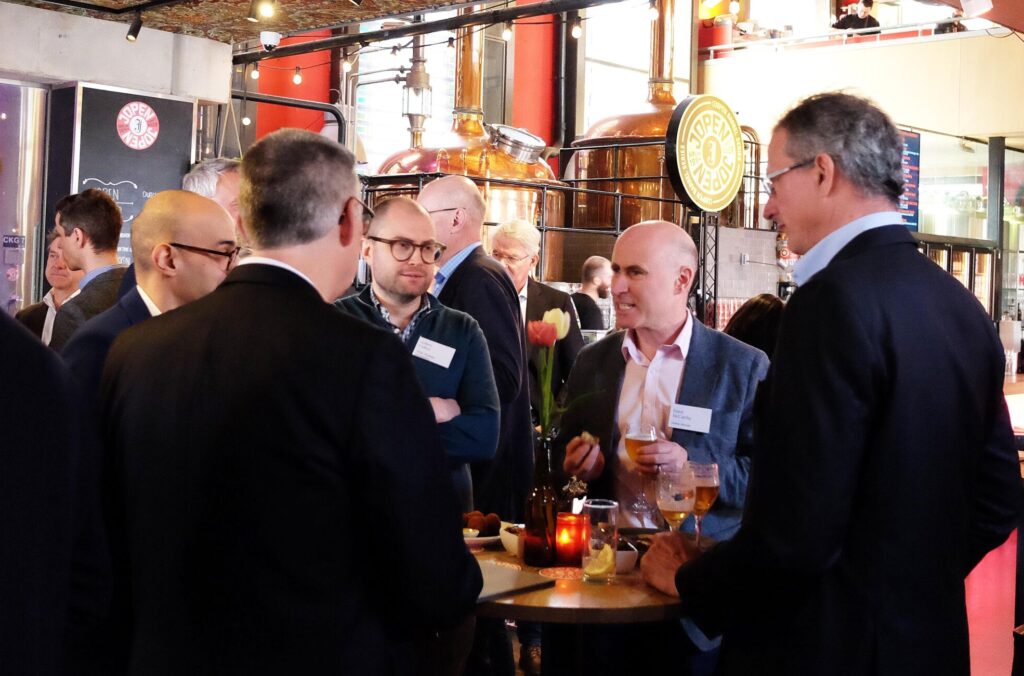
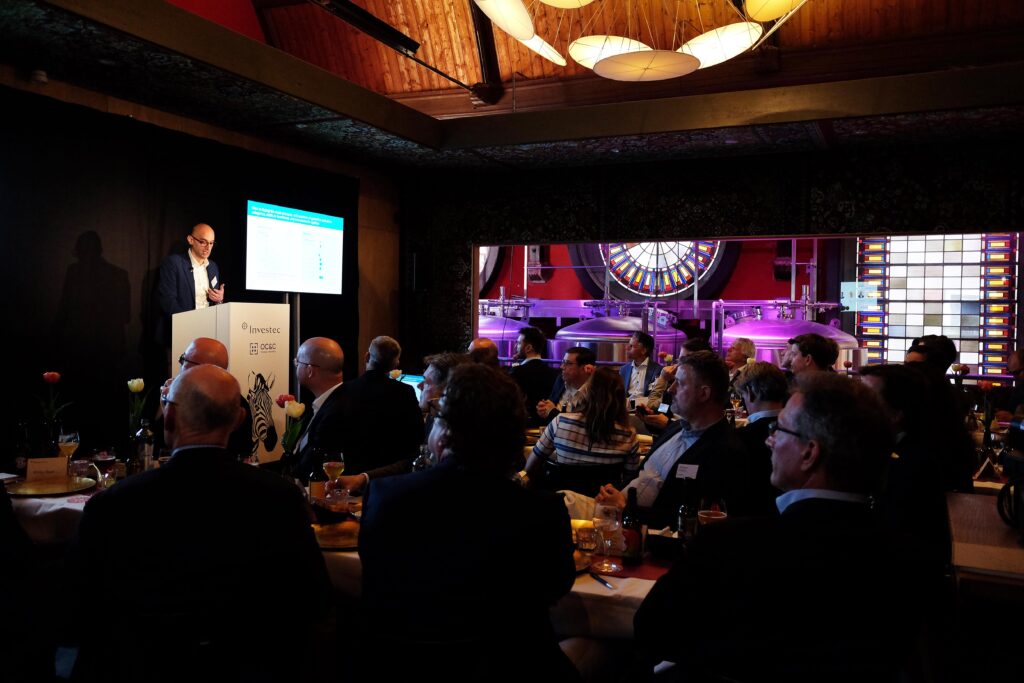
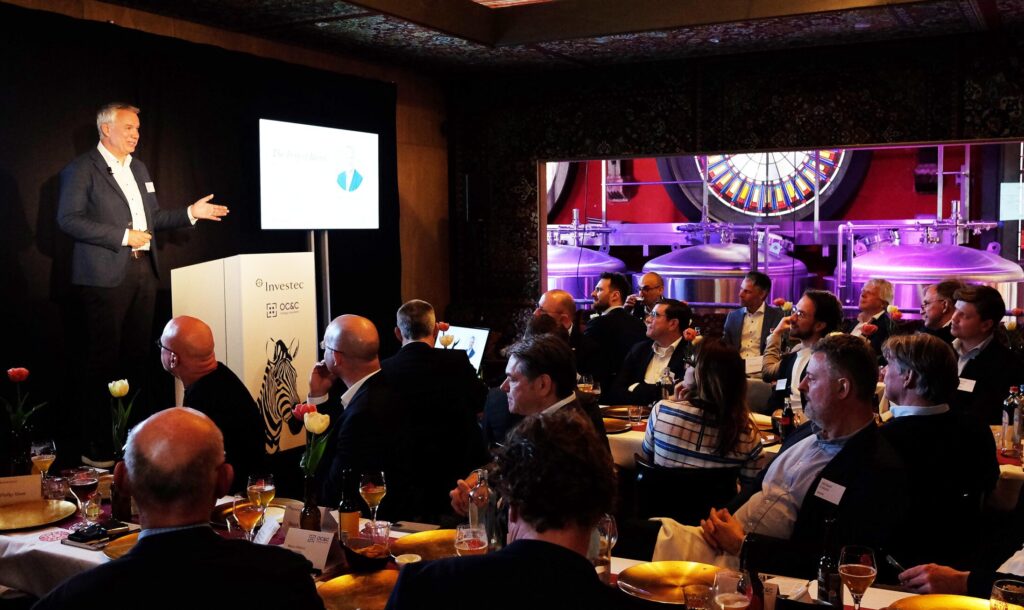
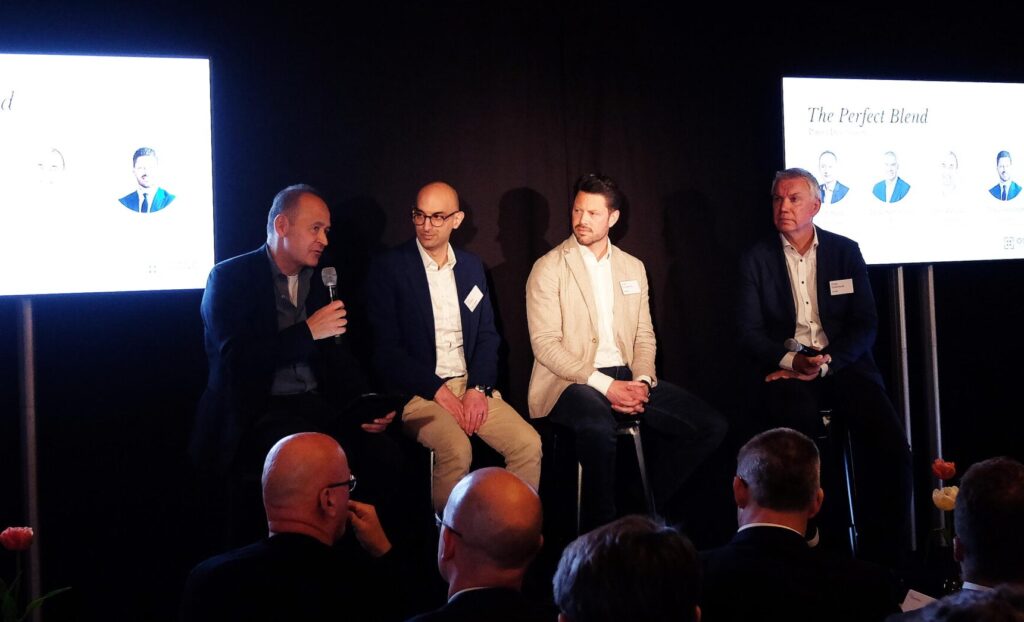
Those themes were at the centre of Investec’s and OC&C’s recent beverage sector conference in Haarlem, the Netherlands, where 40 senior leaders from alcoholic and non-alcoholic beverage companies gathered alongside a select group of private equity investors with portfolio exposure to the sector.
Hosted at brewery Jopenkerk, the event brought together macroeconomic, strategic and operational perspectives to examine where value creation is emerging in an increasingly competitive market.
Resilient demand, evolving behaviours
While the broader economic backdrop remains mixed, beverages continue to demonstrate resilience as a consumer category. Repeat purchasing habits, frequent consumption occasions and strong brand loyalty have historically supported demand through periods of pressure.
Philip Shaw outlined how inflation, energy costs and geopolitical uncertainty continue to shape household budgets and corporate planning. Even so, beverage demand has remained comparatively durable. For operators across the value chain, resilience alone is no longer enough. Agility in pricing, portfolio management and route-to-market execution is becoming increasingly important.
Growth is becoming more selective
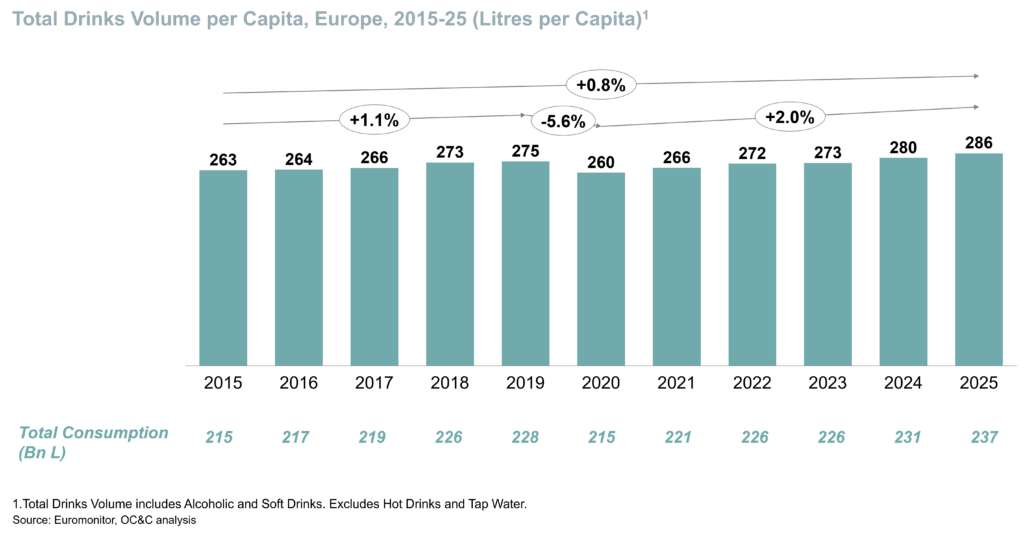
Headline market growth across Europe has been modest in recent years, but performance beneath the surface is diverging sharply.
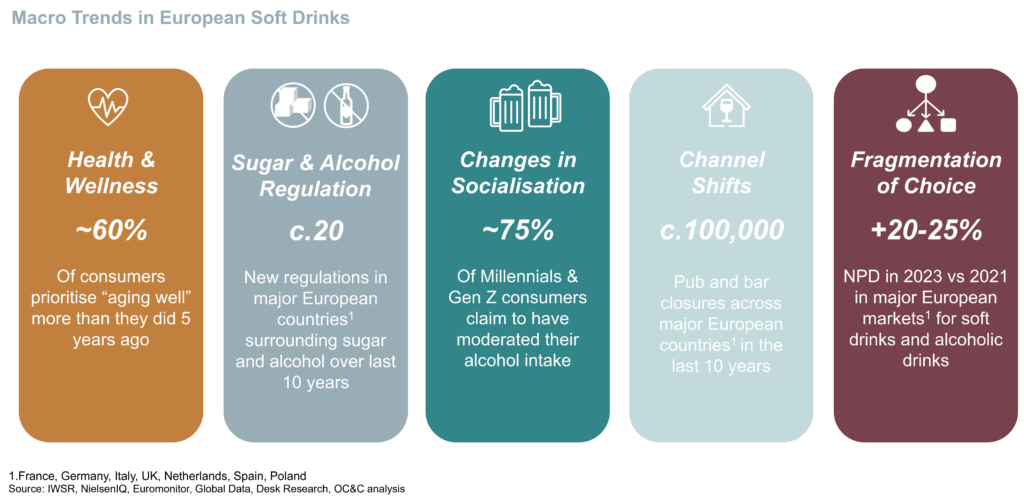
Dan Zubaida highlighted that some of the strongest momentum is now concentrated in categories aligned with changing consumer preferences: functional drinks, hydration, low- and no-alcohol alternatives, convenience-led formats and premium propositions with clear brand identities.
At the same time, more traditional segments face slower growth and greater competitive intensity. The result is a more polarised market, where targeted positioning matters more than broad category exposure.
For management teams and investors alike, the opportunity increasingly lies in identifying specific pockets of structural growth rather than relying on the market to rise uniformly.
Brand strength still drives outperformance
As innovation accelerates and shelf space becomes more contested, brand clarity is becoming a more important source of advantage.
Examples discussed during the event showed that outperforming brands often combine a clear consumer proposition with disciplined execution: strong flavour credentials, wellness relevance, effective new product development, compelling marketing and smart channel strategy.
In categories where barriers to entry are lower and challenger brands can scale quickly, sustained success depends not simply on launching new products, but on building brands with repeat purchase potential and retailer relevance.
Moderation is creating new occasions
One of the liveliest discussions focused on changing alcohol consumption habits, particularly among younger consumers.
Moderation trends are reshaping demand patterns, with many consumers seeking balance rather than abstention. That is supporting growth in alcohol-free beer, adult soft drinks, functional beverages and products designed for social occasions without alcohol.
Rather than representing a simple substitution trend, no- and low-alcohol categories may also expand total consumption occasions by creating new use cases across weekday, wellness-led and mixed-group social settings.
For alcohol and soft drinks players alike, the continued blurring of category boundaries is opening new strategic options.
Health trends and the GLP-1 effect
The impact of GLP-1 medications, including popular weight-management treatments, on the drinks market was another lively topic.
Participants noted that in the near term beverage companies are capturing demand through adjacent “companion” categories such as protein-led products, hydration, reduced-sugar offerings and functional wellness beverages aligned with evolving consumer health priorities and preferences.
Attendees discussed whether innovation in beverage-based GLP-1 delivery formats may, over time, create new adjacent growth opportunities. While still an emerging theme and subject to regulatory and commercial developments, the discussion highlighted how external health trends can influence long-term portfolio strategy and product innovation across the sector.
Scale, M&A and geographic expansion remain key levers
Audience polling during the event revealed the priorities currently shaping boardroom agendas. Product innovation was identified as the most critical growth lever by 39% of attendees, followed by geographic expansion at 32% and M&A at 25%.
Those responses reflect a market in which many companies are balancing organic growth initiatives with selective inorganic opportunities. Acquisitions can accelerate entry into faster-growing niches, while international expansion offers access to new consumer pools beyond domestic markets.
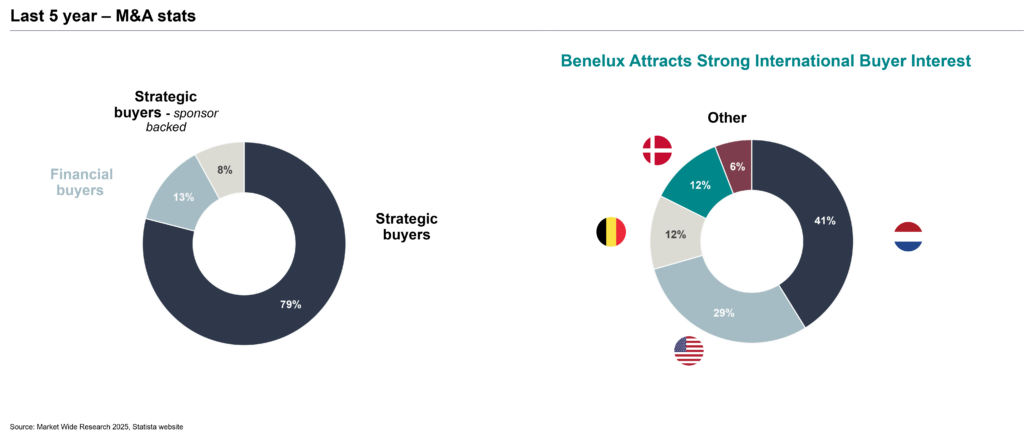
With the European drinks market still fragmented across many subsegments, consolidation is likely to remain an important theme.
Execution still separates winners from the rest
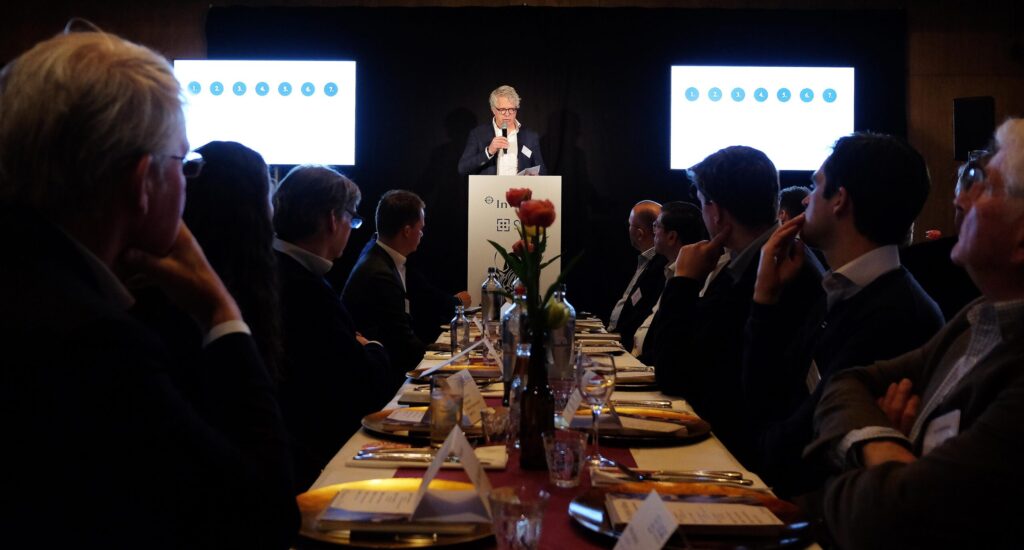
Drawing on A.G. Barr’s experience, Euan Sutherland discussed how growth ultimately depends on consistent execution across commercial, operational and innovation priorities.
That includes investing behind core brands, expanding into adjacent categories, improving channel penetration and maintaining the supply chain capacity needed to support growth. In a market where consumer preferences can shift quickly, pace and adaptability are increasingly valuable capabilities. Strategy creates direction, but execution creates value.
Outlook
The European beverage market remains attractive, but growth is becoming more selective. Companies that can align portfolios to changing consumer needs, build distinctive brands and deploy capital with discipline are likely to outperform.
For investors and corporates, the next wave of value creation may come less from market growth alone, and more from backing the categories, capabilities and brands best positioned to capture changing demand.
Event Gallery

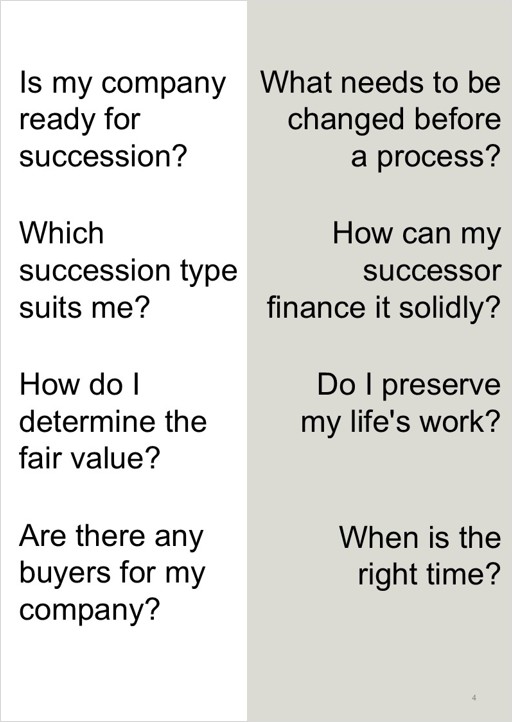
What needs to be considered?
SUCCESS FACTORS
Plan your succession
Succession is one of the most important decisions in the life of an entrepreneur. It requires time, careful preparation and a clear plan.
The handover plan
Define clear goals: measure the extent to which you are financially and mentally ready for the exit and develop an understanding of the value of the chosen succession option.
A transferable company
Create a business model that works without you. This way you will find the best buyer and achieve the highest valuation.
Advisor
Choose advisors with industry expertise who have access to potential buyers worldwide and can implement all transaction options.
Prepare yourself! No success without preparation
PERSONAL READINESS?
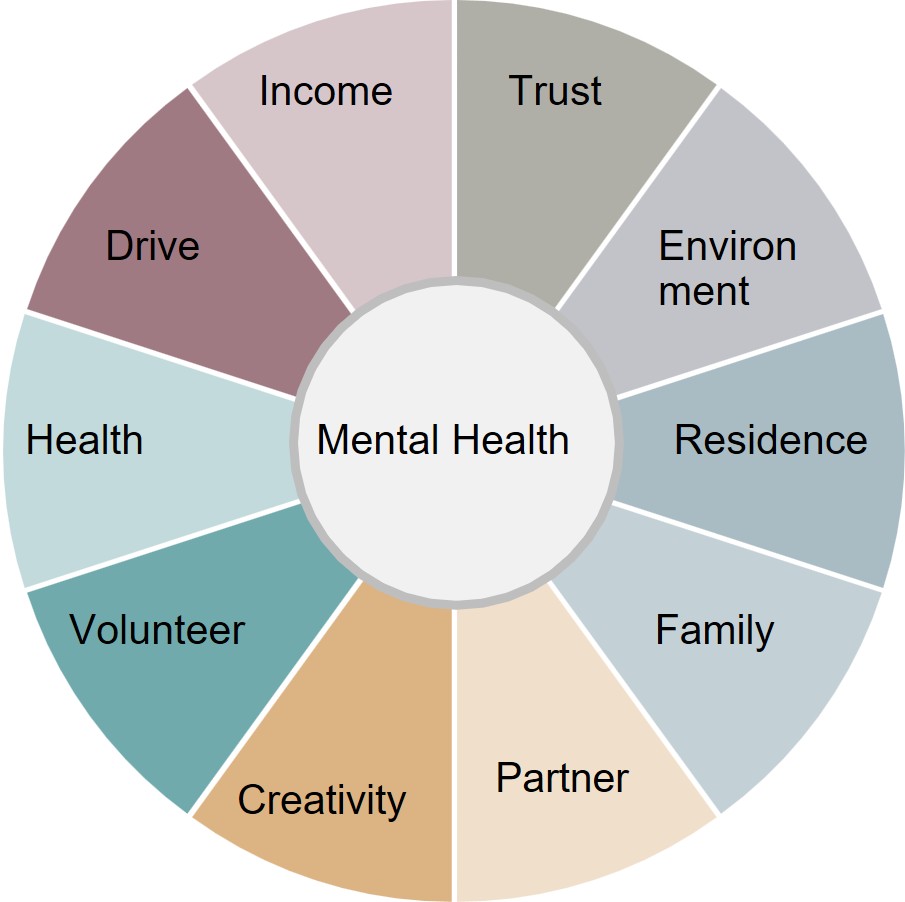
Some entrepreneurs want to continue working in the company, others don’t. How involved are you in the day-to-day business? How do you want to spend your free time after you leave? Can you let go?
Which interests are particularly important to you?
- Continued existence as an independent company
- Long-term and sustainable solution, especially with regard to a secure future for employees
- Financing necessary investments in technology, process efficiency, etc.
- Securing the company’s own asset position and realising the true value of the company
- Handing over the life’s work
- Supply security for family members
- Preservation of reputation as a good owner after the sale
FINANCIAL STATUS?
Entrepreneurs often have a lot of net assets tied up in the company and also like to overestimate the value of their own life’s work. Here it is not always easy, but it always makes sense to be objective.
Diversify your assets, create liquidity
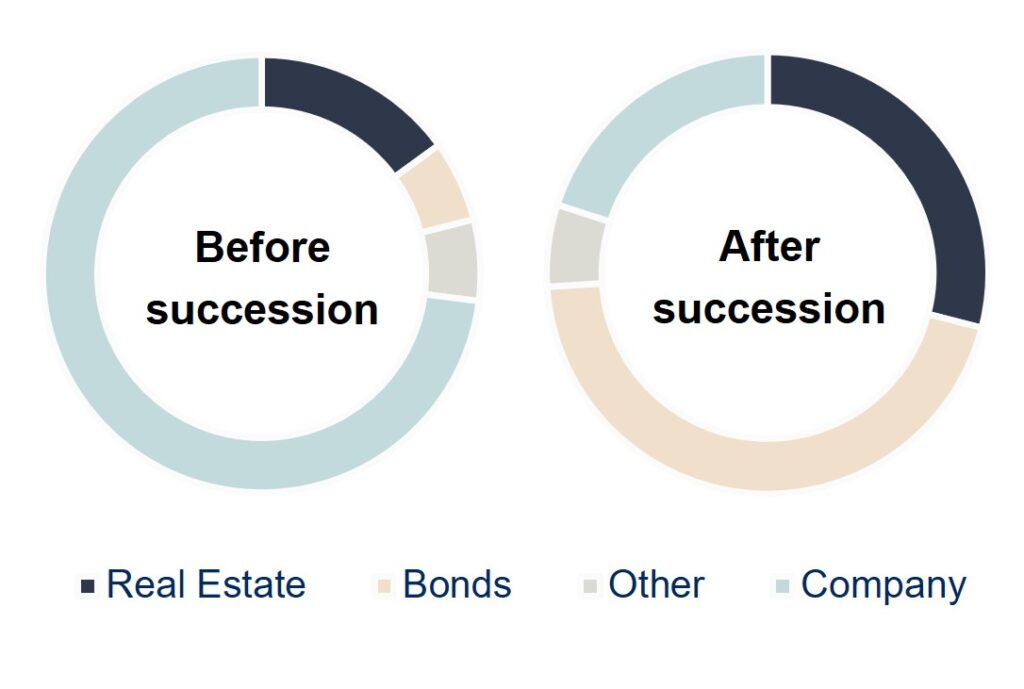
We observe that the value of an active entrepreneur’s own company often corresponds to over 70 percent of his total assets. Other defenses such as shareholder loans, personal liabilities for company loans and rental income from real estate are additionally observable. The lack of diversification, liquidity and dependence on one’s own labour and health represent a risk to be considered with increasing age.
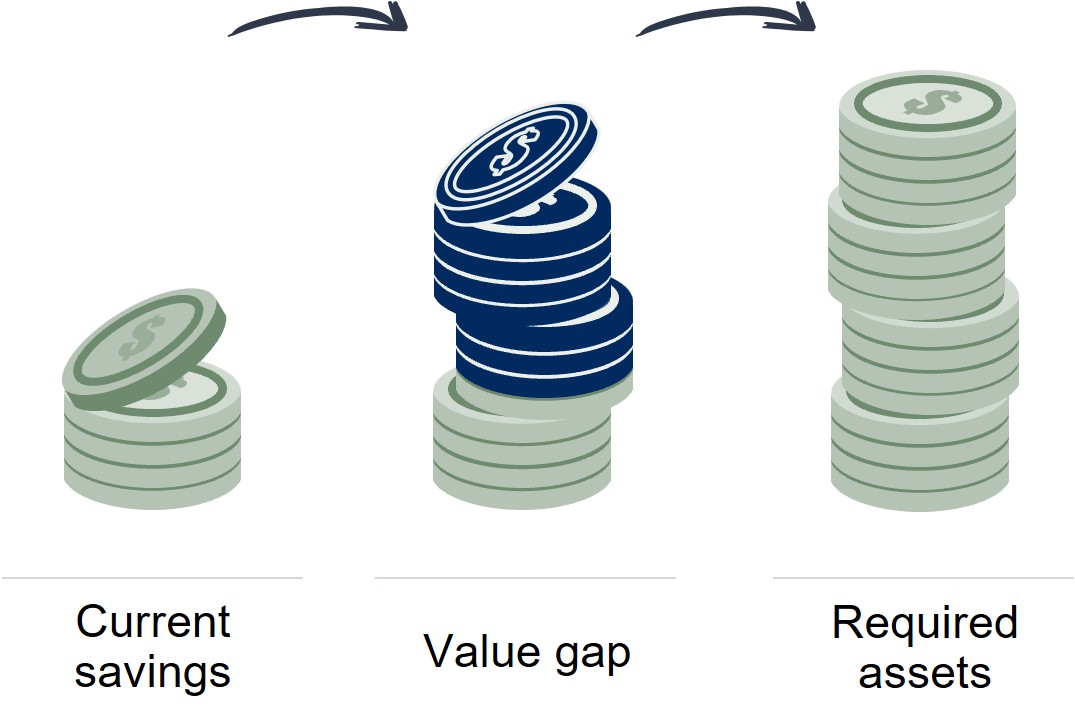
See value gaps in good time
Is it really realistic that in the last stage of your career you create growth in your company that you never managed? Often we hear I’m restructuring sales, I have a great idea, sometimes it works. But often we see entrepreneurs who at the same time take 50 days of holiday that is well deserved, need dividends, take high salaries for lifestyle etc. That doesn’t fit with the desired increase in value. What do you want?
COMPANY TRANSFERABLE?
Medium-sized companies are often strongly influenced by their owners. They are also often the bearers of know-how, have decisive contacts to customers and suppliers and are the person of trust towards the employees. They are the contact person for all major problems.
Transferability checklist
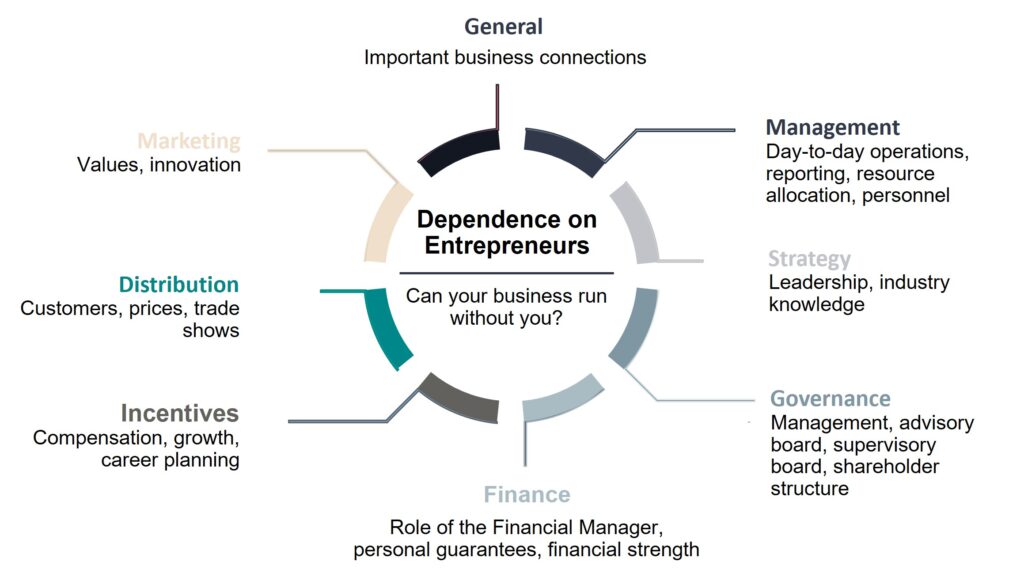
Successful successions require clarity. Often, both outside management and essential second-level functions are missing. However, it is often difficult to incentivize the right managers alone.
CHOOSE SUCCESSION SOLUTION
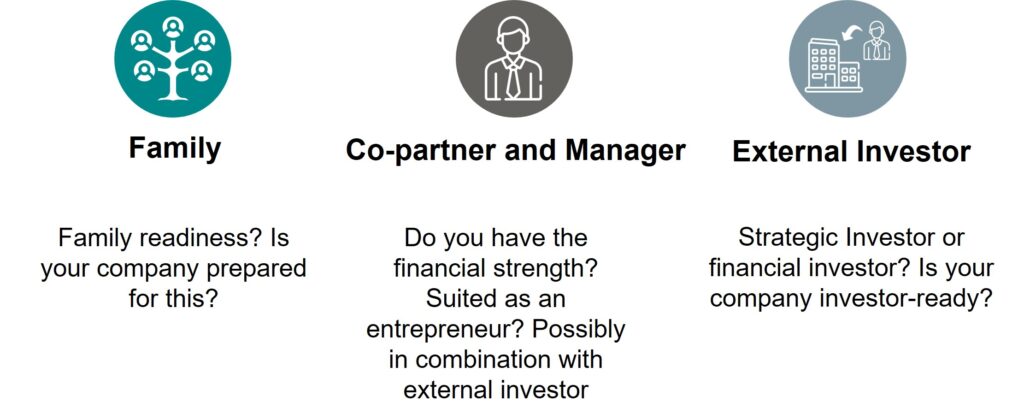
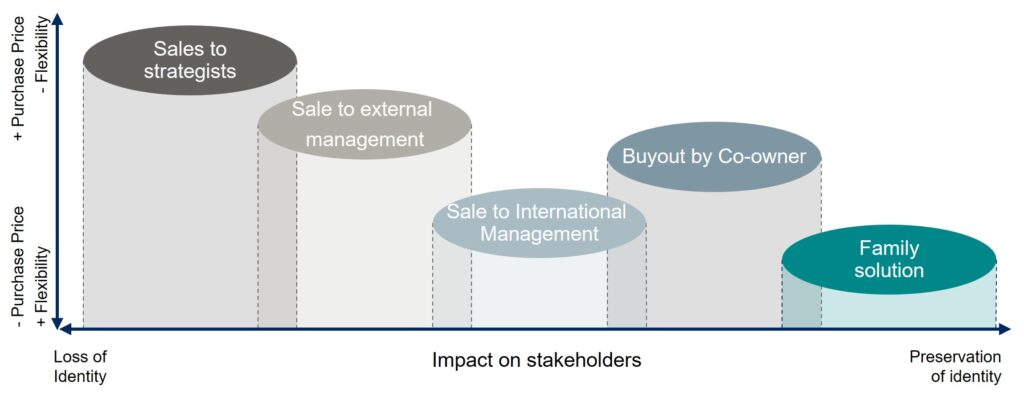
Who you transfer the company to depends on many factors that you should realistically assess before you initiate a process. It is important to do this in an unbiased way and not to follow any “beliefs”, such as the strategist is good, the financial investor is bad, and so on. All options should be considered realistically in relation to the achievement of objectives.
Succession solutions define various advantages and disadvantages
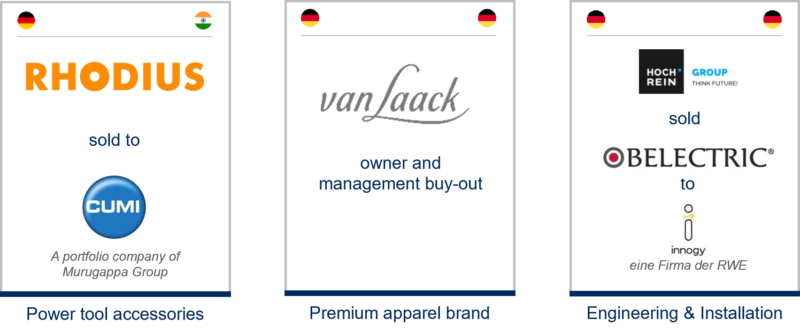
INVESTEC HAS MANY YEARS OF EXPERIENCE AND CUSTOMER RELATIONSHIPS
Would you like to learn more? Please feel free to contact us.
Ervin Schellenberg, Managing Partner: ervin.schellenberg@investec.com
We’re excited to welcome Jens Rutten as Partner in our Zurich office.
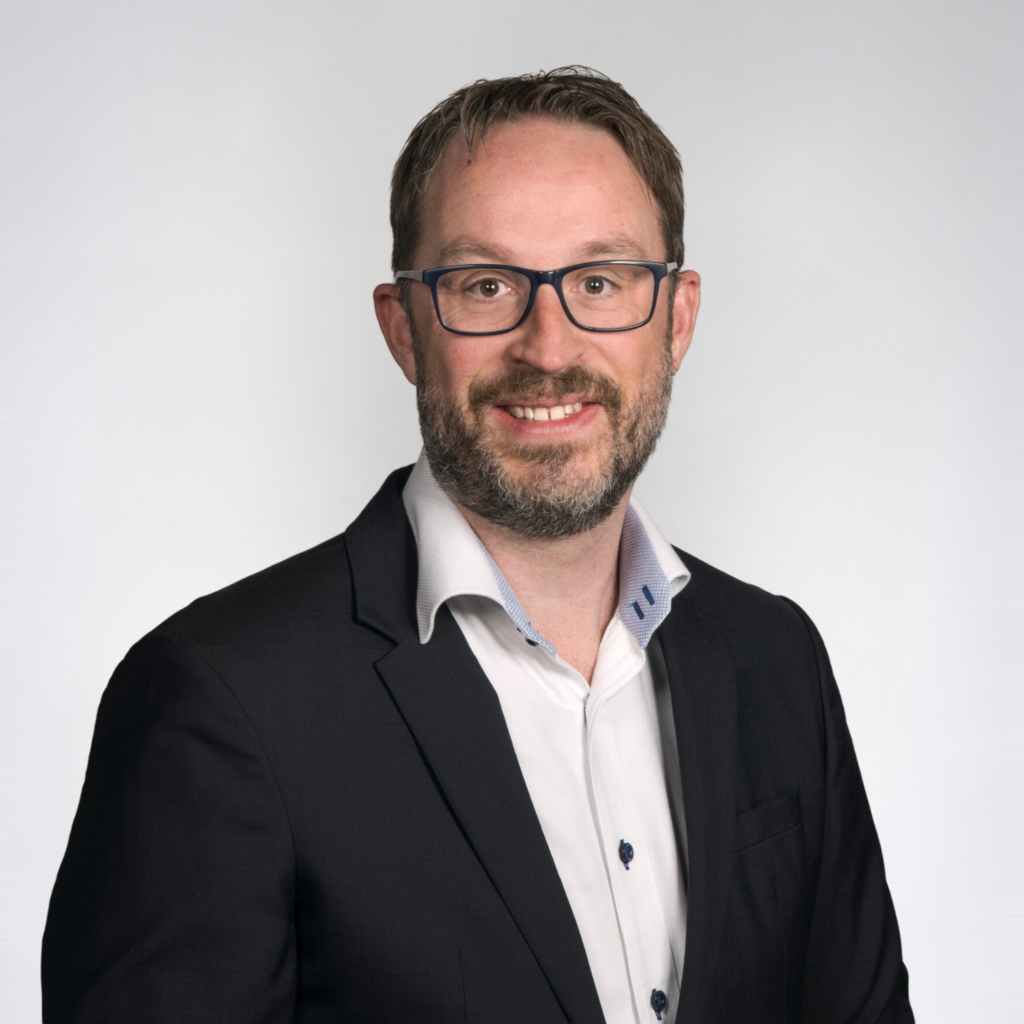
Jens joins from Oaklins, bringing extensive expertise in successions and corporate divestments, with the majority being cross-border deals. He has an outstanding track record in the Industrials, Food & Beverage and Consumer sectors.
His appointment reinforces Investec’s commitment to strengthening its Swiss mid-market team, combining local presence with our global platform of 300+ M&A professionals worldwide.
Contact: Jens Rutten
We are pleased to present you the latest edition of our transaction and valuation update on the food and beverage sector.
With over 300 professionals and ~150 transactions worldwide in 2025, we have a very good overview of the M&A market, valuations and relevant buyer interest in the food and beverage sector.
We recently appeared on the M&A podcast “CLOSE THE DEAL” (a German language format) to discuss the topic of M&A in the food & beverage industry and key considerations for maximizing valuations in a sales process. Click here to listen
Do you have questions regarding M&A or (growth) financing?
We would be happy to schedule a call to discuss further.
We are pleased to present you the latest edition of our transaction and valuation update on the food and beverage sector.
With over 300 professionals and ~150 transactions worldwide in the last two years, we have a very good overview of the transaction market, valuations and relevant buyer interest in the food & beverage sector.
For the second half of 2025, we expect a further increase in transaction activity as well as rising valuations, as market participants have largely adapted to supply chain challenges and inflationary pressures.
We recently appeared on the M&A podcast “CLOSE THE DEAL” (a German language format) to discuss the topic of M&A in the food & beverage industry and key considerations for maximizing valuations in a sales process. Click here to listen
Do you have questions regarding M&A or (growth) financing?
We would be happy to schedule a call to discuss further.
We are pleased to present you the latest edition of our transaction and valuation update on the food and beverage sector.
With over 300 professionals and ~150 transactions worldwide in the last two years, we have a very good overview of the transaction market, valuations and relevant buyer interest in the food & beverage sector.
For the second half of 2025, we expect a further increase in transaction activity as well as rising valuations, as market participants have largely adapted to supply chain challenges and inflationary pressures.
We recently appeared on the M&A podcast “CLOSE THE DEAL” (a German language format) to discuss the topic of M&A in the food & beverage industry and key considerations for maximizing valuations in a sales process. Click here to listen
Do you have questions regarding M&A or (growth) financing?
We would be happy to schedule a call to discuss further.
Click here to download the report.
We are pleased to present you the latest edition of our transaction and valuation update on the food and beverage sector.
With over 300 professionals and ~150 transactions worldwide in the last two years, we have a very good overview of the transaction market, valuations and relevant buyer interest in the food & beverage sector.
For the second half of 2025, we expect a further increase in transaction activity as well as rising valuations, as market participants have largely adapted to supply chain challenges and inflationary pressures.
We recently appeared on the M&A podcast “CLOSE THE DEAL” (a German language format) to discuss the topic of M&A in the food & beverage industry and key considerations for maximizing valuations in a sales process. Click here to listen
Do you have questions regarding M&A or (growth) financing?
We would be happy to schedule a call to discuss further.
Click here to download the report.
For the Food & Beverage M&A market, our colleagues Jürgen Schwarz and Florian Ismer expect a further increase in the number of transactions with rising valuations in the second half of 2025. After several years marked by inflation, rising costs, supply chain issues, and the war in Ukraine, market participants have largely adapted to the supply chain disruptions and inflationary pressure.
Jürgen and Florian were recently guests on the CLOSE THE DEAL podcast, where they spoke with host Kai Hesselmann about, among other things:
- how to maximize valuation in a sales process,
- the current state of the Food & Beverage market,
- how this is impacting M&A deals in the sector,
- the role of strategic buyers, ESG criteria, and cross-border deals,
- how the merger of Capitalmind and Investec took place,
- and what they expect for the future of Food & Beverage M&A.
Click here to listen to the podcast:

DEALCIRCLE was founded to support M&A advisors and buyers in the transaction process and to solve the challenges of inadequate matching. They know from their many years of experience as investors and the exchange with over 1,200 M&A advisors: Unmatched deals and failed transactions cost valuable time and resources. That’s why they rely on data-based matching that combines quality, transparency and innovation. Supported by a strong team of experts, they focus on data-based innovation to optimize sales processes and pave the way for more successful transactions.
The episode is now available on all popular 🎙Podcast platforms:
🟢 Spotify: https://lnkd.in/e_pHV6xG
🔵 Website: https://lnkd.in/egJFcYdB
🟣 Apple Podcasts: https://lnkd.in/e_fVX3-8
🔴 YouTube (Audio only): https://lnkd.in/exTm9iRt
Helen Lucas | UK
Jonathan Harvey | UK

Our 14th report comes at a crucial time for the industry, as GPs get back to the business of selling portfolio companies and raising new funds.
2024 was a tough year for private equity and the overriding view from our survey of 253 general partners (GPs)* is that 2025 will be different.
Our findings show an industry which, despite challenges over the past few years, is resilient, adaptable, and anticipating a more favourable period ahead.
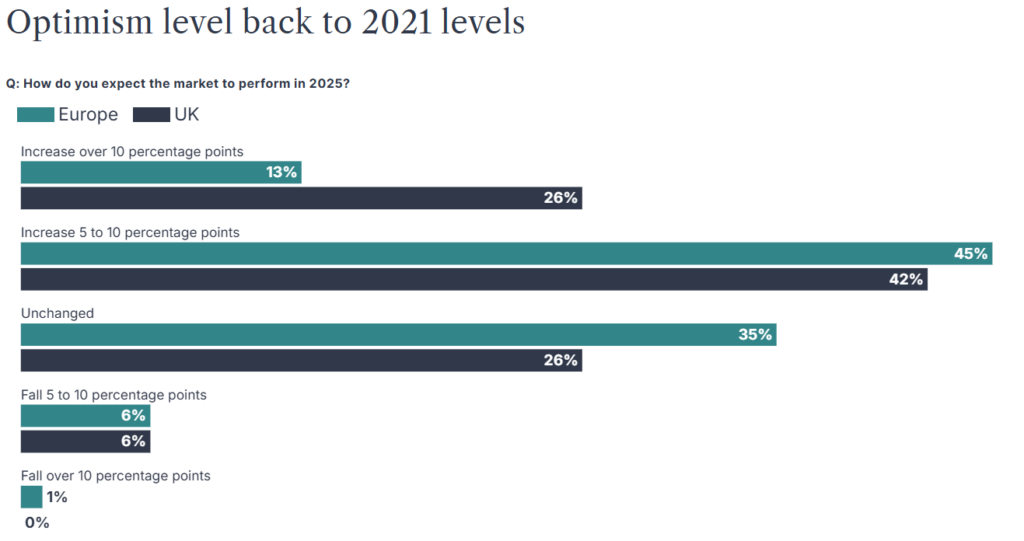
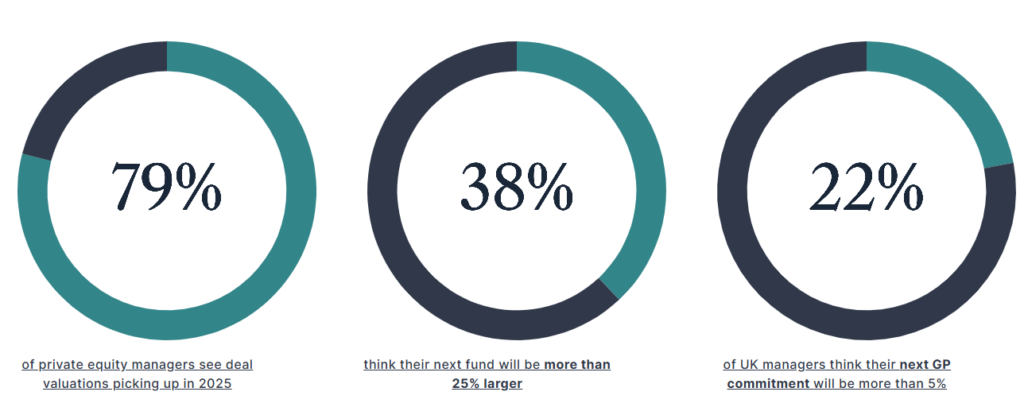
Four in five GPs expect deal valuations to increase in 2025 as interest rates come down, helping to clear exit bottlenecks and accelerate investors’ distributions. The outlook for returns is also brighter, with improvements registered across geographies and fund sizes. Close to two thirds (65%) of investors see returns improving in 2025, up from only 24% in 2024.
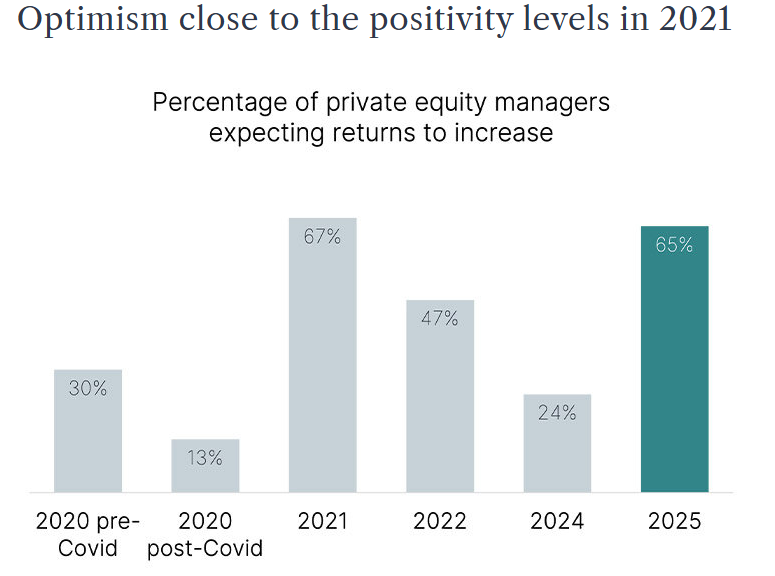
Dealmakers still must navigate ongoing geopolitical and macroeconomic risk, as trade tariff tit-for-tats continue and conflicts in the Middle East and Ukraine remain unresolved. It is a complex market, but the backdrop for M&A is better than it was a year ago.
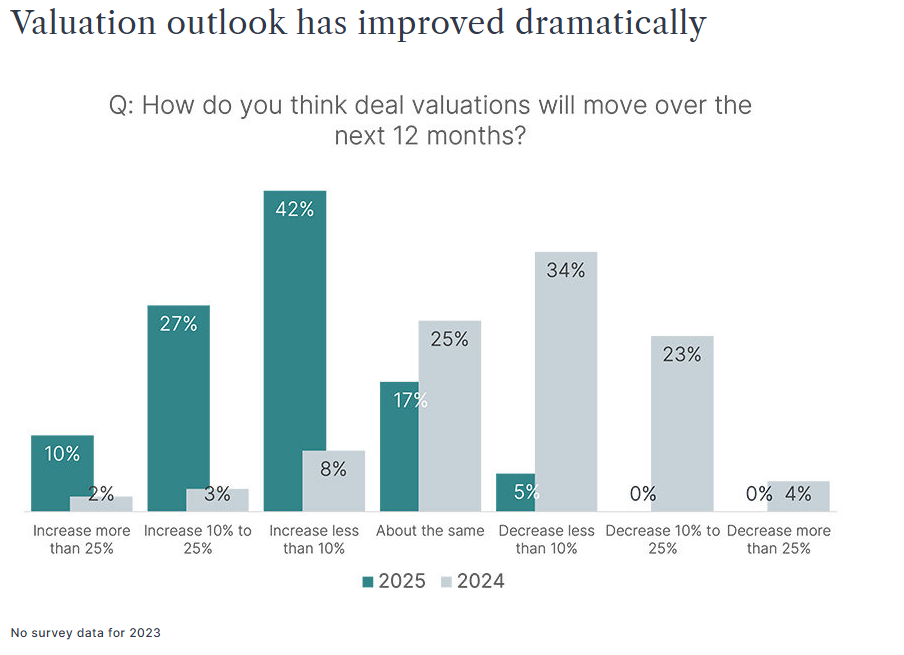
Jump to a section:
Future fundraisings
GP commitments
New world of debt
Innovations and exits
GPs at a crossroads
Future fundraisings
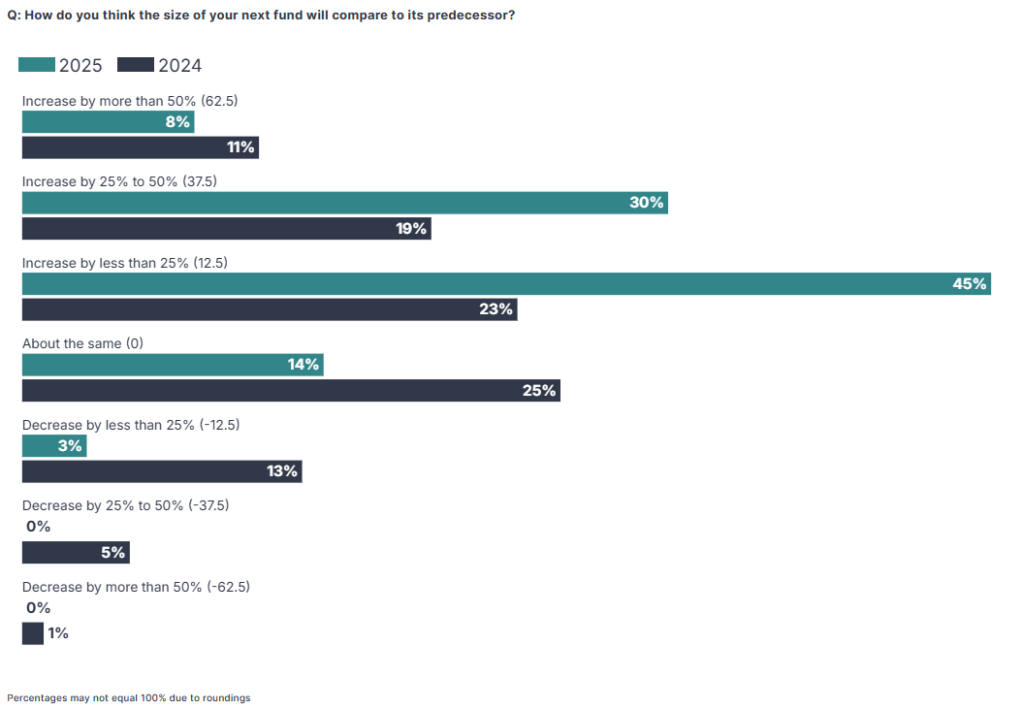
In 2024, 21% of respondents expected a down raise for their next fund: the 2025 research shows only 3% anticipating the same scenario.
There is also a large cohort of super-optimists – 38% expect their next raise will be a blockbuster increase of 25% or more over their previous fund.
Limited partners (LPs), however, are expected to remain highly selective in 2025. In 2024, according to PEI figures1, the ten largest funds to close in 2024 all secured more than $10 billion and absorbed more than a fifth of total fundraising allocations while a Coller Capital LP survey2 showed that the top focus for 98% of investors is that a new manager has a team with a strong track record.
Our survey findings tie in with this theme – close to a third of respondents (31%) expect an increasing number of GPs to move into wind-down. However, this does not mean the opportunity for new managers has passed; just 26% agreed that “very few new GPs will be launched”.
Although fundraising conditions are improving, LPs continue to consolidate GP relationships, focusing on managers of scale and mid-market specialists with differentiated investment strategies and exceptional returns.
Fundraising optimism surges
Jump to a section:
Deal valuations
GP commitments
New world of debt
Innovations and exits
GPs at a crossroads
GP commitments
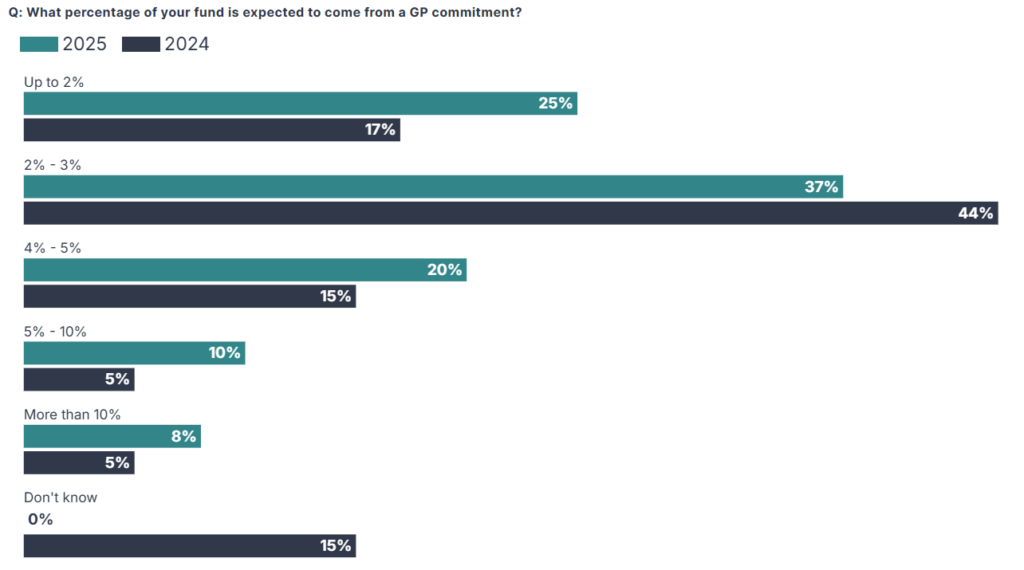
The survey shows GPs are planning to up their commitment from the typical 2% to 3% to strengthen alignment with investors and boost fundraising momentum.
- One in five GPs expect to commit 4-5% of their next fundraise.
- One in ten expect their next commitment to be 6-10%.
- 8% expect to commit more than 10% in 2025.
Managers are taking a blended approach to financing these higher commitments including existing resources, reinvesting carried interest and external debt, which is gaining favour. Most are using two options to fulfil their obligations, with 13% expecting to use three options.
Where are commitments highest?
The findings reveal interesting regional variations when it comes to GP commitments.
UK managers are more likely to be asked for a big commitment: 22% were asked for more than 5% versus just 8% of managers in Europe. Managers in France, meanwhile, seem to be asked for a particularly slim commitment, with more than half expecting to be asked for less than 2%.
Overall, a significant minority of investors expect to up commitments in the future.
Jump to a section:
Deal valuations
Future fundraisings
New world of debt
Innovations and exits
GPs at a crossroads
New world of debt
Debt markets are open for business with a substantial number of new lenders entering the market to provide GPs with enhanced financing optionality.
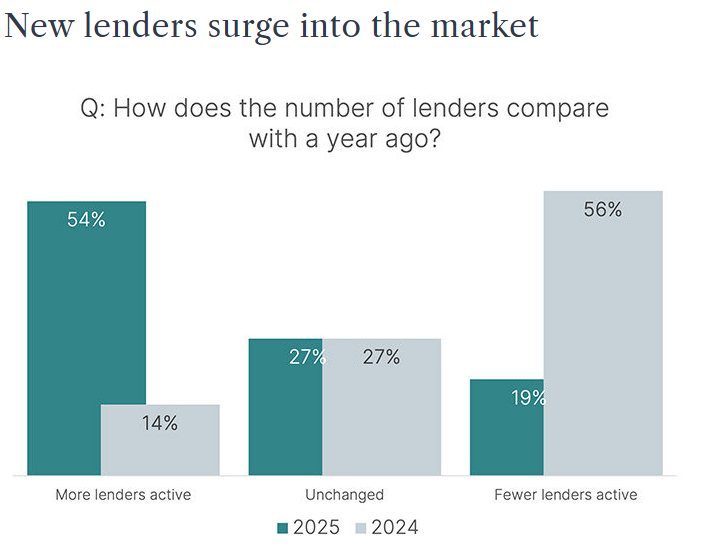
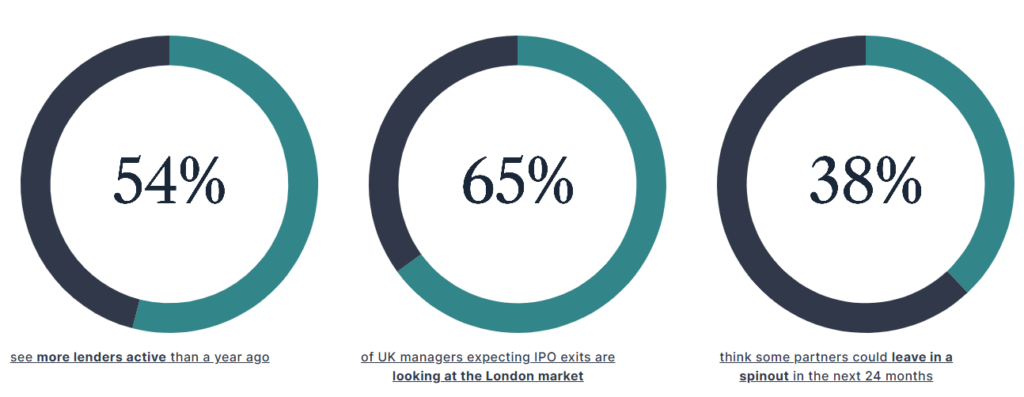
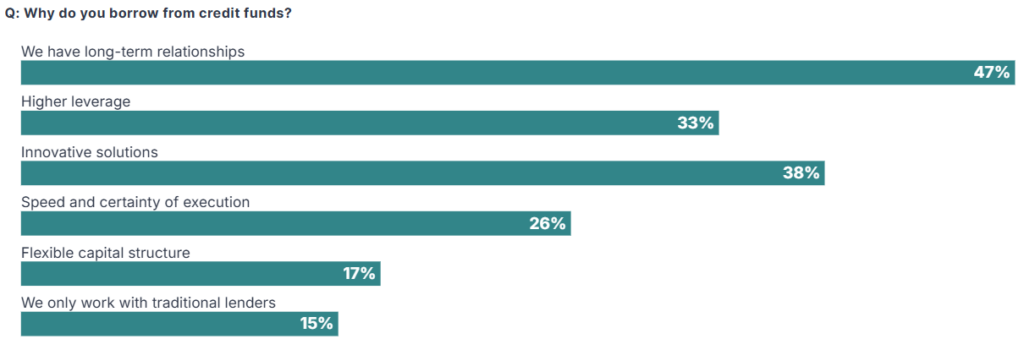
More than half (54%) of GPs say they will have new lenders to work with in 2024. This marks a shift from last year’s findings, when 56% of respondents saw a contraction in new lender activity. The majority of GPs who took part in our survey are working with credit funds and the top three reasons cited for working with a private credit included higher leverage levels and innovative financing solutions.
UK managers are hopeful that increasing competition will result in looser terms, with 54% of UK managers reporting either private debt narrowing margins or terms loosening generally. Outside of the UK, however, GPs are more cautious, with only 35% forecasting looser terms.
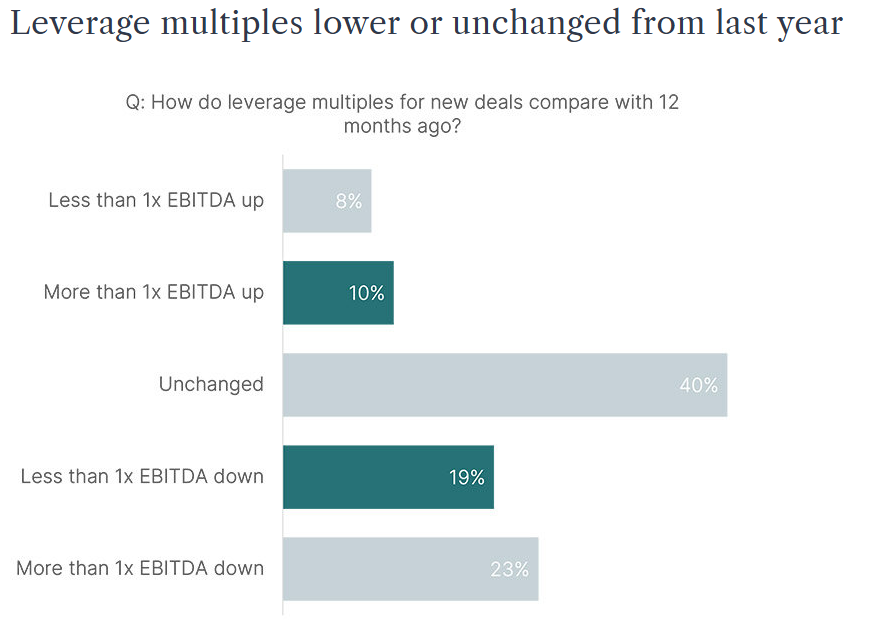
Despite these expectations, lenders are remaining disciplined. Well over a third of respondents (43%) report that leverage multiples have lowered from a year ago.
Competition is fierce for trophy assets in certain sectors, and these companies will be able to negotiate more favourable terms, but lenders will be highly selective.
Interest rates may have come down, but the risk-free rate remains elevated when compared with recent years, making additional leverage costly to service. Debt is available (European leveraged loan issuance climbed by more than 90% in 20243 and private debt managers have $126.4 billion of dry powder available to invest4), but the survey findings on leverage multiples show that capital structures remain relatively conservative.
Covenant flexibility
Even as interest rates have come down, GPs have still had to work hard to protect portfolio companies.
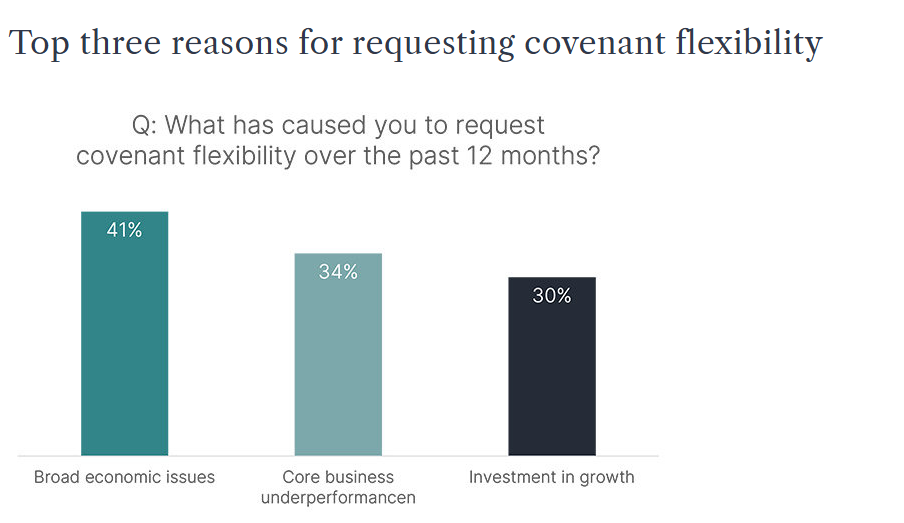
Some 87% of respondents say they have gone to lenders to request covenant flexibility for one or more portfolio companies. Broad economic issues (cited by 41%) and business underperformance (cited by 34%) are the main reasons for requesting flexibility.
Interestingly, close to a third of respondents (30%) have requested covenant flexibility to fund growth as GPs hold some portfolio companies for prolonged periods.
“We will always be open to a conversation about covenant flexibility. If a business is growing and wants to re-lever, or the sponsor wants to hold an asset for longer, loosening covenants can have a positive impact on supporting growth.” – Helen Lucas, Co-Head of UK Origination, Direct Lending, Investec
Lending landscape
As more lenders entered the private equity space, there has also been increased use of some newer debt products. Innovation continues; survey respondents expect ESG-linked lending, fund-level finance and asset-based lending to increase market share.
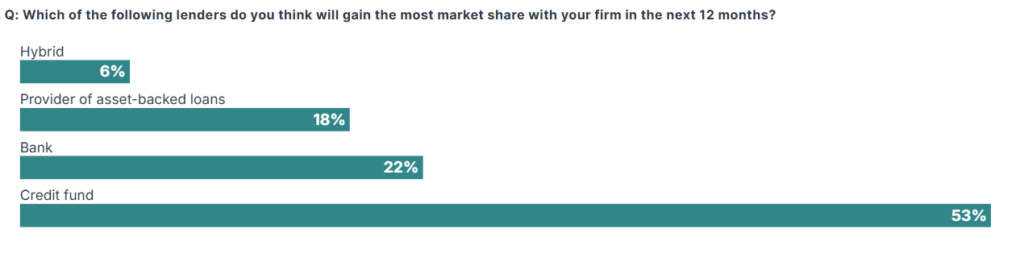
Around half of the respondents expect credit funds to do more business with their firm during the year, but banks remain highly competitive; almost a quarter (22%) say they expect to place more lending with banks in the next 12 months. Hybrid capital is gaining particular traction for smaller managers with assets of $250m or less, with a quarter of these saying this type of lender will gain the most market share at their firm in the next year.
NAV lending
Net asset value (NAV) finance has proven particularly popular with managers in an environment where liquidity has been constrained.
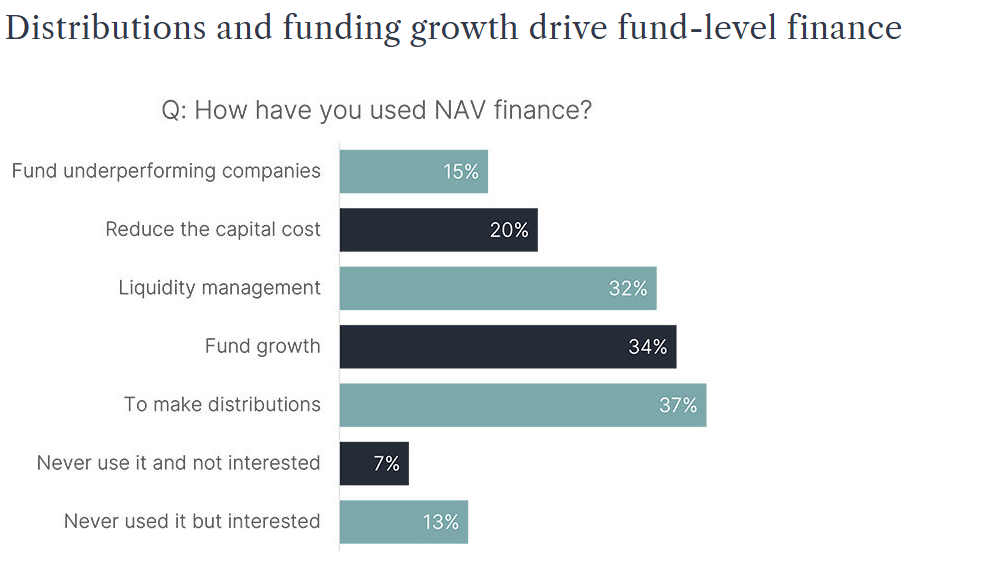
Four in five GPs said they used NAV finance in the last year, with distributions the most-cited use case (37%).
Uptake of NAV finance looks set to continue accelerating, with two thirds (65%) of respondents who had not used NAV finance previously saying they were interested in taking up NAV loans.
Deployment and operations
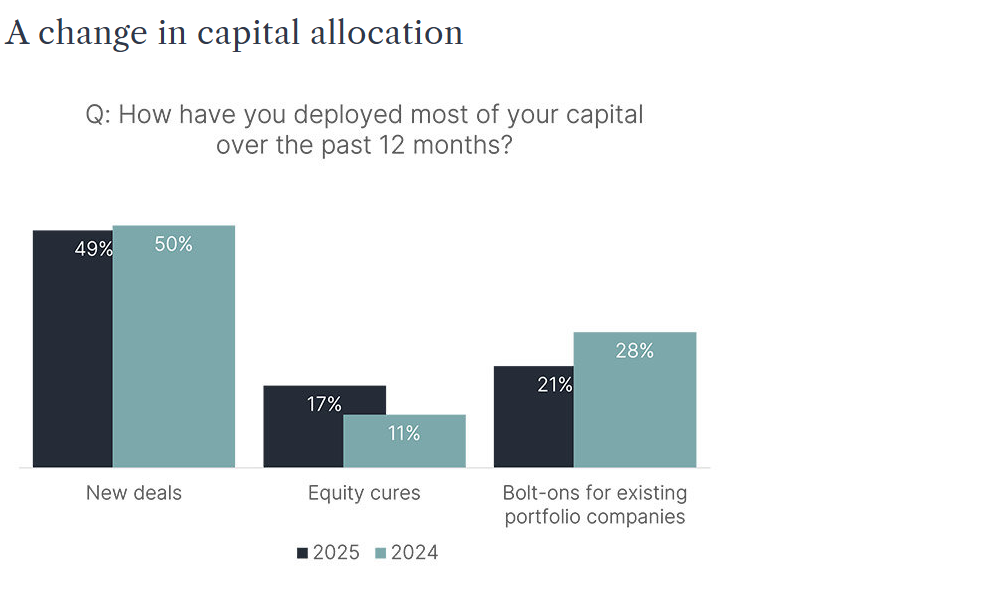
Less than half of GPs (49%) have deployed most of their capital in new deals during the past 12 months, with just over a fifth (21%) focusing efforts on smaller bolt-on acquisitions to support buy-and-build portfolios – down from 28% in our previous survey. An increase in the number of GPs deploying most of their capital in equity cures – up to 17% from 11% last year – further highlights the tough backdrop for managers during the past year.
The improving outlook means that the next 12 months should be more favourable for deployment. Somewhat surprisingly, the public-to-private outlook is mixed and not much changed from last year despite low stock market valuations, most notably in the UK5. Some 50% say they expect to look at more public-to-privates but 40% expect to look at less.
Big-ticket take-private deals during 20246 have ensured that P2P remains on the managers’ radars and may result in activity in this area.
“Private equity managers are ready to deploy, but it is taking much longer to originate deals. GPs will be forming relationships with management teams up to three years ahead of a formal process. During the last two years we have seen a number of processes fall over, and it does take time to rebuild before businesses come back to market.” – Kate Gribbon, Head of Financial Sponsor Coverage & Origination, Investec
Jump to a section:
Deal valuations
Future fundraisings
GP commitments
Innovations and exits
GPs at a crossroads
Innovations and exits
One of the single biggest challenges for private equity managers through the rising interest-rate cycle has been to sell portfolio assets at valuations that deliver adequate returns.
In tepid IPO and M&A markets, GPs often opted to sit tight rather than offload assets at lower-than-hoped-for multiples. Hold periods remain above long-term averages, with the backlog of private equity-backed companies sitting at record levels7.
This has had repercussions on fundraising – slowing distributions to LPs have limited their ability to allocate to new funds.
Managers looking at exits will explore all options to crystallise returns, with the survey findings ranking expectations for different exit routes in a narrow band.
More than half of GPs (54%) think trade sales will be the busiest exit route during the next 24 months. But after a long barren spell the IPO is back in the frame again, with the typical manager optimistic that two portfolio companies could be an IPO candidate over the next two years.
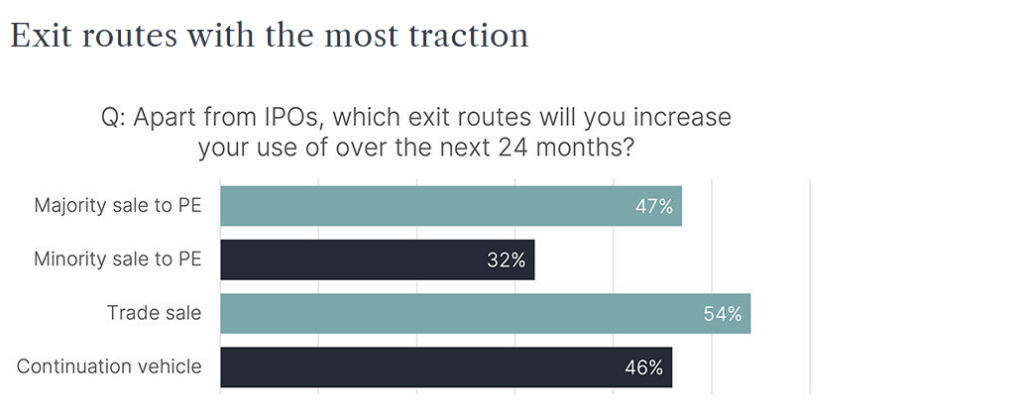
The squeeze on other exit routes meant there has been greater use of continuation vehicles which are here to stay as a mainstream exit path: more than 40% of GPs say a continuation fund will be an exit option they are more likely to use in the next 12 months.
The UK IPO question
Private equity-backed portfolio company IPOs haven’t always been crowd-pleasers, particularly on UK markets8, but the survey findings show managers warming to the UK stock market – albeit with some reservations.
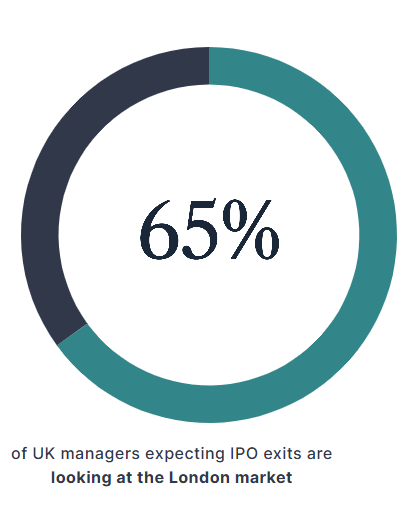
Some 65% of UK managers who expect to list a portfolio company in the next two years consider the UK a potential venue – although they will also look at other venues such as Amsterdam or New York.
The size of the manager and portfolio is a factor in stock market selection. Larger managers with bigger assets to float think a UK IPO is less attractive, indicating that larger IPOs are considered more challenging for UK public markets.
Jump to a section:
Deal valuations
Future fundraisings
GP commitments
New world of debt
GPs at a crossroads
GPs at a crossroads
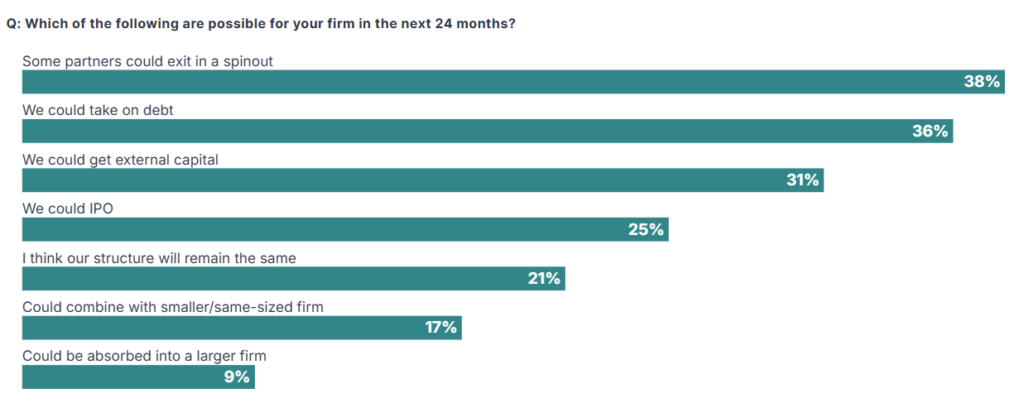
According to Pitchbook figures, GP-to-GP M&A reached record highs at the end of 20249 and the survey points to a long runway of further deals, with 79% of respondents expecting some kind of change to their firm’s structure.
In addition to GP consolidation deals, new teams are forming in spinouts and minority stake investment is proliferating.
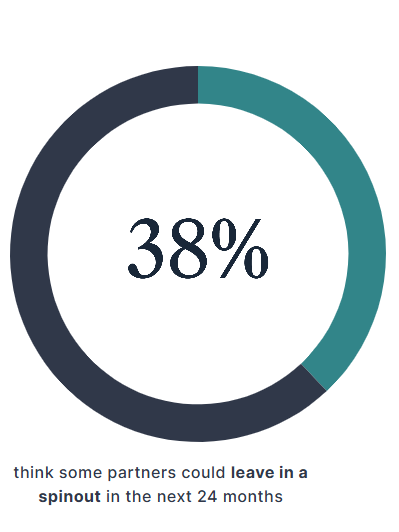
Indeed, 38% of GPs say some partners could leave their firm via a spinout in the next 24 months. This is reflective of a tougher fundraising environment, particularly for smaller managers with assets under management (AUM) below $1bn, where spinouts are more likely as junior partners explore other options when fundraisings stall.
Getting ready to capture growth
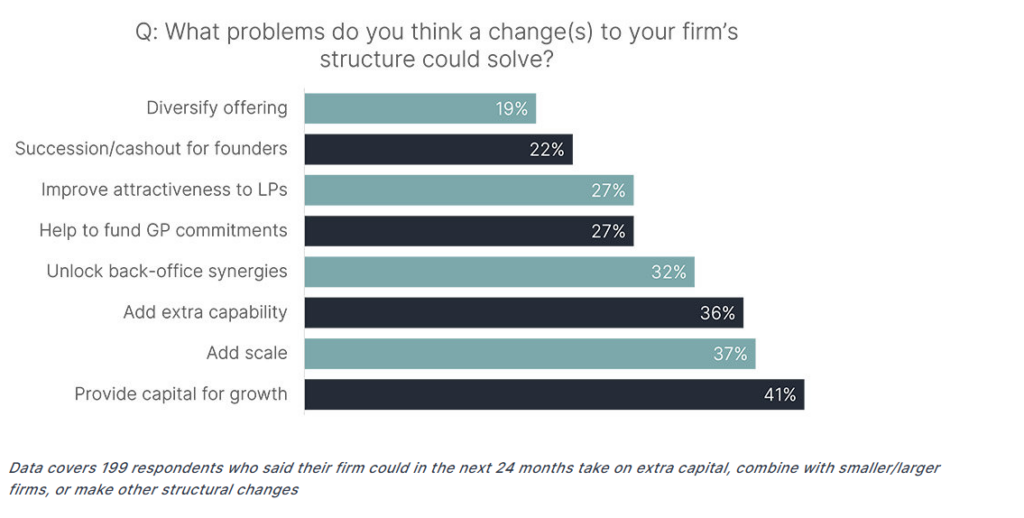
Historically, the main driver for taking on third-party capital or merging with another firm was likely to unlock liquidity and facilitate succession. While this reason was selected by 22% of respondents, the majority see a transaction as a tool to provide capital for growth or expand service lines and scale.
Ideally, twice as many managers say they would like to be the acquirer rather than target in a consolidation scenario.
What is also worth noting is that when it came to continuation vehicles, our survey showed that 40% of GPs think there will be more single-asset continuation vehicles over the next 24 months and over 25% thought they are likely to become more specialised. Single-asset continuation vehicles allow GPs to remain invested in a prized portfolio company and could potentially lead to a spin-out by a manager.
Jump to a section:
Deal valuations
Future fundraisings
GP commitments
New world of debt
Innovations and exits
* Demographic info
This report is based on 253 responses to an online survey conducted between 7 January and 22 January 2025. Respondents were sourced from a prequalified panel and no PE firm was represented more than once.
178 were based in the UK, 75 in Europe including 22 in Germany, 14 in Spain and 11 in France. Some 34% of respondents were investment directors, other eligible job titles were CFO, VP of finance, director of finance, principal and manager of finance/investments.
Footnotes:
2 https://www.collercapital.com/41-barometer-winter-2024/
4 https://www.muzinich.com/opinions/corporate-credit-outlook-2025-private-markets
6 https://www.ft.com/content/ec9aa2ae-f56a-4373-8c4b-88effc01a25d
7 https://www.mckinsey.com/industries/private-capital/our-insights/global-private-markets-report
9 https://pitchbook.com/news/articles/blackrock-hps-purchase-record-year-gp-consolidation
The Food Industry recovers from Inflation Shock: Time for a Sector M&A Update
The food industry has digested the inflation shock: the fierce price wars between retailers and producers have lost their edge and producers once again have more transparency about their business, their margins and their prospects. This makes it possible for many to think about M&A options again, whether in terms of selling companies or as buyers looking for suitable targets.
In this episode of ‘What’s up, Corporate Finance?’, Investec Managing Partner Jürgen Schwarz and Director Florian Ismer talk to financial editor Michael Hedtstück about the potential, challenges and outlook for the food M&A sector.
The key questions:
- Who are the ‘early movers’ currently in the food deal pipeline?
- Who is available on the buyer side?
- What are the sticking points in due diligence and value creation of food assets?
- And what is the market outlook for 2025?
Click here to listen to the podcast:
‘What’s up, Corporate Finance?’ is a blog & podcast of the Finance Think Tank Network, which regularly analyses all topics of the corporate finance world with expert knowledge and journalistic passion.
Listen to the 🎙Podcast, which can be found wherever podcasts are available:
🎧 Web-Player: https://lnkd.in/e2aH2ecT
🎧 Apple Podcasts: https://lnkd.in/ejF6HqVZ
🎧 Spotify: https://lnkd.in/eC5cdsrW
🎧 Amazon Music: https://lnkd.in/eaXz4RDF
🎧 Deezer: https://lnkd.in/eif2s6zK
Here you can find another ‘What’s up, Corporate Finance?’ episode, in which Investec Managing Partner Ervin Schellenberg and Thorsten Gladiator talk about opportunities for buy-and-build strategies in the current market situation.
Once again this year Investec, together with ABN Amro and PwC, organized the 14th edition of the inspiring food event: Food for Growth. The event took place at the beautiful external location VRIJ in Culemborg where chairman of the day Joost Hoebink enthusiastically welcomed the group of entrepreneurs, CEOs and CFOs within the Dutch Food & Agro sector.
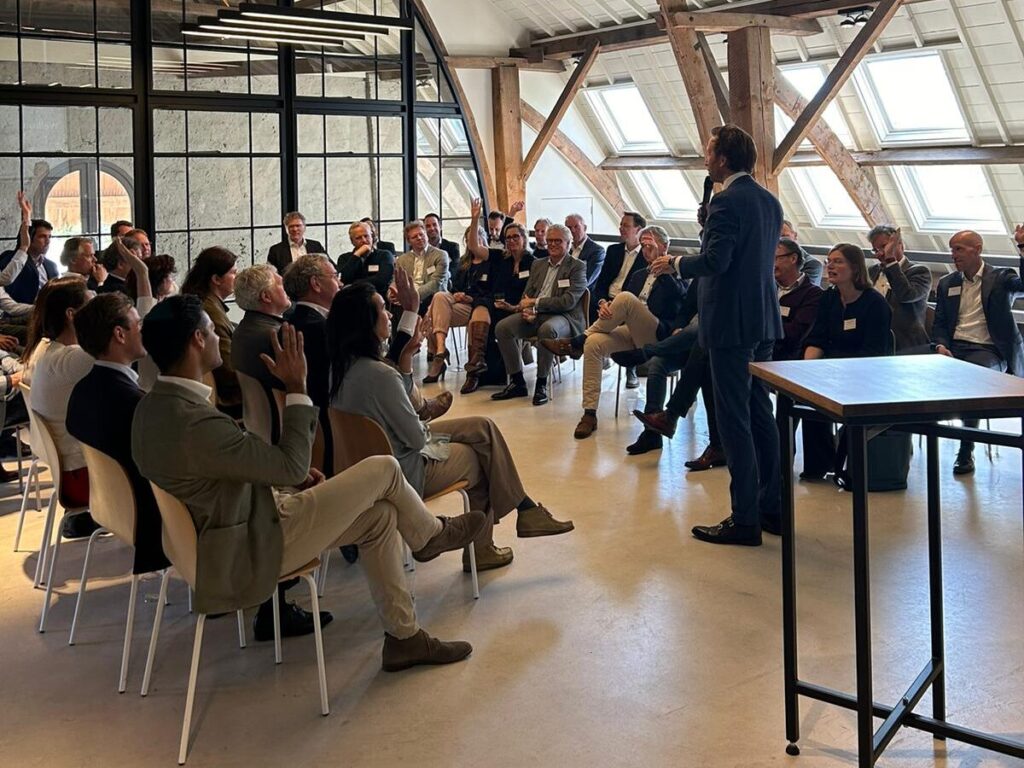
The event focused on “impactful sourcing” in an unstable and troubled world. Central themes were how to ensure food supply in times of geopolitical instability and climate change and what are the pros and cons of local versus global sourcing. Also discussed was how to make the food chain more transparent and sustainable.
External speakers from reputable companies provided food for thought:
Louise van Schaik (Head of Unit EU & Global Affairs bij Clingendael) deelde een inzicht dat ons allen raakte:
“The geopolitical situation we are in now is causing de-globalization and that makes trade flows extra vulnerable.” She added, “The current geopolitical turmoil is leading to protectionism with the result that countries such as China and also the EU are considering how to ensure their own food security within national borders.
Volkert Engelsman (founder of Eosta) emphasized the importance of neat math. He explained that in the new economy, profit is only really profit if the planet and society also win. That will soon be a prerequisite for meeting the expectations of your accountant (CSRD), bank (climate and biodiversity stress tests), customer, NGOs and other stakeholders.
‘Nothing wrong with profit but then do the math properly and don’t secretly pass on the social costs to taxpayers or future generations.’
Nadia Menkveld (sector economist at ABN AMRO) reminded us of the vulnerability of our food industry in light of climate change:
Our food industry is vulnerable to climate change.
After the official program, there was room for informal drinks, including vegan & organic bites and socializing with industry peers – a meaningful conclusion to an inspiring day.
If you couldn’t attend but are curious about the event, contact Jasper Erhardt for more information or for next year’s event.



Interview
As we enter 2024, the M&A landscape shows signs of recovery, albeit cautiously.
In the episode of the February 20, 2024 of No Ordinary Wednesday, Jeremy Maggs in conversation with Investec experts Jürgen Schwarz, Marleen Vermeer, and Kilian de Gourcuff, Investec’s Head of Cross-Border Finance and International Advisory Charles Barlow, on what key sectors, trends and risks to keep an eye on in 2024.
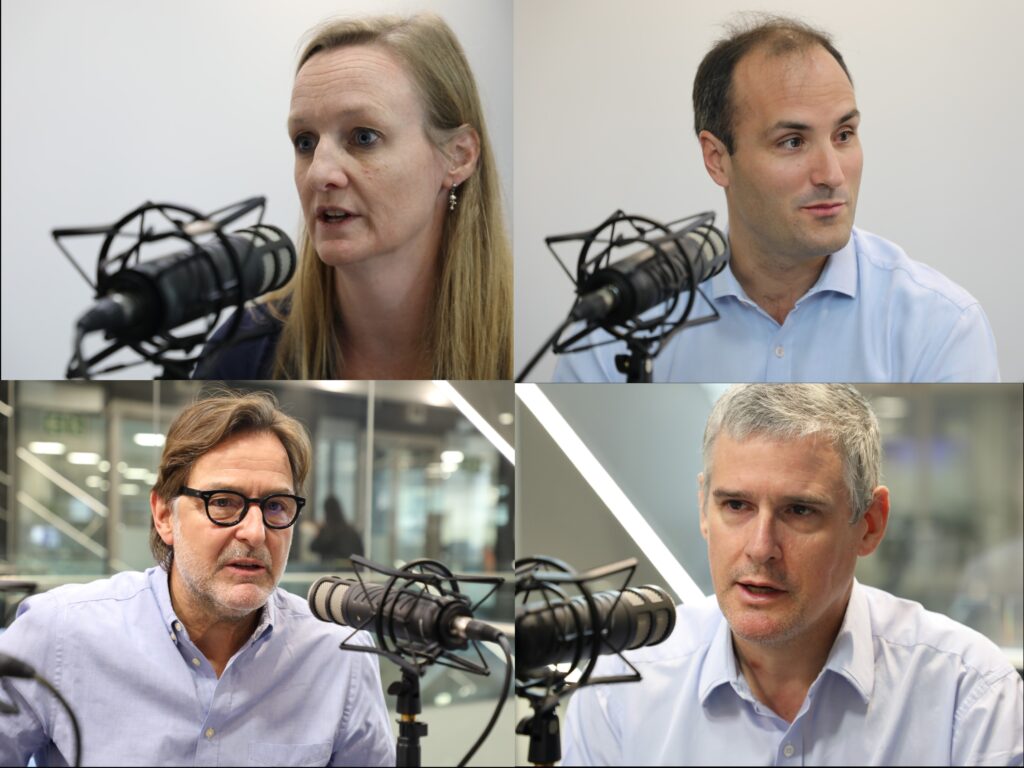
Click below to listen to the podcast:

Where does opportunity lie for dealmaking in 2024? (investec.com)
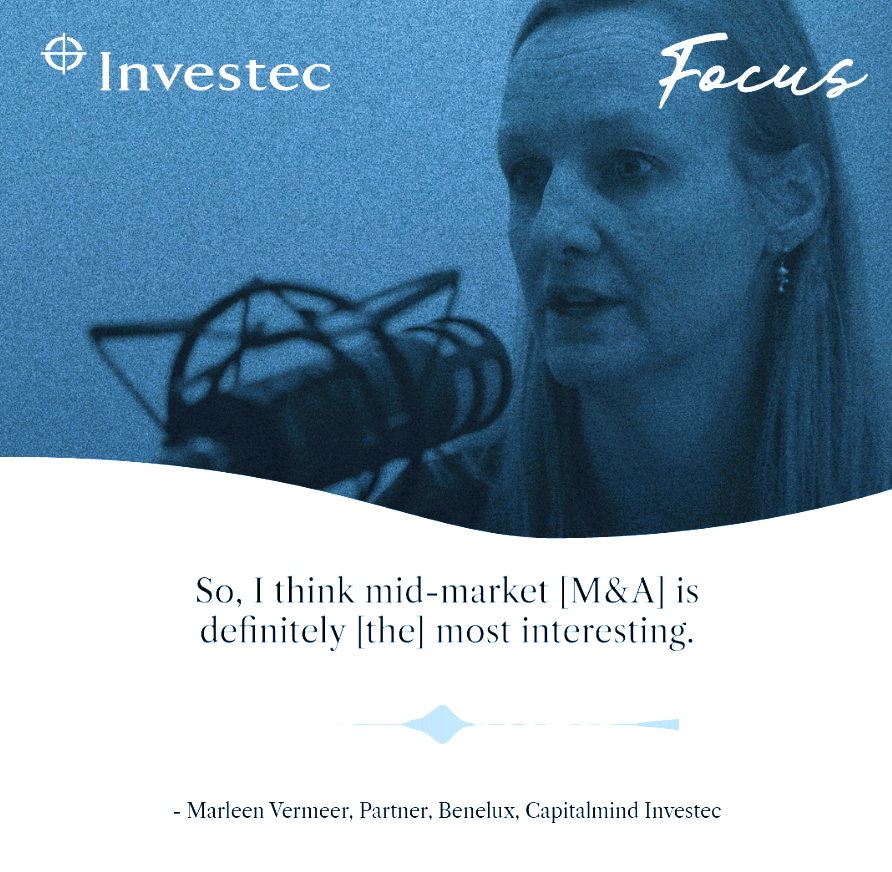
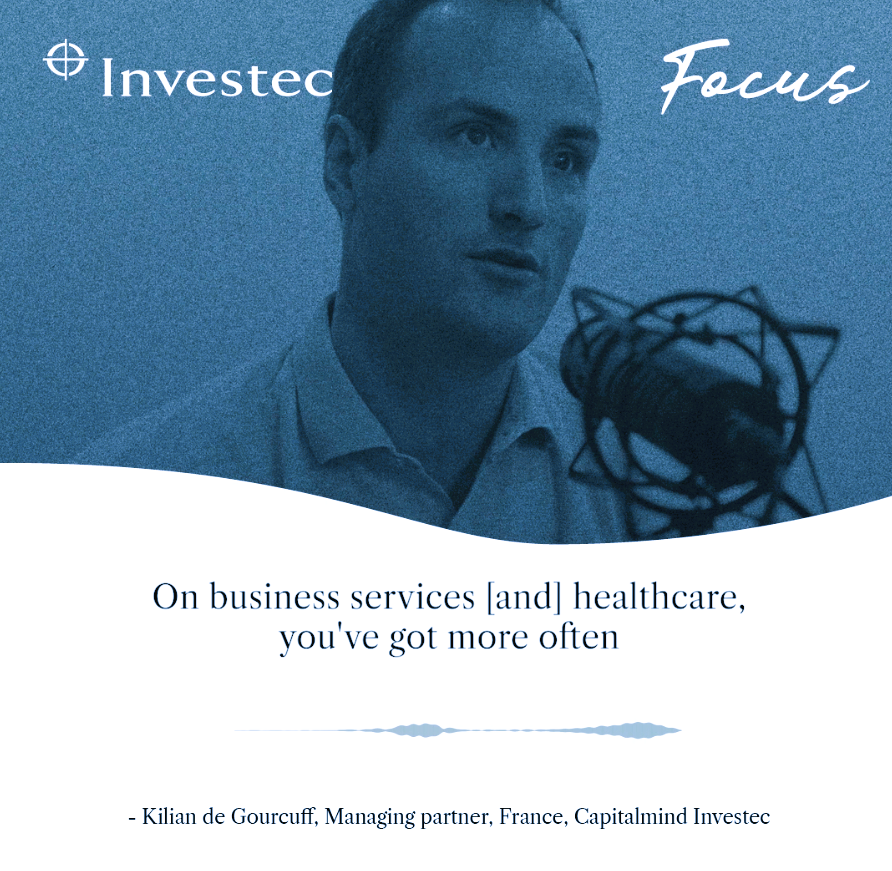
Hosted by seasoned broadcaster, Jeremy Maggs, the No Ordinary Wednesday podcast unpacks the latest economic, business and political news in South Africa, with an all-star cast of investment and wealth managers, economists and financial planners from Investec. Listen in every second Wednesday for an in-depth look at what’s moving markets, shaping the economy, and changing the game for your wallet and your business.
Listen to the best of No Ordinary Wednesday: https://www.investec.com/en_za/focus/no-ordinary-wednesday-with-jeremy-maggs.html
Financial restructuring for Shareholders & Lenders
Helping clients to navigate uncertainties while putting their businesses back on track
Interview with Jürgen Schwarz, Managing Partner of Investec about Restructuring with the help of a M&A process:
- How did the market change in recent years?
- What is your approach?
- Giving an example
This video answers these questions and give you an idea and overview in a few minutes.
Sale from insolvency
Due to our pan-European presence and track record we are well placed to advise on international and cross-border restructurings.
Our international sector teams implement more than 50 transactions p.a. and in many sectors they know the active buyers, the acquisition criteria, the behaviour of individual decision makers. We also have an up-to-date overview of the market prices paid, which vary considerably over time and depending on the positioning in the sector.
Investec has direct access to numerous international equity and debt capital providers and has carried out numerous restructurings ranging from approximately 10 million Euros to several billion Euros.
Financing and Market trends | 2023
Why the German industry has a great need for investment.
German industry is facing significant challenges, including the effects of digitalization, the shift from analogue to digital business models, the need for environmental protection measures and sustainable production processes, as well as demographic change, which is leading to a shortage of skilled workers and an ageing workforce. In order to successfully master these processes, significantly higher investment efforts are required than in the past.
Digitalization and Industry 4.0: At present, Germany ranks at best in the middle of the EU in terms of the use of digital technologies in the economy1. German industry must invest in digital technologies and automation to remain competitive. However, in order to catch up with comparable countries, IT and digitalization investments in Germany would have to double or triple from EUR 49 billion to EUR 100 to 150 billion annually. In the SME sector alone, digitalization expenditure would have to increase from EUR 18 billion in 2019 to EUR 35 to 50 billion per year.
Sustainability and environmental protection: Companies are increasingly focusing on environmentally friendly technologies and processes in order to achieve sustainability goals and reduce their environmental impact. These investments not only serve to protect the environment, but also contribute to long-term competitiveness. A recent study commissioned by KfW puts the climate protection investments required to achieve the goal of climate neutrality by 2050 at around EUR 5 trillion or around EUR 190 billion per year1. This enormous sum makes it clear that considerably greater efforts will be required to achieve the target than has been the case to date.
Read the complete Insight here.
Thorsten Gladiator, Managing Partner Investec: As corporate finance advisors, we see the importance of ESG in general and sustainability aspects in particular in almost every transaction, both in M&A situations and in financing mandates.
Equity and debt investors place a strong focus on ESG compliant investments in the interest of their financiers and / or due to investment criteria that are binding for them.
For business sellers as well as CFOs, this has pricing and process consequences:
- A clearly defined and documented ESG strategy creates confidence among investors and the company’s other stakeholders
- The same applies to the (early) implementation of legal requirements for sustainability reporting (CSRD)
- A focus on sustainability aspects provides positive differentiation features compared to competitors and can thus have a value-creating effect
- The lack of a corresponding strategy can lead to price discounts in the valuation as well as higher financing costs
- In the due diligence phase of a transaction, lack of ESG information leads to prolonged processes, higher management burden and the withdrawal of investors with clearly defined ESG investment criteria
The following article from AIM – Advice in Motion highlights the various aspects for medium-sized companies and shows examples of successful ESG strategies.
Opportunities and challenges of sustainability for smaller and medium-sized enterprises
The sustainability performance of a company today is the decisive factor for its competitiveness tomorrow. In this context, medium-sized companies in Germany in particular are faced with tasks whose extent has not yet been fully recognized in many cases and which involve major challenges in terms of resources, time and expertise.
Even though sustainability is a ubiquitous and much-discussed topic that is omnipresent both in the media and in public debate, it is by no means a new issue. Rather, sustainability has a long and exciting history that spans centuries and has been shaped by various actors and concepts.
Where do the roots of sustainability lie?
As far back as the Middle Ages, the moral ideal of the honorable merchant played a decisive role in promoting sustainable principles. Many a family entrepreneur rightly sees himself or herself in the tradition of the honorable merchant and aligns his or her business conduct with principles such as honesty, responsibility and sustainability.
In the 18th century, the Saxon chief miner Carl von Carlowitz coined the term sustainability in his work “Sylvicultura Oeconomica.” He introduced the idea that forest resources should be managed sustainably by cutting only as much wood as can naturally grow back. What was interesting about Carlowitz’s concept of sustainability was that sustained yield was precisely not antithetical to sustainability. Rather, forestry yield acted as the cornerstone for this oft-cited source of the concept of sustainability. The mining area of the Erzgebirge was simply dependent on the sustainable use of wood for construction, mining and smelting purposes.
Another significant milestone in the development of sustainability was the Brundtland Report, published in 1987 under the title “Our Common Future”. The report defined sustainable development as “development that meets the needs of the present without compromising the ability of future generations to meet their own needs.” Here, sustainability clearly went beyond a purely economic consideration. The report emphasized the need to integrate economic, social and environmental aspects to create a sustainable future.
Since then, the understanding of sustainability has evolved to encompass a variety of dimensions. One key concept is ESG (environmental, social, governance) criteria, which encompass environmental, social and governance-related factors. Differentiation of individual sustainable development goals is achieved through the United Nations Sustainable Development Goals (SDGs), which were adopted in 2015. The SDGs include 17 global goals to promote sustainable development at the economic, social and environmental levels by 2030. These goals range from poverty reduction, health, education and gender equality to renewable energy and sustainable cities.


The SDGs are an excellent framework for linking the principle of sustainability with economic, ecological and social development and provide a suitable orientation framework for a company’s sustainability strategy:
- SDGs as guidelines for sustainable management
- Alignment of products and services with the SDGs
- Business activities can contribute directly to achieving the SDGs
Nowadays, at the current edge of development trends around sustainability, so to speak, ESG expression is thus considered a leitmotif and fundamental approach for responsible and sustainable development. It is about combining economic, social and ecological aspects in order to create a world worth living in for present and future generations.
The individual SDGs are suitable targets for integrating ESG into corporate strategies, as they are more concrete and easier to measure using indicators than the more fundamental ESG concept.
Importance of the midmarket
As the backbone of the economy, the SME sector comprises a large number of companies that operate both regionally and internationally. It is of great importance for economic performance and employment in the country. Around 2.5 million companies in Germany belong to the Mittelstand, in the definition of a small and medium-sized enterprise (SME). These range from microenterprises to medium-sized companies with up to 250 employees, which generate around one-third of total sales for Germany and employ more than half of all employees.
Expectations around an ESG expression of the SME business model arise in a wide variety of internal and external stakeholder groups. Typical stakeholders include shareholder families, employees, customers and suppliers, financiers (EC and FC), NGOs and the media, and to an increasing extent regulatory policy.
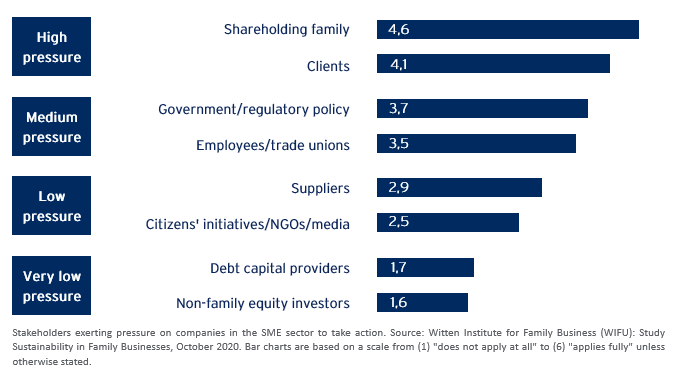
The reasons for which companies address ESG requirements also vary. The most common motives include:
- The assumption of ecological and social-societal responsibility,
- Ethical reasons and intrinsic motivation,
- Requirements of customers and employees,
- Cost reduction and expectation of increasing sales,
- Requirements of capital providers,
- And last but not least, the increasing regulatory requirements.
The majority of companies are in the early stages of sustainability management.
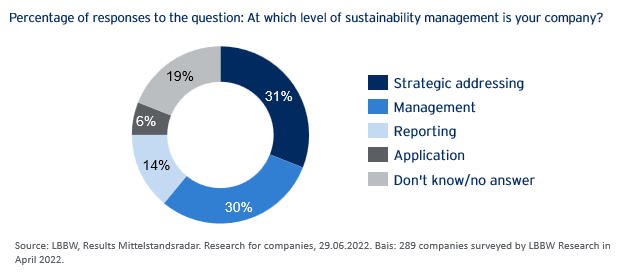
Pressure to act and status quo around ESG in SMEs
The pressure to develop and implement ESG strategies is immense and relevant stakeholders are demanding this. In addition to opportunities of an ESG orientation such as cost reduction, successful positioning of the company, revenue and profitability advantages, there are clear business risks of a lack of consideration of sustainability requirements up to the withdrawal of the “license to operate” (violation of regulatory requirements, exclusion from supply chains, lack of financing or perspective withdrawal of insurance coverage).
If, against this background, surveys come to the conclusion that, despite pressure to act and explicit expectations of the relevant stakeholders, only around half of the companies in the SME sector have developed and implemented ESG strategies, the question arises as to why.
A ´decisive factor is the lack of time and resources in many SMEs to deal with the challenges and requirements of sustainability. Time is traditionally a scarce commodity, especially in owner-managed companies. Teams and specialists for ESG strategies and sustainability cannot simply be plucked out of the ground: the market for ESG specialists is empty and salary expectations are correspondingly high.
Support from external consultants is the obvious choice, but here, too, capacities are stretched and for many a large consulting firm it is obvious and more lucrative to advise the large DAX companies with entire teams of consultants before they delve into the peculiarities of the business model of a geographically decentralized SME.
AIM – Advice in Motion GmbH
This is where AIM, as an independent sustainability consultancy and partner in the Investec network, can provide effective support. AIM thinks and speaks medium-sized. Their clients include medium-sized companies from a wide range of industries in Germany, France, Portugal, Luxembourg and Switzerland. AIM supports with:
- Creation, coordination and implementation of ESG strategies in medium-sized companies,
- Preparation for mandatory sustainability reporting (CSRD),
- Directive-compliant calculation of the carbon footprint of companies (CCF) and products (PC),
- Preparation of climate strategies, derivation of targets and measures from the climate footprint,
- Communication around ESG and climate protection: avoidance of reputation risks.
Examples of successful ESG implementation in medium-sized companies:
I. Initial situation: Sustainability requirements for a medium-sized company in the wood industry in Germany with around 1,200 employees. In addition to the intrinsic motivation of the shareholders, a major impetus for action arose from the initiative of the industry association, which demands the implementation of climate protection measures for all member companies. Another impetus for action was for the company, as a supplier in the value chain of a large trading house, to support its ambition (climate protection and other social goals throughout the supply chain). AIM supported the development of a climate strategy, the calculation of the corporate carbon footprint and the compensation of unavoidable emissions in order to achieve climate neutrality.
II. Initial situation: market positioning of a 5-star resort hotel in Provence with its own vineyard. A key impetus for action was to reconcile a luxury resort with sustainability requirements and climate change mitigation measures. AIM developed an ESG strategy for the resort. This was based on a selection of sustainable development goals (SDGs) to which the resort can contribute. Corresponding measures were defined and implemented. At the same time, climate neutrality was achieved for the resort by offsetting unavoidable emissions. (AIM has implemented a comparable project with a resort in Portugal, which has since been nominated for the Sustainability Award of the Portuguese Tourism Association).
III. Initial situation: product positioning for a manufacturer of high-quality competition racing bikes from Switzerland. The company wants to make competitive sports compatible with sustainability and climate protection in particular. In order to provide buyers and users of the competition bike with an assessment of the carbon footprint of the racing bike product, AIM calculated the product-related carbon footprint for the bike, taking into account all phases of the life cycle of the racing bike, from cradle to grave.
IV. Initial situation: A medium-sized holding company with around 1000 employees in Germany will be subject to mandatory sustainability reporting in accordance with CSRD for the first time from the calendar year 2024. The extended reporting affects around 15,000 companies in Germany. The company’s sustainability performance will be considered from two perspectives: the impact of sustainability aspects on the corporate business model and the impact of the company’s activities on the environment and stakeholders. At the same time, the company aims to create a comprehensive ESG strategy that brings together all the actions taken to date to support sustainability goals. AIM has worked with the company to develop an ESG strategy that is aligned and parameterized with metrics to best prepare for upcoming sustainability reporting.
The development of company specific ESG and climate strategies and the requirements associated with the expansion of sustainability reporting pose major challenges for entrepreneurs in the SME sector. We support your company effectively in the sustainable transformation to ensure together with you the future and the competitiveness of your company for you and future generations.
Author: Andreas Kuschmann, Founding Partner AIM – Advice in Motion GmbH.