

Receive Focus insights straight to your inbox
Six minutes. That’s how often the average knowledge worker checks in with some form of communication tool. We check our smartphones 52 times a day, on average. It's become so dire that 40% of us never get 30 minutes of uninterrupted focused time in a workday. So, how do we stay productive in the always-on era?
In part two of this Investec Focus Radio podcast on the future of work, we speak to Marc Kahn, the global head of Organisational Development and Human Resources (OD and HR) at Investec, about what employees and companies can do to manage information anxiety and boost productivity in the digital age.
Listen to podcast: Productivity in an always-on era
Need for speed
The smartphone has changed the game when it comes to how we work, as well as our work hours, says Kahn. "What we're really dealing with is less of a time issue and more of a speed issue. The expectation of speed of response has changed, and that has affected our experience of time.
"Today, what would have, say, 50 years ago, taken four days to communicate – and back then, it would been considered relatively quick – you can do in about 30 seconds to a minute via WhatsApp."
This makes the volume of work you can get through in a day exponentially greater, explains Kahn. And the speed with which we can do things in the workplace is now even faster, thanks to the advent of automation, which takes care of manual tasks so we don't have to.
How do you deal with this tidal wave of communication? "Everyone has a choice on the speed of response. It's about prioritisation, the ordering of things," says Kahn, who regards the lack of productivity as a sequencing problem. Being organised in terms of knowing who and what is most important, is key.

The expectation of multi-tasking
At the 2018 Discovery Leadership Summit in Johannesburg, internationally renowned leadership coach Caroline Webb said multi-tasking is a myth and that you have to single-task if you want to do something properly.
Kahn disagrees. "The expectation is that you must manage complexity as a high-end worker through sequencing and organising communications."
Disable your voicemail, or ask people to rather send you a text or WhatsApp.
Turn off email notifications that pop up and distract you from the task at hand.
On WhatsApp, disable the function that shows a message as being read, removing the expectation of an instant response
Working 9-5? Not a way to make a living
"You don't turn your phone on at 9 o'clock when you start work and off at 5 o'clock. Everyone knows you don't – your manager knows you don't, your subordinates know you don't, your clients know you don't," says Kahn.
So, to avoid working every waking minute of your day, the secret to productivity, he believes, is to use your common sense to evaluate the importance of communications you receive in this permanent flow of transactional information.
You don't turn your phone on at 9 o'clock when you start work and off at 5 o'clock. Everyone knows you don't.
The people who will thrive in the digital economy will be those who can prioritise and carve out time accordingly – it isn't about how long you work, but how effective you are. "Employees will be paid for the value they deliver, not the time they work," says Kahn, who believes working hours in employment contracts will soon be a thing of the past.
Interestingly, some countries are going the other way, insisting on employees’ "right to disconnect". France, for example, introduced legislation in 2017 that makes it mandatory for employers to negotiate the obligations of employees to communicate after work hours.
Creating an enabling culture for productivity
Time management doesn't come naturally to many people, and while companies have spent a lot of time teaching staff how best to serve clients and how best to relate to each other, very few provide this training in a digital context.
As Kahn puts it: "Companies are not saying, 'We expect you to interact using these various digital channels in the following manner, and here are some really good tips on how to sequence, prioritise and organise your communication between yourself and colleagues and clients.'"
Another potentially poor use of time is the endless meetings that employees are expected to attend. Kahn points out that for certain non-sensitive discussions, there are better ways to engage with colleagues; for example, via a closed WhatsApp group or a quick 10-minute stand-up meeting every morning.
Digital workplace ergonomics
Could where you work also be a cause for less productivity? The constant buzz and distractions in an open-plan office can result in frazzled employees, and it's also been found to reduce human interaction.
A Harvard study followed two Fortune 500 companies that were switching to open-plan offices. Researchers compared how employees interacted in their new office space before and after the switch. They found that face time between employees decreased by up to 70% and emails and texts shot up by 50%.
The evolution of the workplace is not reducing communications with employees, says Kahn. Instead, employees have just transported themselves into digital interactions.
"Physical workplace ergonomics have now got to account for the way we communicate digitally," explains Kahn, who believes companies should make more welcoming spaces for employees to interact away from their desks.
Kahn believes that the Google workspace metaphor has been over-engineered. "It's about creating a comfortable human environment. You don't need to allocate spaces with labels on them to say: 'Here is a meeting space.' Create this optionality in your environment, and staff will self-organise and self-utilise it in a sensible way.
Self-regulation in time management
In a recent interview with best-selling author Dan Pink, we discussed the findings of his new book, When? The Scientific Secrets of Perfect Timing, in which he describes the different chronotypes (early birds, night owls, etc) of people when it comes to productivity.
He also writes about how the majority of people move through the day in three phases: we peak in the morning, go into a trough over lunchtime and then experience a recovery in the early evening.
The modern workplace, with all its many distractions, runs counter to this order of the day and forces us to fit in with a particular regimen.
Every team must think carefully about what the best conditions are for things like remote working or flexible working that makes sense for them to create value.
Again, Kahn comes back to self-regulation being the key to productivity. "The more an organisation can create the flexibility for different people to utilise their rhythms appropriately, rather than make everyone do certain things at certain times, the better the value creation would be that comes from that sort of workforce."
This principle also applies to flexibility and whether employees can work out of the office. There's no one-size-fits-all solution. "Depending on the nature of the task, the team and the individuals involved, different environments will be more conducive to creating value," says Kahn. "Remote working is going to detract from value creation and at other times, remote working is going to create the value."
Companies in a digital age need to be able to give their staff the flexibility to create flexible working arrangements. "Every team must think carefully about what the best conditions are for things like remote working or flexible working that makes sense for them to create value. This must be done while continually tracking value creation and iterating and recontracting the policy where necessary."
Overcoming information anxiety
Says Kahn: "You are not in control and you can never be totally in control." The complexity of today's digital world and the sheer number of demands on your time mean you will never be on top of everything.
"So, what do you do when you can't control everything around you, you can't know everything, you can't respond to everything, you can't be on top of everything? What you do is you surf," says Kahn. "You can't control the sea, but you can learn to surf and relax into the rhythm of the chaos, so you don't get dumped too often and enjoy the ride."
That's what individuals can do, but companies also need to embrace the new paradigm of self-regulation. "Instead of controlling the environment, give people the ability to self-regulate and be responsive to the flow."
Marc Kahn is the global head of Human Resources & Organisational Development for Investec. He is a psychologist (HPCSA & PBA), a chartered business coach (WABC), a certified master coach (IMCSA) and a seasoned management consultant. He is also the author of Coaching on the Axis: Working with Complexity in Business and Executive Coaching.
About the author

Ingrid Booth
Lead digital content producer
Ingrid Booth is a consumer magazine journalist who made the successful transition to corporate PR and back into digital publishing. As part of Investec's Brand Centre digital content team, her role entails coordinating and producing multi-media content from across the Group for Investec's publishing platform, Focus.
About the author
Patrick Lawlor
Editor
Patrick writes and edits content for Investec Wealth & Investment, and Corporate and Institutional Banking, including editing the Daily View, Monthly View, and One Magazine - an online publication for Investec's Wealth clients. Patrick was a financial journalist for many years for publications such as Financial Mail, Finweek, and Business Report. He holds a BA and a PDM (Bus.Admin.) both from Wits University.
About the author
Caroline Edey-van Wyk
Brand Editor
Colloquially known as Investec’s “storyteller,” Caroline curates and produces all the content that underpins Investec's Out of the Ordinary brand promise. She works across the business but specialises in the areas of Sustainability, CSI, Sponsorships and HR. Caroline holds a Bachelor of Journalism degree in Political Science and Broadcasting - cum laude. Before she joined Investec she was a broadcast journalist at Sky News and eNCA.
About the author

Pedro van Gaalen
Content creator, editor and freelance writer
Pedro is an experienced communicator across print and digital media platforms based in Johannesburg. He attained a communications degree from RAU (now UJ), and began his PR and marketing career in 2000 in the motoring sector. He has built a career as a communications consultant and freelance writer, offering his experience, varied expertise and diverse background to various PR agencies, corporate clients and research houses.
About the author
Lenyaro Sello
Content Marketing Specialist
Lenyaro is a key member of Investec's Global Content team, based in Johannesburg, who focuses on relevant and topical issues for internal and external audiences including clients. She is a well-travelled multi-skilled multimedia journalist who previously held roles within eNews Channel Africa (eNCA) and Eyewitness News (EWN). Lenyaro holds a BA Hons in Journalism degree and a Masters degree in Strategic Marketing, both from Wits University.
About the author

Marc Kahn
Global head of people and organisation development, Investec
Marc is responsible for the people value chain of Investec worldwide. Specifically his areas work to facilitate the way the company's culture supports and drives its people and their businesses toward extraordinary performance. Marc is a psychologist (HPCSA & PBA), a chartered business coach (WABC), a certified master coach (IMCSA) and a seasoned management consultant. Marc is a Visiting Professor of People, Organisation and Strategy at Middlesex University, and the author of the book: Coaching on the Axis: Working with Complexity in Business and Executive Coaching (2014) Routledge: London.

Ewan Naude
Investment manager
Ewan is a Wealth manager for high net worth individuals. He completed his accounting articles post-university and then moved on to a global mining company where he was a coal trader for three years. His interest has always been in financial markets and, specifically, investments which ultimately led him to Investec all those years ago.
About the author

Marnus Broodryk
Entrepreneur
Serial entrepreneur Marnus Broodryk is a Shark Tank SA investor, founder and CEO of The Beancounter. and founder of sme.africa. He is also the host of the popular Investec-sponsored Making SMEs Matter podcast series, and is the author of the best-selling book 90 Rules for Entrepreneurs. Marnus is dedicated to helping SMEs start up and grow in a volatile environment.
About the author
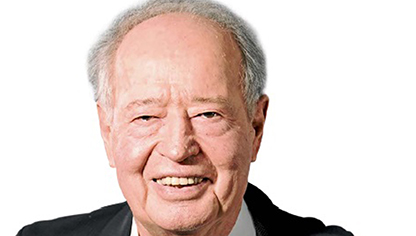
Prof. Brian Kantor
Economist
Brian Kantor is a member of Investec's Global Investment Strategy Group. He was Head of Strategy at Investec Securities SA 2001-2008 and until recently, Head of Investment Strategy at Investec Wealth & Investment South Africa. Brian is Professor Emeritus of Economics at the University of Cape Town. He holds a B.Com and a B.A. (Hons), both from UCT.
About the author
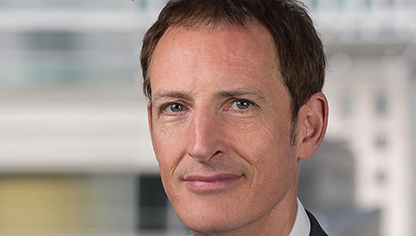
John Wyn-Evans
Investment strategist
John is Head of Investment Strategy for Investec Wealth & Investment UK, is a member of the Global Investment Strategy Group, and is Chair of the Investec & Investment UK Asset Allocation Committee. John graduated from Exeter University in Modern Languages in 1984. He spent 27 years as an institutional stockbroker with Merrill Lynch and Lehman Brothers, before moving to investment management in 2011 and joining Investec in 2013. John is an Everton FC supporter.
About the author
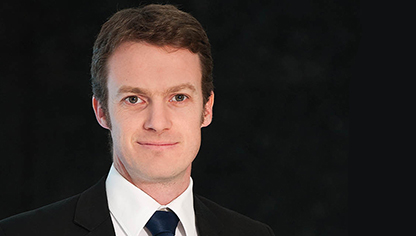
Chris Holdsworth
Investment strategist
Chris holds an MSc (Statistics) and is a CFA. He joined Investec in 2007 as a quantitative analyst for the institutional equities team. He started covering strategy from the beginning of 2013 and headed up the research team from 2017. At the beginning of 2019, he moved to the Wealth and Investment (SA) Team as Chief Investment Strategist. He is also a member of the Global Investment Strategy Group and Chair of the Global Sector View Group.
About the Author
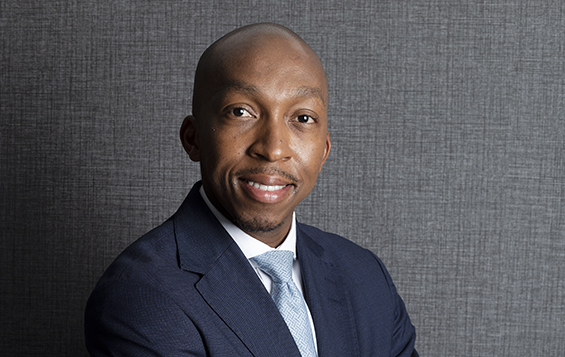
Head of Sales: Investec For Business
Itumeleng Merafe
Currently the Head of Sales for Investec For Business, Itumeleng started his career as a retail treasury consultant at Investec, servicing individuals and small corporates. He joined the Treasury Structuring team in 2011 as a consultant and was appointed as head of the team in 2015. Itumeleng holds a BCom in Economics and Investment management, has completed the Finance Executive Development Programme at Cass Business School, holds an ACI dealing certificate, and a Masters in the management of finance and investments.
About the author
Annabel Bishop
Chief Economist of Investec Ltd
Annabel holds an MCom Cum Laude (Economics and econometrics) and has worked in the macroeconomic, risk, financial market and econometric fields, among others, for around 25 years. Working in the economic field at Investec, Annabel heads up a team, which focusses on the macroeconomic, financial market and global impact on the domestic environment. She authors a wide range of in-house and external articles published both abroad and in South Africa.
About the author

Philip Shaw
Chief Economist, UK
Philip graduated with an Economics degree from Bath University and a master’s in Econometrics from the University of Manchester. He is a regular commentator on the economy and financial markets in the press and on TV. Philip joined Investec in London in 1997 and heads up the Economics team there.
About the author
Angela Rettenbacher
Digital content specialist
Angela read for a Bachelor of Journalism degree at Rhodes University in Grahamstown in the early nineties, followed by a two-year stint at the SABC. Soon after, she went backpacking for 10 years! Prior to joining Investec's content team, Angela spent nine years as an Output Editor on the newsdesk at eNCA, both in TV news and Online. Before that, she spent eight years in the corporate sphere, in the Investment Banking and other divisions of Goldman Sachs both in London and Johannesburg.
About the author
David Gracey
Head of Foreign Exchange and Fixed Income Trading
David has more than 30 years of trading experience in South African financial markets. He heads up the FX and FI trading desk, trading in both asset classes, and makes markets to clients in products associated with these asset classes. David also manages the risk associated with this function.
About the author
Karen Meyer
Digital content writer
Karen has degrees in BA Communications and Honours in Journalism. She's responsible for writing and editing all the communication for Investec Private Banking. She has extensive experience in corporate communication and has worked in marketing for some of the country’s biggest brands.
About the author
Houston Muzamhindo
Data Scientist, Investec Private Bank
I am a Data Scientist within the Analytics Consulting Team in Investec Private Bank where my team focuses on building the machine learning and artificial intelligence capability in the bank, coming up with use cases and implementing them. I founded an edutech startup when I was doing my undergraduate studies and it currently has just over 17,000 students registered, mostly from South Africa.
About the author

Kevin Hogan
Head of Fraud Risk
Kevin holds a degree in financial risk management. By profession, he is a credit analyst. He says he fell into the whole 'fraud thing' by accident, and the rest is history. Kevin now manages fraud risk for Investec Bank Ltd and contributes to content insights on Investec Focus.
About the author
Sean O'Toole
Art journalist
Sean is a Cape Town-based journalist and editor. He's also a contributor to Investec Focus content for the Investec Cape Town Art Fair. He holds separate degrees in English literature, law, and creative writing.
About the author
Chris Becker
Blockchain technologies lead
Chris commercialises decentralised blockchain technologies and digital assets for the benefit of Investec Private Banking clients. In his previous role, he was an economist and strategist conducting research for large corporates, asset managers and hedge funds for a decade before entering blockchain technologies full time in 2017.
Kate Stannard
Investment manager
Kate holds a Business Science degree – her clients are Financial Advisers who use Investec's Investment Services. Keeping abreast of market conditions and being able to communicate relevant information is an important component of her role. Kate is also a qualified level 1 Kundalini Yoga teacher.
About the author
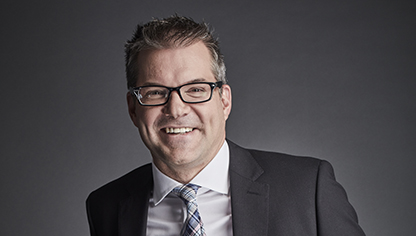
Patrick Duggan
Wealth manager: Investec Wealth & Investment
Patrick is a senior private client wealth manager with Investec Wealth & Investment, specialising in providing holistic investment planning advice to some of South Africa’s high net worth and ultra-high net worth individuals, families and their associated entities.
About the author
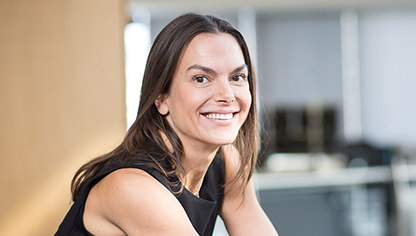
Alexandra Nortier
Joint-head Wealth Management at Investec
Alexandra is joint head of National Wealth Management, a business unit of Investec Wealth & Investment. Her requires expertise in all aspects of the investment markets, both locally and offshore, as a client needs guidance and education in all spheres of investing. She completed a Bachelor of business science with Honours in finance from the University of Cape Town., and is also a Chartered Financial Analyst (CFA).
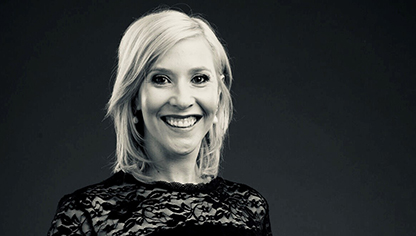
Rene van Zyl
Joint-head, Investec Tax & Fiduciary
Rene completed her law degree at the University of Stellenbosch and is an Admitted Attorney of the High Court of South Africa. After completing her articles in Cape Town, she joined a multinational offshore trust company, gaining extensive experience in global estate planning and structuring for high net worth individuals, while obtaining her H-dip Tax through Thomas Jefferson School of Law in San Diego, California. Rene was responsible for local and offshore products and solutions at FNB Fiduciary before joining Investec Wealth and Investment as a Tax & Fiduciary specialist in July 2017. Rene has been instrumental in building the Tax and Fiduciary offering for Investec during the last two years, and she was the first founding member of the team. She was also the representative for Digital Assets in South Africa for STEP. She was rated in the Chambers HNW 2019 for professional advisors. Every year they carry out thousands of in-depth interviews with clients in order to assess the reputations and expertise of business lawyers worldwide. The qualities they look for (and which determine rankings) include technical legal ability, professional conduct, client service, commercial awareness/astuteness, diligence, commitment, and other qualities most valued by the client.
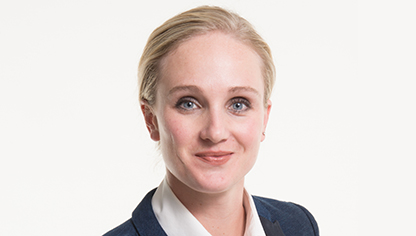
Elizabeth Fick
Joint-head, Investec Tax & Fiduciary
Lizzie is an admitted attorney, currently busy with her Masters in Taxation. She specialises in tax and cross-border planning and structuring. Lizzie has vast experience in the drafting of local and offshore wills, estate and succession planning, trust and company law, local and offshore trust and company administration, exchange control regulations, tax law and opinions, as well as cross-border structuring and planning. Before joining Investec, Lizzie worked as an associate at a global law firm specialising in tax and cross-border planning, and as a Client Relationship Manager in trust and fiduciary services.
You may also be interested in:

Private banking

One Place™

Business banking
Private banking
One Place™
Business banking
Browse further in