
Versterking van ons Industrial Tech & Services team
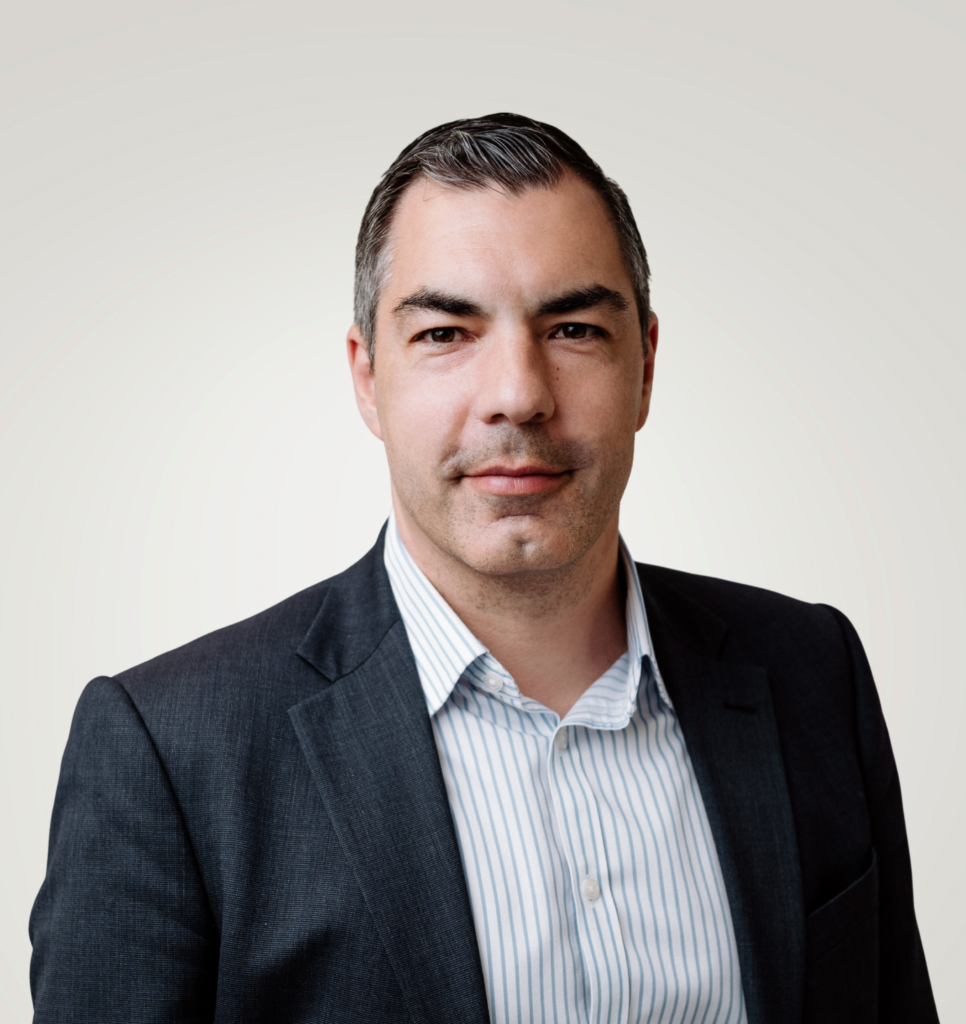
Investec heet Matthias Odrobina van harte welkom als Managing Director van ons European Business Advisory en als senior lid van het wereldwijde sectorteam dat Europa, het Verenigd Koninkrijk, Afrika, de VS en Azië bedient met onafhankelijk advies over grensoverschrijdende transacties.
Matthias beschikt over diepgaande sectorexpertise op het gebied van industriële technologie – met bijzondere aandacht voor smart industries, B2B-software en digitale transformatie.
Hij heeft 20 jaar ervaring als vertrouwd partner voor raden van bestuur en eigenaren op het gebied van fusies, overnames, desinvesteringen, financieringen en buyouts, met een bijzondere focus op de industriële sector, B2B-software en zakelijke dienstverlening.
Contact: Matthias Odrobina
How a professional dialogue is now moving companies forward
Interview with Thorsten Gladiator, Managing Partner of Investec about how a professional dialogue is now moving companies forward:
- Why companies should entertain a professional dialogue with their investors and lenders?.
- What other challenges are companies facing?
- As a financial expert and transaction specialist what advice do you have for companies when dealing with debt and equity investors?
- Giving an example.
This video answers these questions and give you an idea and overview in a few minutes.
Finding the right type of capital and investor to help grow your business
Our team has a long track record of successfully raising equity and debt capital and has the necessary expertise and networks:
- Raising capital to support business growth
- Securing capital from private equity and/or other Investors to support MBO/MBI projects
- Securing capital from private equity and/or other investors to manage changes in the shareholding structure (such as supporting the buyout of one or more shareholders and the reallocation of equity shares)
- Project financing: supporting companies in realizing essential investments or working capital
- Refinancing: supporting companies in reorganizing/reducing their debt burden
In today’s world, too many consultants arrive with a hammer in hand – ready to treat every problem as a nail. But real entrepreneurs don’t need pre-packaged solutions. They have challenges and visions and need solutions properly addressing these challenges and provide options. They need partners who understand complexity, offer relevant expertise, and provide real alternatives – especially when the path forward isn’t obvious.
That’s precisely why I joined Investec.
Not because it’s the biggest or loudest name in the market—but because it relentlessly strives to offer what truly matters:
- Unbiased, holistic advice – Our diversified product offering is free from conflicts of interest. We are guided by the client’s needs, not by distribution targets.
- Deep sector expertise – Particularly in software, IT services, fintech and digital. And not just in Europe – we connect clients to markets in the US, UK, and Asia.
- A rare blend of global reach and local agility – we combine the reach of an international investment bank with genuine local proximity and entrepreneurial spirit.
- Real understanding of entrepreneurs – Many advisors have never faced the reality of growth pains, pivots, or strategic inflection points. We have.
- Solutions for the overlooked – Where others turn away due to minimum fee thresholds, we craft tailored access to capital—even for businesses with EBITDA between £3 and £10 million.
That’s what drew me here: the chance to help entrepreneurs explore what lies between the classic ‘all in’ or ‘full exit’ choices. The space where creative capital, smart structuring and nuanced advice can unlock new possibilities.
My personal story—how I built and shaped tech markets, what drives me, and why Investec is the right platform for the next chapter – is explored in detail in the article linked below.
But let me leave you with a parable:
A seasoned blacksmith had long relied on one tool—a powerful, time-tested hammer. One day, a young entrepreneur arrived with a broken, intricate machine. The blacksmith hammered, welded, tested—but the machine still stuttered.
“You need more than a hammer,” the entrepreneur said. “You need someone who understands how the system works—end to end.”
The blacksmith began collecting new tools: measuring devices, precision instruments, innovative materials. But the most important tool of all was a compass. It showed where the forces were coming from—and where they needed to go.
He realized success wasn’t about force. It was about using the right tool, at the right moment, with a clear view of the bigger picture.
That’s what we aim to do at Investec.
Click here to read my story in detail.
“Entrepreneurs have challenges and are seeking solutions to mitigate said challenges. Being able to provide client centric advice on adequate solutions to turn challenges into opportunities is at the heart of what we enjoy doing the most at Investec Advisory.”
On June 5, we had the pleasure of hosting a selected group of entrepreneurs for our TMT CEO Dinner in our Wiesbaden office.
The evening focused on strategic dialogue around digital transformation and the impact of software and how leaders can actively shape the future of their businesses. A standout moment was the keynote by Lars Lehne (former CEO of Incubeta and Syzygy), who offered inspiring perspectives on South African culture and the intersection of digital expertise, leadership, and openness to change – all with a fresh and thought-provoking angle.
The event wrapped up with a relaxed and personal dinner, offering a space for open dialogue and meaningful new connections.
Evenings like this are where ideas begin to take shape and future plans are set in motion. We’re already looking forward to the next edition!
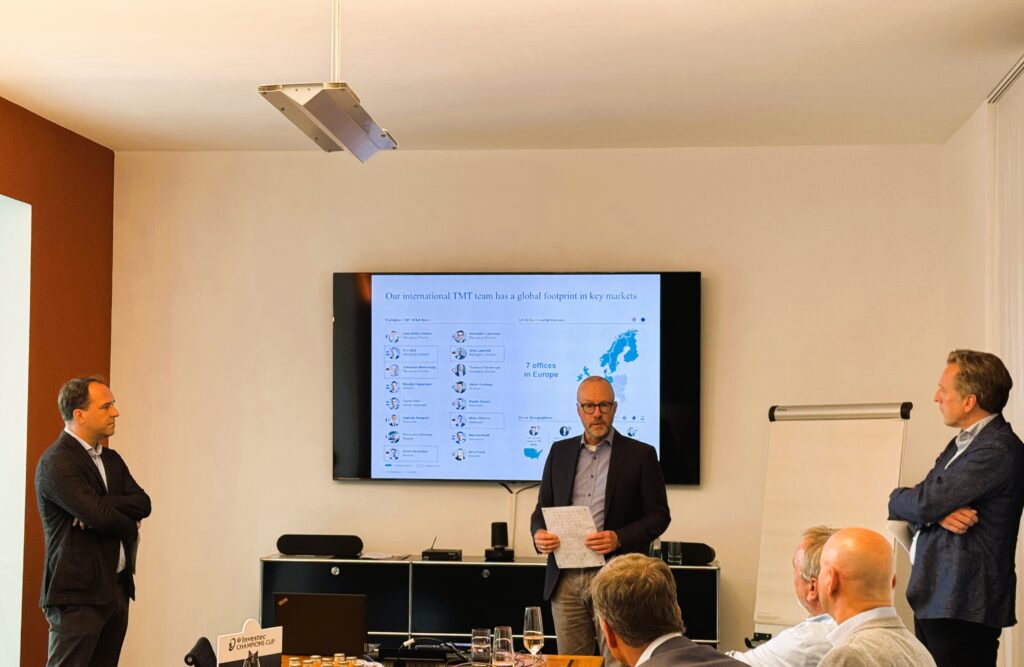
Het landschap van IT Managed Services ondergaat een significante transformatie. Terwijl de sector een opmerkelijke opleving doormaakt in consolidatie, groei en innovatie, nemen we vijf belangrijke trends onder de loep die de toekomst van Managed Services in Nederland vormgeven. Dit inzicht maakt deel uit van ons IT Services 2024 rapport.
5 Belangrijkste trends in de Nederlandse IT Managed Services markt
1. Momentum in de markt
De Nederlandse IT Managed Services markt zit in een stroomversnelling, met robuuste groeiverwachtingen. Verwacht wordt dat de markt in 2025 een samengesteld jaarlijks groeipercentage (CAGR) van 10,2% zal bereiken en een waarde van € 12,4 miljard zal vertegenwoordigen. Dit momentum benadrukt de toenemende afhankelijkheid van IT Managed Services binnen het Nederlandse zakelijke ecosysteem, en weerspiegelt bredere wereldwijde trends in de digitale transformatie van industrieën.
2. MKB dominantie
Kleine en middelgrote ondernemingen (MKB) vormen de ruggengraat van de Nederlandse Managed Services markt en zijn goed voor meer dan 60% van de sector. Deze dominantie onderstreept de cruciale rol die het MKB speelt in de nationale economie, door gebruik te maken van IT Managed Services om het concurrentievermogen te vergroten, activiteiten te stroomlijnen en risico’s van technologische verstoringen te beperken.
3. Gegevensbescherming
Cyberbeveiliging staat steeds meer op de voorgrond van IT-strategieën, en de Nederlandse markt is daarop geen uitzondering. Het cybersecurity-segment binnen Managed Services zal in 2025 naar verwachting €3,5 miljard bedragen. In 2022 meldde ongeveer 39% van de bedrijven in Europa dat ze minstens één cyberaanval hadden meegemaakt, wat de cruciale behoefte aan robuuste cybersecurity-oplossingen onderstreept.
5. Hybride oplossingen
Voor grotere organisaties worden hybrid IT-omgevingen de strategische keuze. Deze oplossingen combineren de voordelen van lokale en cloud-based systemen, optimaliseren de toegang en verbeteren de security. Met hybrid omgevingen kan flexibeler worden ingespeeld op bedrijfsbehoeften en wordt een schaalbare aanpak geboden voor het beheer van complexe IT-infrastructuren.
Vooruitblik
Terwijl we het veranderende IT-landschap blijven analyseren, wordt de verschuiving naar IT ‘as-a-service’ modellen steeds duidelijker. Deze modellen bieden aantrekkelijke voordelen, waaronder financiële recurrentie en aanpassingsvermogen, die essentieel zijn in de huidige dynamische marktomgeving en ook belangrijke drijfveren voor zowel kopers als investeerders.
Neem contact op met Maurits Odekerken of Ron Belt voor meer informatie en ons volledige IT Services 2024 rapport.
Interview
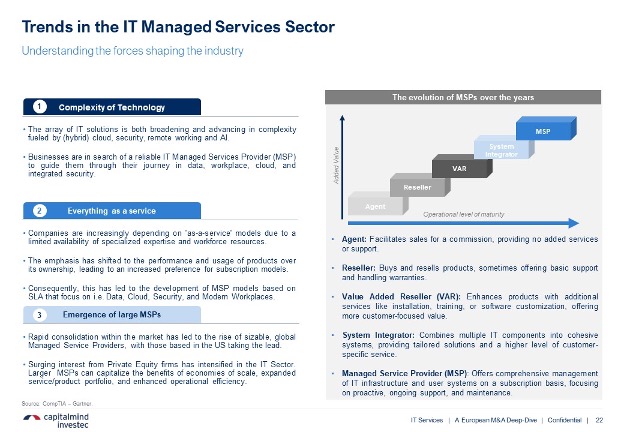
As we enter 2024, the M&A landscape shows signs of recovery, albeit cautiously.
In the episode of the February 20, 2024 of No Ordinary Wednesday, Jeremy Maggs in conversation with Investec experts Jürgen Schwarz, Marleen Vermeer, and Kilian de Gourcuff, Investec’s Head of Cross-Border Finance and International Advisory Charles Barlow, on what key sectors, trends and risks to keep an eye on in 2024.
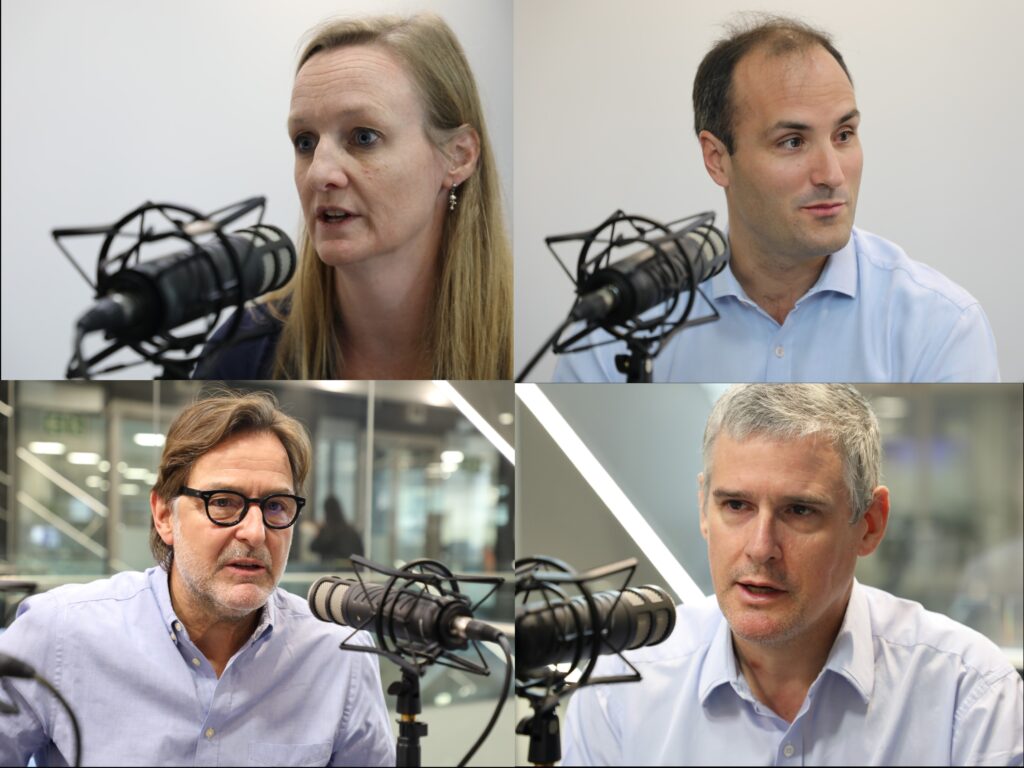
Click below to listen to the podcast:

Where does opportunity lie for dealmaking in 2024? (investec.com)
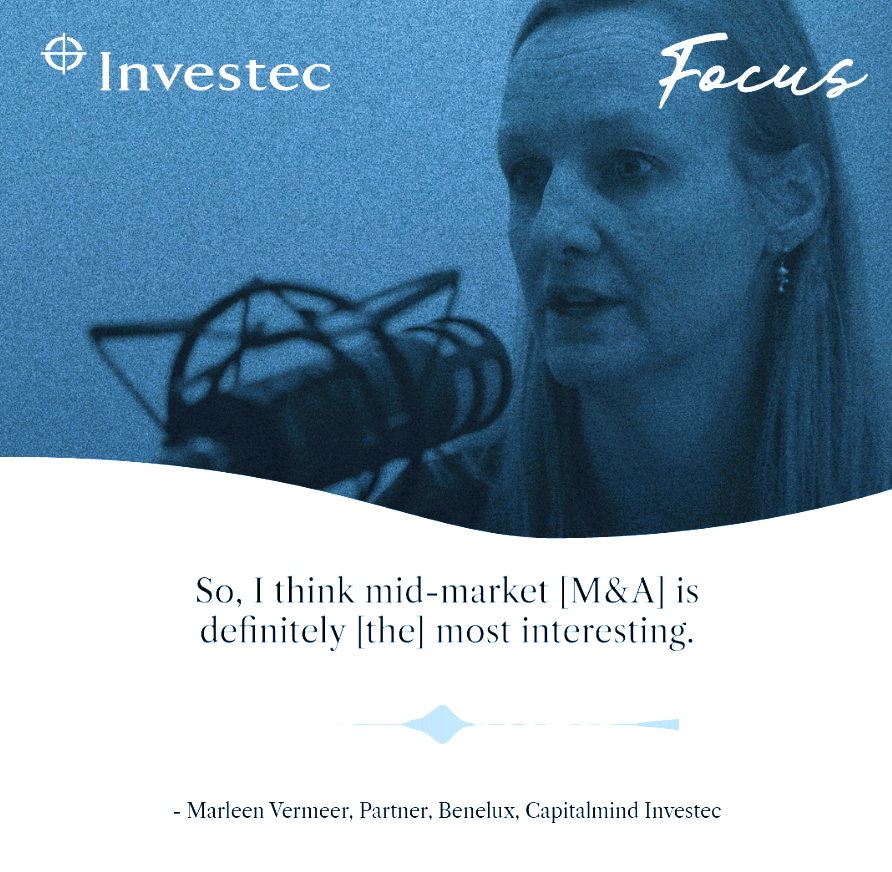
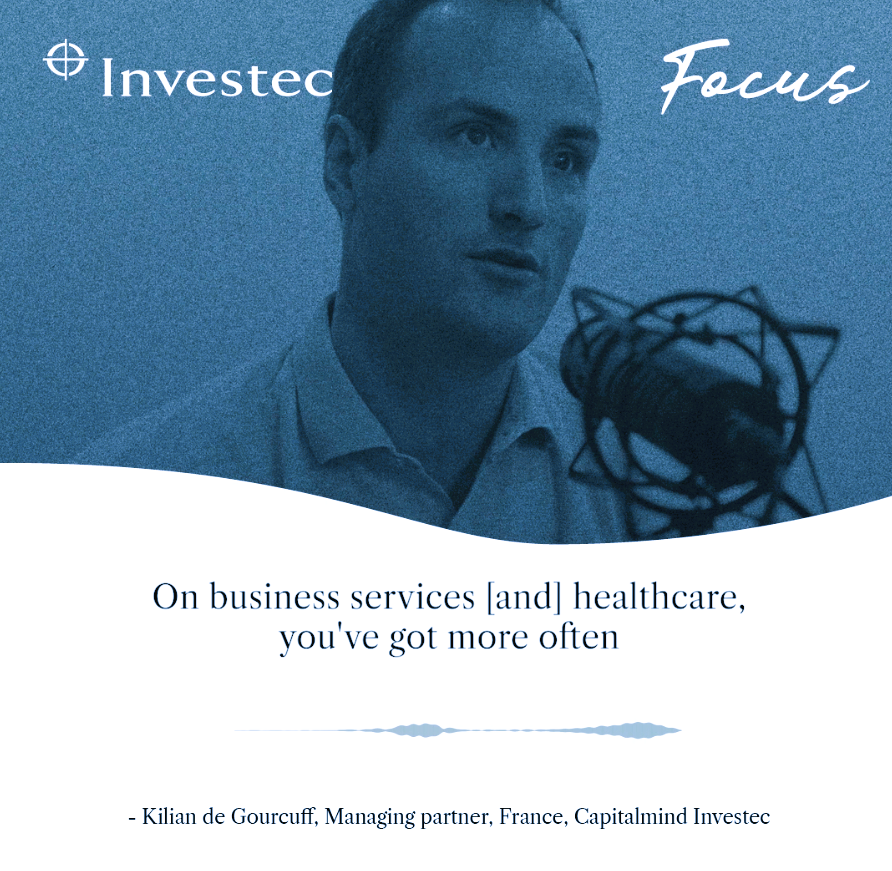
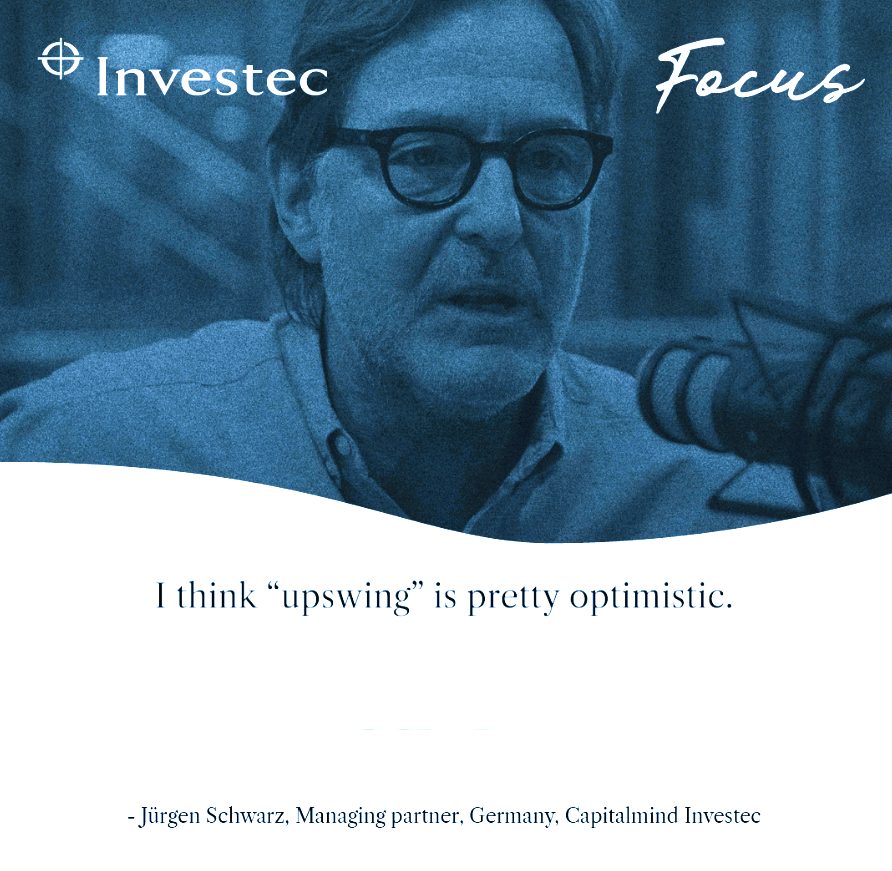
Hosted by seasoned broadcaster, Jeremy Maggs, the No Ordinary Wednesday podcast unpacks the latest economic, business and political news in South Africa, with an all-star cast of investment and wealth managers, economists and financial planners from Investec. Listen in every second Wednesday for an in-depth look at what’s moving markets, shaping the economy, and changing the game for your wallet and your business.
Listen to the best of No Ordinary Wednesday: https://www.investec.com/en_za/focus/no-ordinary-wednesday-with-jeremy-maggs.html
Sustainable underlying trends, attracting interest from all market participants, coupled with high risks and investments in the development phase are paving the way for a thriving market.
The European M&A market for industrial software continues to be fuelled by consolidation across all end market segments. Ongoing trends of digitalization within the industrial sector, increasing convergence of sectors and the demand for more (factory) automation to counteract the increasing shortage of talent are just a few selected trends contributing to the growing interest from private equity firms and strategic players crossing sector and geographic borders.
Software as a solution to competition gaps
The advancement of Industry 4.0 implementation, integrating digital technologies into the manufacturing process, positions digitalization at the core of most sectors. Compliance with this trend has become inevitable for companies striving to stay at the forefront of innovation. Both micro- and macroeconomic trends, such as skilled labor shortages, ESG policies, and reshoring of complete production plants, are accelerating this process. Meanwhile, safeguarding assets is essential as the industrial system becomes more (cyber)connected and online. The German industry, accounting for approximately 25% of the country’s GDP, is considered critical infrastructure, emphasizing the need to ensure data integrity.
Market interest from different strategic angles
Software has always attracted various buyer pools with different strategic interests. Financial sponsors are particularly interested in recurring and scalable revenues combined with high-profit margins. In contrast, strategic players seek capabilities expansion and the “softwarization“ of their hardware (IoT). The industrial software market demonstrates sustainable growth underpinnings, with optimizing and modernizing the IT landscape being more crucial than the hardware itself.
Deal examples:
Growth capital unlocked for Desk by Software Partners Group
“SPG is a partner that combines excellent technology know-how and buy & build expertise, which will enable us to reach the next stage of our buy&build journey.” Volker Schneider (CEO, Desk)
wenglor sensoric group acquires Berlin based AI and Image processing Start-Up deevio
“With the acquisition of deevio GmbH, we have this opportunity to further strengthen our expertise and capability in the field of machine vision. In recent years, deevio has developed a great deal of know-how in using AI and data science for image processing applications within the automation industry, which is a considerable advantage for us.” Rafael Baur (Managing Director, wenglor)
Data (analytics) driven production: The new standard
New levels of data accessibility have been achieved, with standard APIs implemented across the entire IT landscape of the industry and collaboration between industrial technology providers. Data lakes are formed through a multi-sourcing policy from (digital twin) machinery and sensors, the IT architecture (ERP, MES, etc.), and human-generated data (quality management, observations, etc.). Recent technologies, such as AI, cloud computing, and predictive models, enable the treatment and analysis of the vast amount of generated data. Decision-makers now have access to aggregated and qualitative information for data-driven decisions.
Deal examples:
Majority investment of FSN Capital in Lobster
“In a world of exponentially growing amounts of data, complexity of data flows and application stacks, Lobster offers easy to use, economic and powerful software solutions to integrate data, applications, and processes of all forms and variations.” Robin Mürer (Co-Managing Partner, FSN Capital Partners)
The same old challenge… – make or buy
The ultimate question in growth strategies making companies consider M&A as an option is whether to make or buy. The combination of high development costs (in time and opportunity) but risky success rates is the primary rationale for market activity within (industrial) software to expand its capabilities and/or geographical footprint. The principle of Moore’s Law is still true in today’s technology ecosystem. Rapid cycles leave no room to develop everything in-house, acting as a catalyst for market activity.
Deal examples:
“Best Practice IT Solutions’ cloud-based software will complement Aptean’s current Food & Beverage ERP offering and enhance our ability to serve beverage companies.” Duane George (GM, Aptean)
“By bundling the expertise of tisoware and Persis, we create a uniquely comprehensive HR ecosystem for our customers. Together with solutions for access and building security (Security) and for optimizing production processes (MES) in the context of Industry 4.0, we offer an overall workforce portfolio for medium-sized enterprises in the DACH region.” Markus Steinberger (CEO, tisoware)
Our industrial software index outruns other indexes
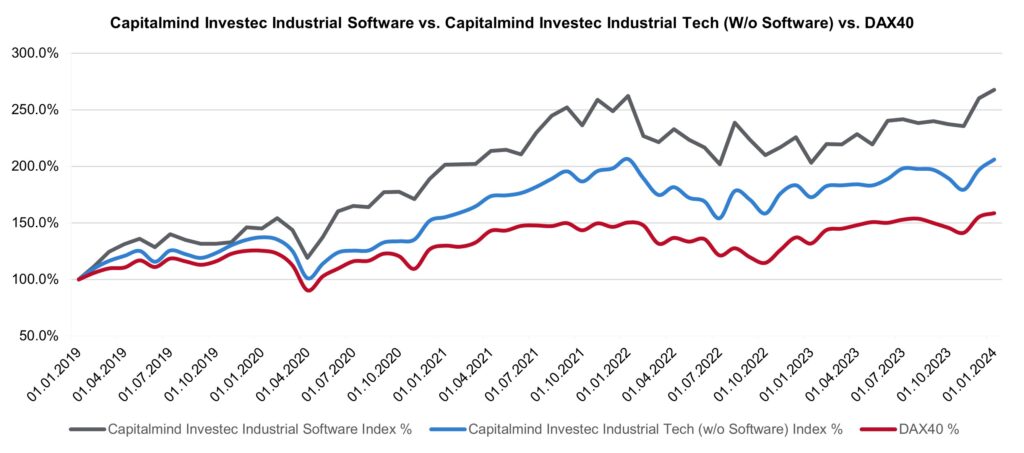
Since 2019, the Industrial Software Index has risen almost threefold, while the main Industrial Technology sector has doubled. A new all-time high has been reached for market capitalization.
The main macroeconomic events over the last 5 years have similarly impacted all indexes, but industrial software market capitalizations seem to recover more quickly.
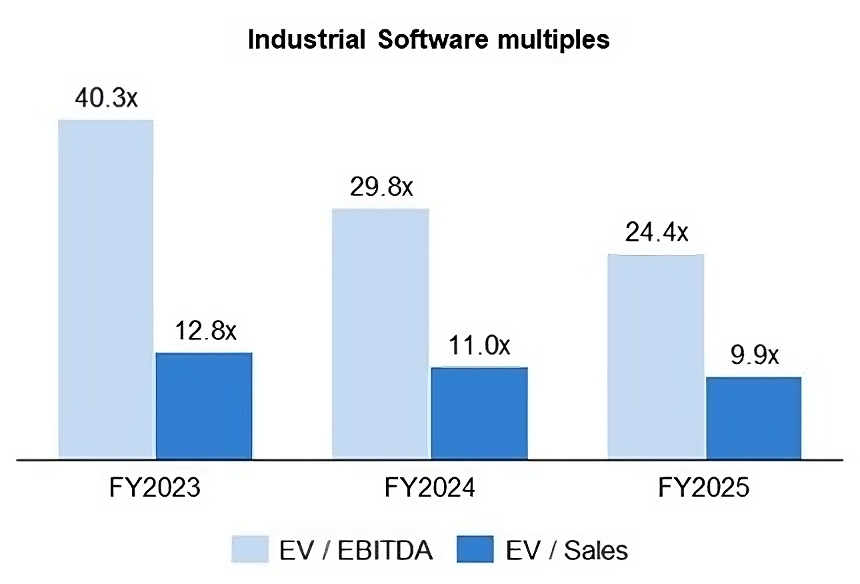
Valuations for listed industrial software companies, both EV/EBITDA and EV/Sales, remain high, with forward multiples at ca. 11x sales FY2024.
So, industrial software – hot or not?
Most checkboxes are ticked for answering the question positively:
- High valuations are fueling market activity.
- Growing interest, both from financial investors and large software consolidators.
- Sustainable market movers, with both strategic and financial rationale, are dictating most transactions.
Investec Industrial Technology
The Investec Industrial Technology index tracks daily developments in sectors such as Flow & Process Control, Robots/Motion, Electronics/Control / Connect, Integrated providers, Measurement/Vision Tech, Industrial Software, Intralogistics/System integration and Machinery.
The index includes valuations, growth projections, profitability margins and other metrics.
Would you like to learn more about valuations, buyer activity and current opportunities in the market?
Please do not hesitate to contact us.
You can find more information on our website at Industrials | Investec
Versterking van ons technologieportfolio bij Investec

Investec is verheugd de toevoeging van Sebastian Markowsky aan het managementteam aan te kondigen. Sebastian Markowsky zal het technologieteam versterken, waar zijn focus ligt op fusies en overnames en bedrijfsfinanciering op het gebied van industriële en digitale transformatie en industriële, software- en financiële technologie voor bedrijven in het middensegment van de markt.
Sebastian heeft meer dan 15 jaar ervaring in het regelen van fondsenwerving en fusies en overnames in Duitsland en internationaal, en heeft een sterke focus op technologie met de aanvullende gebieden van software fintech, digitale transformatie en digitale media, evenals IT-diensten en IT-integratie.
Sebastian licht toe: “Investec biedt een sterk platform en een uitgebreid productportfolio om technologieondernemers in het middensegment van de markt te ondersteunen in veel verschillende situaties en met verschillende behoeften. Met Investec achter ons kunnen we onze Europese klanten een zeer uitgebreide reeks verschillende en gerichte oplossingen bieden.”
Ervin Schellenberg Managing Partner Investec Europe voegt hieraan toe: “Ik ben verheugd Sebastian te verwelkomen, een zeer ervaren technologie investment banker met een passie voor innovatie en transformatie. In de loop der jaren zijn we steeds meer technologisch onderlegd geworden in onze Industrials Services transacties en we kijken ernaar uit om nog actiever te worden op dit gebied met de steun van Sebastian. Sebastian maakt ook deel uit van ons wereldwijde technologie team, zodat we onze klanten toegang kunnen bieden tot Investec’s geconcentreerde expertise.”
Voordat hij bij Investec kwam, was Sebastian Chief Strategy Officer bij een compliance softwarebedrijf in de VS en bekleedde hij functies als partner bij een venture en corporate finance firma in Zwitserland en als directeur bij GP Bullhound, een wereldwijd erkende technologie-investeringsbank. Sebastian begon zijn carrière in M&A bij Deutsche Bank AG in Frankfurt.
Sebastians passie voor technologie, innovatie, disruptie en niet in de laatste plaats blockchain wordt weerspiegeld in zijn uitgebreide klantenportefeuille, die bestaat uit bedrijven in het middensegment, start-ups en volwassenen, klanten van private equity en groeikapitaalinvesteerders en family offices. Zijn ervaring omvat het adviseren van klanten over fusies en overnames, kapitaalverhogingen, strategische groei en opvolgingsplanning.
Hij zit momenteel in de raad van toezicht van Advanced Blockchain AG, een beursgenoteerde onderneming van de Deutsche Börse die zich richt op de incubatie van blockchainprojecten. Sebastian brengt een schat aan kennis en connecties mee in de technologiemarkt, zowel in Duitsland als internationaal.
Met zijn uitgebreide netwerk, uitgebreide ervaring in fondsenwerving en fusies en overnames en zijn achtergrond als ondernemer is Sebastian een waardevolle toevoeging aan ons technologie team. We zijn ervan overtuigd dat zijn bijdragen onze capaciteiten aanzienlijk zullen vergroten naarmate we onze activiteiten op de Duitse markt blijven uitbreiden.
Contact : Sebastian Markowsky
Financial restructuring for Shareholders & Lenders
Helping clients to navigate uncertainties while putting their businesses back on track
Interview with Jürgen Schwarz, Managing Partner of Investec about Restructuring with the help of a M&A process:
- How did the market change in recent years?
- What is your approach?
- Giving an example
This video answers these questions and give you an idea and overview in a few minutes.
Sale from insolvency
Due to our pan-European presence and track record we are well placed to advise on international and cross-border restructurings.
Our international sector teams implement more than 50 transactions p.a. and in many sectors they know the active buyers, the acquisition criteria, the behaviour of individual decision makers. We also have an up-to-date overview of the market prices paid, which vary considerably over time and depending on the positioning in the sector.
Investec has direct access to numerous international equity and debt capital providers and has carried out numerous restructurings ranging from approximately 10 million Euros to several billion Euros.
You know your company best but selling it to a suitable buyer at an attractive price is often a major challenge.
Interview with Ervin Schellenberg, Managing Partner of Investec about finding the right partner for medium-sized companies:
- How to find the right partner for a medium-sized company?
- Is my company ready for a transaction?
- What is the equity story?
- Giving an example
This video answers these questions and give you an idea and overview in a few minutes.
Our wealth of experience from many years of successful transactions and our access to relevant decision-makers in national and international buyers ensure the best possible result for you.
Investec has the core competences required to sell companies and has successfully completed hundreds of transactions across all major industries.
Financiering en markttrends | 2023
Waarom de Duitse industrie grote behoefte heeft aan investeringen.
De Duitse industrie staat voor grote uitdagingen, waaronder de effecten van digitalisering, de verschuiving van analoge naar digitale bedrijfsmodellen, de behoefte aan milieubeschermende maatregelen en duurzame productieprocessen, evenals demografische veranderingen, die leiden tot een tekort aan geschoolde werknemers en een vergrijzende beroepsbevolking. Om deze processen succesvol te beheersen, zijn aanzienlijk hogere investeringsinspanningen nodig dan in het verleden.
Digitalisering en Industrie 4.0: Op dit moment staat Duitsland op zijn best in de middenmoot van de EU wat betreft het gebruik van digitale technologieën in de economie1. De Duitse industrie moet investeren in digitale technologieën en automatisering om concurrerend te blijven. Maar om de achterstand op vergelijkbare landen in te lopen, zouden de investeringen in IT en digitalisering in Duitsland moeten verdubbelen of verdrievoudigen van 49 miljard euro naar 100 tot 150 miljard euro per jaar. Alleen al in het mkb zouden de uitgaven voor digitalisering moeten stijgen van 18 miljard euro in 2019 naar 35 tot 50 miljard euro per jaar.
Duurzaamheid en milieubescherming: Bedrijven richten zich steeds meer op milieuvriendelijke technologieën en processen om hun duurzaamheidsdoelstellingen te halen en hun impact op het milieu te verminderen. Deze investeringen dienen niet alleen om het milieu te beschermen, maar dragen ook bij aan het concurrentievermogen op lange termijn. Een recente studie in opdracht van KfW schat de klimaatbeschermingsinvesteringen die nodig zijn om de doelstelling van klimaatneutraliteit tegen 2050 te bereiken op ongeveer 5 biljoen euro of ongeveer 190 miljard euro per jaar1. Dit enorme bedrag maakt duidelijk dat er aanzienlijk grotere inspanningen nodig zullen zijn om de doelstelling te halen dan tot nu toe het geval is geweest.
Lees de volledige insight hier.
Author: Sebastian Lawrence, Henry Barnes and Kwanele Mokgohlwa | Technology Investment Banking
At Investec, we see huge opportunities open to DevOps companies, across both software and services, and the investors backing them. As the industry continues to develop, we also expect the sector to heat up with more M&A opportunities on the horizon.
Organisations are under increasing pressure to innovate and deliver new digital experiences to their customers, partners and employees. As they seek to respond to these challenges, companies are realising the importance of efficient software development and deployment, coupled with new working practices that bring teams together effectively.
DevOps aims to solve these issues, bridging the gap between software development and IT operations to deliver applications and services at high velocity. The importance of DevOps is clear when you consider the high growth forecasts for the market – which is expected to grow at a 20% CAGR from 2020-2026 with an estimated total market size of $18 billion by 2026.
As Investec’s advisory team for the Technology sector, we see huge opportunities open to DevOps companies, across both software and services, and the investors backing them. As the industry continues to develop, we also expect the sector to heat up with more M&A opportunities on the horizon.
What is DevOps?
Combining the words ‘development’ and ‘operations’, DevOps is a combination of practices, tools and philosophies that increases an organisations’ ability to deliver and deploy software applications and services at high velocity.
A DevOps approach removes the barriers between development and operations divisions. These formerly siloed teams, often merge into a single team where the engineers work across the entire software development lifecycle and have multidisciplinary skills.
You can visualise a DevOps process as an infinite loop, comprising six phases (the software development lifecycle or SDLC):
- initial process planning
- software code creation
- integration and delivery
- testing
- deployment
- monitoring and management
Enterprises are looking to DevOps to exploit modern technologies across their application lifecycle. The result of this is shorter release cycles and time-to-value, higher-quality, better consistency, reliable deployments and increased agility.
By automating the software development pipeline, it becomes possible to ensure the reliability and stability of an application after every new release. When the applications perform correctly in production, companies reap the benefit of greater customer satisfaction.
M&A Activity Is Picking Up
According to IDC, over 500 million new digital applications and services will be developed and deployed by 2023 – the same number of apps that have been developed over the last 40 years. With such high demand, it’s no surprise that M&A activity has been growing over the past few years.
While M&A activity has historically been dominated by trade buyers, interest from the private equity community is increasing – and now accounts for 40% of deal volume.
As the DevOps market continues to rapidly expand in an already fragmented and competitive market, we expect this to drive increasing sector consolidation as large and better funded acquirers look to increase their capabilities.
We expect the services providers to be net beneficiaries of the DevOps market growth; in particular, those that have demonstrated significant technical expertise and achieved stellar growth. Both trade and PE-backed assets recognise the need for talent, resulting in increased M&A consolidation for scaled, high-end consultancy assets in the market.
There is significant room for further services businesses to enter the market, particularly as the software landscape is continually evolving – which is why we expect further M&A consolidation to occur in 2022.
Read our report for more insight.
Authors: Sebastian Lawrence and Grace Baiju | Technology Investment Banking
The global Video Gaming market has boomed in recent years, with games like Fortnite capturing millions of daily players. As our latest report shows, deal flow has remained strong through the pandemic, and has not showed any signs of slowing down.
When it announced the $68.7 billion acquisition of video game company Activision Blizzard this January, Microsoft made the market sit up and take note.
The largest acquisition ever made by a technology company, the deal turned Microsoft into the third largest gaming company in the world by giving it ownership of franchises such as “World of Warcraft”, “Call of Duty”, and “Candy Crush”. Announcing the news, Microsoft CEO Satya Nadella said that gaming “is the most dynamic and exciting category in entertainment across all platforms today”, and will be central to the development of the metaverse.
Microsoft is not alone in its excitement about the future of entertainment. The Video Gaming market is rapidly expanding in terms of deal flow, with the past two years seeing healthy amounts of activity despite challenging economic conditions.
That’s why, notwithstanding a difficult IPO market, we expect gaming to be one of the sectors that rebounds quickly as public markets re-open. We also anticipate that M&A activity will remain active as the industry continues to consolidate.
Like many sectors, gaming is adapting to a changing world.
As our latest market update finds, some of the latest trends have been beneficial to gaming companies. With consumers spending more time gaming, the number of global players has been growing steadily.
There has also been more consolidation. It’s not just the world’s largest technology companies like Microsoft that are interested in the sector – the last few years have seen a wave of M&A activity by other trade players and private equity firms.
Nevertheless, there are a few challenges ahead. Video gaming is expected to feel the effects of inflation on consumer decisions – after all, lower disposable income is likely to be a drag on game sales. That said, the industry’s subscription models are likely to prove more resilient than purchases of individual games.
How do investors value gaming companies?
There has been a wave of dealmaking for Video Gaming companies across both private and public markets. 2021 saw roughly 30% more deals and an average 45% increase in transaction value from 2020.
For Video Gaming businesses that are looking to build a premium valuation, it’s important to note that investors tend to look at both financial and non-financial metrics. Bread-and-butter financial metrics such as revenue and earnings growth are obviously crucial, but when it comes to gaming there are plenty of other factors that potential investors are likely to consider.
With strong tailwinds such as the fast growth of mobile gaming, expectations for the Video Gaming sector are buoyant. As the second half of the year begins, investors may find that the game has just begun.
Read our report for more insight.
Thorsten Gladiator, Managing Partner Investec: As corporate finance advisors, we see the importance of ESG in general and sustainability aspects in particular in almost every transaction, both in M&A situations and in financing mandates.
Equity and debt investors place a strong focus on ESG compliant investments in the interest of their financiers and / or due to investment criteria that are binding for them.
For business sellers as well as CFOs, this has pricing and process consequences:
- A clearly defined and documented ESG strategy creates confidence among investors and the company’s other stakeholders
- The same applies to the (early) implementation of legal requirements for sustainability reporting (CSRD)
- A focus on sustainability aspects provides positive differentiation features compared to competitors and can thus have a value-creating effect
- The lack of a corresponding strategy can lead to price discounts in the valuation as well as higher financing costs
- In the due diligence phase of a transaction, lack of ESG information leads to prolonged processes, higher management burden and the withdrawal of investors with clearly defined ESG investment criteria
The following article from AIM – Advice in Motion highlights the various aspects for medium-sized companies and shows examples of successful ESG strategies.
Opportunities and challenges of sustainability for smaller and medium-sized enterprises
The sustainability performance of a company today is the decisive factor for its competitiveness tomorrow. In this context, medium-sized companies in Germany in particular are faced with tasks whose extent has not yet been fully recognized in many cases and which involve major challenges in terms of resources, time and expertise.
Even though sustainability is a ubiquitous and much-discussed topic that is omnipresent both in the media and in public debate, it is by no means a new issue. Rather, sustainability has a long and exciting history that spans centuries and has been shaped by various actors and concepts.
Where do the roots of sustainability lie?
As far back as the Middle Ages, the moral ideal of the honorable merchant played a decisive role in promoting sustainable principles. Many a family entrepreneur rightly sees himself or herself in the tradition of the honorable merchant and aligns his or her business conduct with principles such as honesty, responsibility and sustainability.
In the 18th century, the Saxon chief miner Carl von Carlowitz coined the term sustainability in his work “Sylvicultura Oeconomica.” He introduced the idea that forest resources should be managed sustainably by cutting only as much wood as can naturally grow back. What was interesting about Carlowitz’s concept of sustainability was that sustained yield was precisely not antithetical to sustainability. Rather, forestry yield acted as the cornerstone for this oft-cited source of the concept of sustainability. The mining area of the Erzgebirge was simply dependent on the sustainable use of wood for construction, mining and smelting purposes.
Another significant milestone in the development of sustainability was the Brundtland Report, published in 1987 under the title “Our Common Future”. The report defined sustainable development as “development that meets the needs of the present without compromising the ability of future generations to meet their own needs.” Here, sustainability clearly went beyond a purely economic consideration. The report emphasized the need to integrate economic, social and environmental aspects to create a sustainable future.
Since then, the understanding of sustainability has evolved to encompass a variety of dimensions. One key concept is ESG (environmental, social, governance) criteria, which encompass environmental, social and governance-related factors. Differentiation of individual sustainable development goals is achieved through the United Nations Sustainable Development Goals (SDGs), which were adopted in 2015. The SDGs include 17 global goals to promote sustainable development at the economic, social and environmental levels by 2030. These goals range from poverty reduction, health, education and gender equality to renewable energy and sustainable cities.


The SDGs are an excellent framework for linking the principle of sustainability with economic, ecological and social development and provide a suitable orientation framework for a company’s sustainability strategy:
- SDGs as guidelines for sustainable management
- Alignment of products and services with the SDGs
- Business activities can contribute directly to achieving the SDGs
Nowadays, at the current edge of development trends around sustainability, so to speak, ESG expression is thus considered a leitmotif and fundamental approach for responsible and sustainable development. It is about combining economic, social and ecological aspects in order to create a world worth living in for present and future generations.
The individual SDGs are suitable targets for integrating ESG into corporate strategies, as they are more concrete and easier to measure using indicators than the more fundamental ESG concept.
Importance of the midmarket
As the backbone of the economy, the SME sector comprises a large number of companies that operate both regionally and internationally. It is of great importance for economic performance and employment in the country. Around 2.5 million companies in Germany belong to the Mittelstand, in the definition of a small and medium-sized enterprise (SME). These range from microenterprises to medium-sized companies with up to 250 employees, which generate around one-third of total sales for Germany and employ more than half of all employees.
Expectations around an ESG expression of the SME business model arise in a wide variety of internal and external stakeholder groups. Typical stakeholders include shareholder families, employees, customers and suppliers, financiers (EC and FC), NGOs and the media, and to an increasing extent regulatory policy.
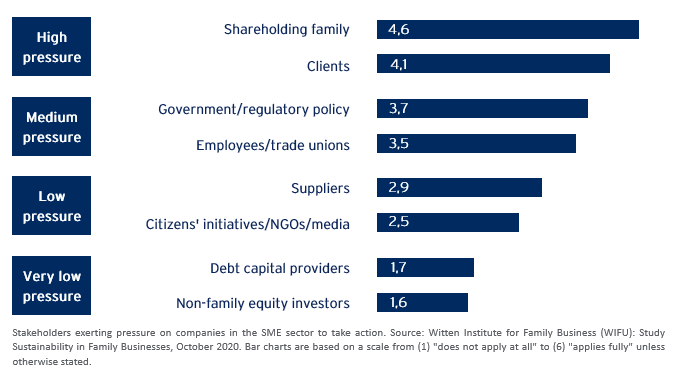
The reasons for which companies address ESG requirements also vary. The most common motives include:
- The assumption of ecological and social-societal responsibility,
- Ethical reasons and intrinsic motivation,
- Requirements of customers and employees,
- Cost reduction and expectation of increasing sales,
- Requirements of capital providers,
- And last but not least, the increasing regulatory requirements.
The majority of companies are in the early stages of sustainability management.
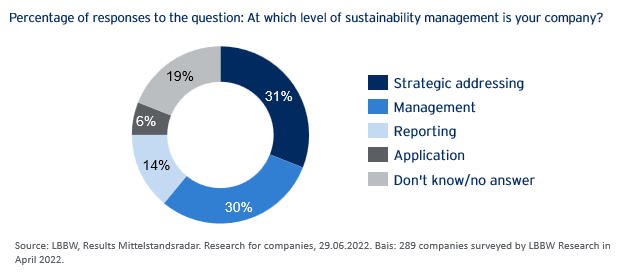
Pressure to act and status quo around ESG in SMEs
The pressure to develop and implement ESG strategies is immense and relevant stakeholders are demanding this. In addition to opportunities of an ESG orientation such as cost reduction, successful positioning of the company, revenue and profitability advantages, there are clear business risks of a lack of consideration of sustainability requirements up to the withdrawal of the “license to operate” (violation of regulatory requirements, exclusion from supply chains, lack of financing or perspective withdrawal of insurance coverage).
If, against this background, surveys come to the conclusion that, despite pressure to act and explicit expectations of the relevant stakeholders, only around half of the companies in the SME sector have developed and implemented ESG strategies, the question arises as to why.
A ´decisive factor is the lack of time and resources in many SMEs to deal with the challenges and requirements of sustainability. Time is traditionally a scarce commodity, especially in owner-managed companies. Teams and specialists for ESG strategies and sustainability cannot simply be plucked out of the ground: the market for ESG specialists is empty and salary expectations are correspondingly high.
Support from external consultants is the obvious choice, but here, too, capacities are stretched and for many a large consulting firm it is obvious and more lucrative to advise the large DAX companies with entire teams of consultants before they delve into the peculiarities of the business model of a geographically decentralized SME.
AIM – Advice in Motion GmbH
This is where AIM, as an independent sustainability consultancy and partner in the Investec network, can provide effective support. AIM thinks and speaks medium-sized. Their clients include medium-sized companies from a wide range of industries in Germany, France, Portugal, Luxembourg and Switzerland. AIM supports with:
- Creation, coordination and implementation of ESG strategies in medium-sized companies,
- Preparation for mandatory sustainability reporting (CSRD),
- Directive-compliant calculation of the carbon footprint of companies (CCF) and products (PC),
- Preparation of climate strategies, derivation of targets and measures from the climate footprint,
- Communication around ESG and climate protection: avoidance of reputation risks.
Examples of successful ESG implementation in medium-sized companies:
I. Initial situation: Sustainability requirements for a medium-sized company in the wood industry in Germany with around 1,200 employees. In addition to the intrinsic motivation of the shareholders, a major impetus for action arose from the initiative of the industry association, which demands the implementation of climate protection measures for all member companies. Another impetus for action was for the company, as a supplier in the value chain of a large trading house, to support its ambition (climate protection and other social goals throughout the supply chain). AIM supported the development of a climate strategy, the calculation of the corporate carbon footprint and the compensation of unavoidable emissions in order to achieve climate neutrality.
II. Initial situation: market positioning of a 5-star resort hotel in Provence with its own vineyard. A key impetus for action was to reconcile a luxury resort with sustainability requirements and climate change mitigation measures. AIM developed an ESG strategy for the resort. This was based on a selection of sustainable development goals (SDGs) to which the resort can contribute. Corresponding measures were defined and implemented. At the same time, climate neutrality was achieved for the resort by offsetting unavoidable emissions. (AIM has implemented a comparable project with a resort in Portugal, which has since been nominated for the Sustainability Award of the Portuguese Tourism Association).
III. Initial situation: product positioning for a manufacturer of high-quality competition racing bikes from Switzerland. The company wants to make competitive sports compatible with sustainability and climate protection in particular. In order to provide buyers and users of the competition bike with an assessment of the carbon footprint of the racing bike product, AIM calculated the product-related carbon footprint for the bike, taking into account all phases of the life cycle of the racing bike, from cradle to grave.
IV. Initial situation: A medium-sized holding company with around 1000 employees in Germany will be subject to mandatory sustainability reporting in accordance with CSRD for the first time from the calendar year 2024. The extended reporting affects around 15,000 companies in Germany. The company’s sustainability performance will be considered from two perspectives: the impact of sustainability aspects on the corporate business model and the impact of the company’s activities on the environment and stakeholders. At the same time, the company aims to create a comprehensive ESG strategy that brings together all the actions taken to date to support sustainability goals. AIM has worked with the company to develop an ESG strategy that is aligned and parameterized with metrics to best prepare for upcoming sustainability reporting.
The development of company specific ESG and climate strategies and the requirements associated with the expansion of sustainability reporting pose major challenges for entrepreneurs in the SME sector. We support your company effectively in the sustainable transformation to ensure together with you the future and the competitiveness of your company for you and future generations.
Author: Andreas Kuschmann, Founding Partner AIM – Advice in Motion GmbH.
Unlocking Working Capital potential to fuel operational growth
Amidst the aftermath of the COVID-19 pandemic, geopolitical tensions, and persistent inflation, it is crucial for companies to prioritize efficient working capital management (WCM) in order to navigate near-term uncertainty and foster growth during the economic recovery. We identified four key reasons that make WCM crucial:
1. Economic headwinds are expected to be persistent: Despite the recovery of most advanced economies to pre-pandemic levels of output, growth in 2023 is projected to be sluggish. Recent downward revisions in growth forecasts highlight the challenges that lie ahead. For instance, the GDP growth forecast for the EU has been reduced to around 0.75%, a mere one-fifth of the previous year’s growth1. The IMF has also predicted that Germany will be the second weakest G7 economy next year, following the UK, with an anticipated GDP contraction of 0.11%1. Moreover, recent data reveals that the German economy contracted slightly for two consecutive quarters, by 0.5% in Q4 2022 and 0.3% in Q1 20232.
2. Inflationary pressure remains high until at least 2024: The Russian invasion of Ukraine has led to skyrocketing energy and food prices, resulting in persistent inflationary pressures. Additionally, rising material costs and supply chain challenges pose a threat to inventory levels, leaving businesses susceptible to supply shortages and price fluctuations. Although the IMF predicts a decline in inflation in Germany from 8.7% in 2022 to 6.1% in 2023, a return to the 2% target is not expected until at least 2025. Consequently, some companies have turned to forward buying and speculative upstocking. However, this strategy strains working capital and depletes cash reserves.
3. Interest rate peak has probably been reached: Central banks across the world have continued to tighten monetary policy and roll back quantitative easing to defeat red-hot inflation. In Europe, the ECB has raised its key interest rate by 0.25 percentage points to 3.5% in June, marking the eighth consecutive increase since July 2023. This rate-hiking cycle is the fastest in the ECB‘s history. ECB President Christine Lagarde announced further rate hikes in July, indicating an ongoing trend. According to a survey conducted by Bloomberg, it is projected that the peak will be reached at 4% in September 2023. Consequently, financing and working capital is becoming increasingly expensive.
4. Corporate cash flows are coming under increasing pressure: According to PwC, Days Cash on Hand of companies decreased by 10% in 20214. In 2022, the intensified efforts of central banks worldwide to combat inflation by raising interest rates have significantly impacted corporate cash flows. Mounting challenges stem from factors such as cost inflation, supply chain disruptions, and geopolitical events like the war in Ukraine, which have also influenced lender sentiment and global debt markets. In Europe, institutional loan issuance suffered a decline of 42% so far in 2023 compared to the previous year (as of July)5. As a result, the management of liquidity and working capital has become increasingly important.
Thorsten Gladiator, Managing Partner Investec: Supply chain issues and increasing (raw) material prices lead to higher funding requirements in working capital. A variety of working capital financing products allows for tailor-made solutions.
Hoge groei en consolidatie van de markt voor HR-software
De markt voor HR-software blijft groeien, wat nog wordt versneld door de impuls die de Covid-19-pandemie aan de digitalisering heeft gegeven.
De markt zal naar verwachting groeien van ~24,0 miljard euro in 2021 tot ~35,4 miljard euro in 2028 met een CAGR van 5,7%.
De belangrijkste drijvende krachten achter de groei zijn:
- Toegenomen behoefte aan het volgen en verbeteren van de betrokkenheid en efficiëntie van werknemers;
- Toenemende vraag naar arbeids- en kostenbesparende automatiseringssoftware;
- Sterke groei van het aantal KMO’s die (schaalbare) HR-oplossingen nodig hebben;
- Toenemende toepassing van cloud technologieën zoals Software as a Service (Saas).
Toenemende fusies en overnames en consolidatie
De laatste jaren is er sprake van toenemende M&A-activiteit en consolidatie in de HR Software markt.
De markt voor HR-software telt enkele grote spelers, maar blijft wereldwijd relatief gefragmenteerd. Ook financiële kopers pikken de interessante kenmerken van de markt op en duiken erin:
Venture Capital – In 2021 storten Venture Capital fondsen meer dan 13 miljard euro in de markt voor HR-technologie, waarbij het investeringsvolume van 2020 tot 2021 meer dan verdrievoudigt.
Private Equity – Een groeistrategie die vaak door Private Equity wordt gebruikt is Buy & Build. De markt voor HR-software is zeer interessant voor Private Equity vanwege de hoge verwachte groei van de markt; de schaalbaarheid van de software, de terugkerende inkomsten en omdat de markt nog gefragmenteerd is.
In de afgelopen jaren zijn enkele belangrijke transacties gesloten:
Personio, een toonaangevend HR-softwarebedrijf voor kleine en middelgrote bedrijven uit Duitsland, kondigde een Series E ronde aan van nieuwe investeerders, waarmee 200 miljoen dollar wordt toegevoegd aan de initiële financiering die in oktober 2021 werd opgehaald. De nieuwe financiering brengt het totale kapitaal dat via haar Series E is opgehaald op $ 470 miljoen, waardoor het bedrijf gewaardeerd wordt op $ 8,5 miljard, waardoor het een van de snelst groeiende en meest waardevolle software startups wereldwijd is.
Alight Solutions, een toonaangevende cloudgebaseerde leverancier van geïntegreerde digitale oplossingen voor menselijk kapitaal en bedrijven, ging in 2021 naar de NYSE na een SPAC-fusie van $ 7,3 miljard met Foley. Blackstone verkocht Alight aan het SPAC-vehikel.
Ultimate Software, een cloud-based leverancier en ontwikkelaar van human capital management software systemen fuseerde in 2020 met Kronos, dat ook cloud-oplossingen biedt voor work force en human capital management. Het gefuseerde bedrijf, de Ultimate Kronos Group (UKG) werd na de fusie gewaardeerd op 22 miljard dollar.
Verder verkocht Investec in april ’22 BCS, een toonaangevende leverancier van Human Resource Management en Payroll software in de Benelux, aan Main Capital Partners (zie: Verkoop van BCS aan Main Capital | Investec).
In de afgelopen jaren zijn Private Equity kopers actiever geworden in de HR Software markt en veel spelers hebben een Buy & Build strategie ingezet in de sector.
Download ons rapport voor een selectie van de actieve en potentieel geïnteresseerde Private Equity kopers in de Benelux HR Software markt en de waarderingen in de markt.
Both financial and strategic investors increasingly submit purchase offers directly to company owners. They are often completely unprepared for such an offer. Buyers try to take advantage of this surprise effect.
Both interested parties from the private equity segment and companies themselves are now once again directly approaching company owners or making indicative offers for the purchase of privately owned companies to an extent rarely seen. Due to the ongoing low interest rate policy of central banks, high valuations, attractive growth prospects and high liquidity available for investments, private equity companies are under considerable investment pressure and have therefore significantly increased their direct investment efforts. Similarly, large companies are seeking growth through acquisitions to gain access to technologies and user end markets or to support their record high share prices. Both types of buyers seek to avoid highly competitive and structured transaction processes led by M&A advisors. From the buyer’s point of view, this can optimise the transaction duration and the purchase price – to the detriment of the seller.
Optimise sale price
Recently, we were approached by a business owner who had received an unsolicited offer to buy his company from a larger industrial partner. This original offer was around EUR 28 million. The entrepreneur sought advice because he was unable to assess the offer due to the lack of an accurate idea of the value of his company. At the same time, no preparations had been made for a possible sales process. Although there was a certain curiosity about a sale in terms of long-term succession planning, the topic of a company sale was not (yet) on the agenda due to positive business prospects.
The company had a current EBITDA of around EUR 4 million, attractive margins, a good reputation, and long-standing relationships with an international customer base. As with many SMEs, there was a noticeable concentration on certain customer sectors in this case.
We were able to argue and convince the entrepreneur that a higher sales price usually could be achieved through a thorough preparation of information and documents as well as a competitive sales process. Special attention was paid to the formulation of an attractive “equity story”, which was derived from the positioning of the company, its unique selling propositions, and its growth potential. Equally important was a review and preparation of the financial history as well as the short- and medium-term corporate planning, ideally consisting of an integrated P&L, balance sheet and cash flow planning.
After preparing the sales documents, a multi-stage sales process was initiated and structured in which both potential strategic buyers and selected financial investors such as private equity companies and family offices were approached. Relevant company information was first made available to interested parties by means of a teaser and investment memorandum and, in a later step, via an electronic data room. The confidentiality and sensitivity of certain information was always taken into account through the gradual disclosure, which was adapted to the stage of the process or negotiations.
The company was ultimately sold to the original bidder for more than EUR 36 million. This represents a significant improvement over the initial bid – without any material change in the operational or financial situation.
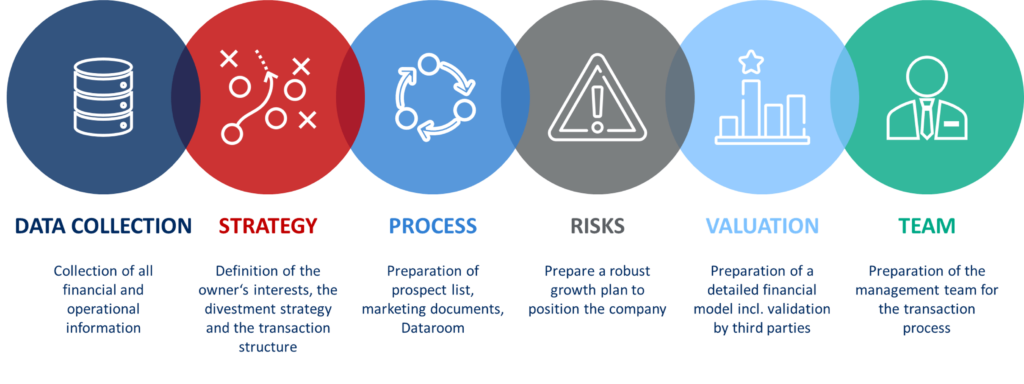
Don’t get rattled
Buyers try to take advantage of the element of surprise by proactively making offers. Such offers are often not only below the achievable market price, but they address companies and owners unprepared. A professionally structured divestment process can increase the probability of success of a transaction and optimise the transaction terms, including the final purchase price, in favor of the seller.
Don’t reveal too much too soon
Sometimes, as advisors, we are only brought into a sales process when talks with the prospective buyer are already underway or – regrettably – deadlocked. By this time, a lot of information has often already been given to the prospective buyer, which tends to weaken the seller’s position. In such a situation, it is important to regain control of the transaction process. By preparing well for the due diligence and by including possible other interested parties in the divestment process, the seller’s negotiating position can be improved. The further process may or may not include the original bidder.
By proceeding in this way, business owners can be sure that they can optimise the valuation as well as better control the contractual arrangements of the final buyer. With a view to a careful preparation and structured implementation of a sale, it is in this respect helpful to involve or cooperate with specialised advisors as early as possible.
Cooperation with “business confidants”
We have been “in the market” since 1999, during which time Investec has built trusting relationships with numerous financial institutions, tax advisors, auditors, and other business confidants. We understand and respect the history of relationships, therefore clear agreements and responsibilities are important to us. As an advisor specialised in corporate transactions and financing, we rely on close cooperation with these players as well, in order to bring together expertise and drive for the benefit of the client.
Veel M&A-activiteit en consolidatie in CPaaS-markt
In de Communications Platform as a Service (CPaaS)-markt is er heel wat M&A-activiteit geweest. De afgelopen vijf jaar hebben toonaangevende CPaaS-spelers om marktaandeel gestreden door wereldwijd talrijke overnames te doen. Bedrijven zoals Twillio Inc, Vonage en Sinch AB zijn voorbeelden van bedrijven die zich snel (internationaal) hebben uitgebreid door consolidaties.
De CPaaS-markt zal naar verwachting een CAGR van 34,3% registreren tijdens de prognoseperiode (2020 – 2025).
De CPaaS-markt is zeer concurrerend, met voornamelijk kleine en grote leveranciers op de markt die zaken doen op binnenlandse en internationale markten. In de huidige CPaaS 3.0-propositie – die momenteel in volle bloei is – gaan de leiders van het kernsegment van CPaaS verder dan de levering van API-basisfuncties.
Toonaangevende bedrijven trekken kapitaal aan voor fusies en overnames en voor sterke groei.
- In 2020 haalde Infobip meer dan 200 miljoen dollar op bij participatiemaatschappij One Equity Partners tegen een waardering van meer dan 1 miljard dollar. Het was de eerste externe financieringsronde van het bedrijf;
- Sinch haalde in december 2020 690 miljoen dollar op bij SoftBank om verdere overnames te financieren;
- MessageBird haalde 200 miljoen dollar op in Series C-financiering in een ronde geleid door Silicon Valley’s Spark Capital – tegen een waardering van 3 miljard dollar;
- Een aantal middelgrote spelers ging met succes naar de beurs – Link Mobility Group, Route Mobile, CM.com.
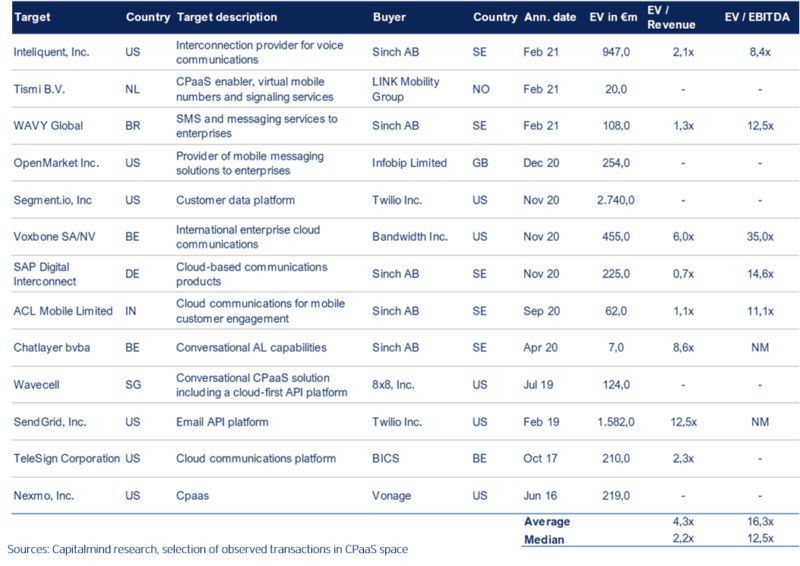
Gediversifieerde CPaaS-kopers
Ondanks talrijke overnames in de afgelopen jaren lijkt de markt gefragmenteerd, waarbij de belangrijkste leveranciers belangrijke strategieën hanteren zoals productinnovatie, fusies en overnames om hun productfuncties uit te breiden en concurrerend te blijven.
Redenen voor fusies en overnames
Volgens Gartner breiden CPaaS-leveranciers hun productaanbod snel uit om zich te richten op een groter aantal use cases in een steeds competitievere omgeving.
Dit segment wordt steeds meer geconsolideerd, geleid door een paar grote spelers, gevolgd door een sterke band van middelgrote bedrijven en een lange staart van kleinere bedrijven. Dit segment zal echter blijven evolueren naarmate bedrijven als Microsoft en Cisco en netwerkexploitanten als AT&T terrein winnen en voor extra concurrentie zorgen.
We merken dat kopers zoeken naar:
- Verrijking van platforms om volledig programmeerbaar te zijn; voor alle modaliteiten;
- Verbetering van de klantbetrokkenheid;
- Verhoging van KPI’s, connectiviteit en technische mogelijkheden;
- Verbetering van berichtgeving en API-mogelijkheden;
- Geografisch uitbreiden / nieuwe markten betreden;
- Klantenbestand verwerven.
Het marktrapport openen en lezen klik hier
Voor vragen, neem contact op met: ron.belt@capitalmind.com