
Listen now
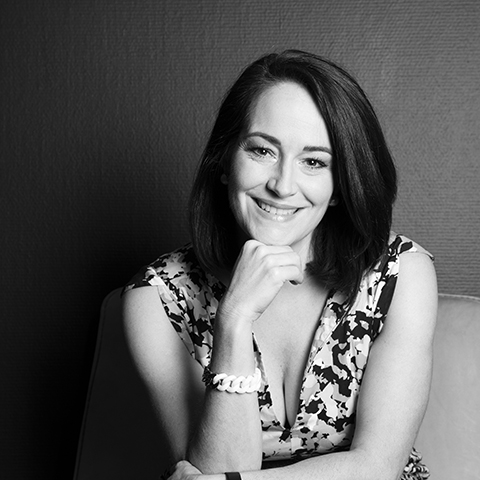
Tristanne Farrell chats to Cumesh Moodliar, CEO of Investec Bank SA, and Itumeleng Merafe, head of Investec Private Bank, on how to approach art as an investment. The conversation covers liquidity considerations, depressed market conditions, tax benefits and the role of primary and secondary markets. We also get a sense of what's behind their mutual love for art, and where it all started.
Podcast transcript: scroll to the areas that interest you
- TF: Tristanne Farrell, Investec Wealth and Investment International, Senior Investment manager
- CM: Cumesh Moodliar, CEO of Investec South Africa
- IM: Itumeleng Merafe, head of Investec Private Bank South Africa
00:00: Intro
CM: In times where the markets are depressed and similarly when there's volatility and you can't actually make accurate predictions around asset classes, art becomes an interesting view for people.
I think the key aspect would be understanding what your own liquidity needs are and how you may need to liquidate equities or any other sorts of assets that are much easier to sell versus trying to sell a particular piece and hoping to achieve a higher value.
TF: Welcome to Art in Focus, an Investec Focus Radio series that explores the dynamic and growing African art market. I'm Tristanne Farrell, your podcast host. I'm a senior wealth manager at Investec Wealth & Investment International, and I have a passion for art that's out of control.
In this series, I'll be chatting with art collectors, investors, renowned artists, and emerging talents about the current state of the African art scene.
Whether you're an art novice or a seasoned investor, join me as we tour the landscape of Africa's artistic expression together.
In this episode, we'll be talking about art as an investment. And not only do we get the collector's take on this matter, but the collectors in question bring the banking and finance expertise to the conversation as well.
01:20: Introduction of guests
TF: I'm joined by Cumesh Moodliar and Itumeleng Merafe. Cumesh is the CEO of Investec South Africa and has been with Investec for 12 years. He started out in banking in Port Elizabeth and is now based in Joburg. Itu, is the head of Investec Private Bank South Africa and has been with Investec for 18 years.
He started out in the client support centre and is also based in Joburg. Both are avid collectors and supportive of the creative arts. Something else that they both have in common is they completed the Archbishop Tutu Fellowship in 2016 and 2019 respectively. So welcome to you both.
CM: Thank you. Thanks for having us.
IM: Thanks, Tristanne. Great to be chatting to you today.
01:56: How did Cumesh and Itu’s art journey begin?
TF: So between the two of you, you've got nearly 30 years of experience in finance. What has been your experience in art and let's hear about how you both started your collections. Let’s get a sense of what your weekends look like and how you hunt for that next piece to add to your collection. Maybe we'll start with Cumesh on this one.
CM: Thanks, Tristanne. I think firstly to say that I have a collection feels like a bit of an overstatement. I have art on walls. I'm not sure if I see it as a collection as a whole, but certainly, so I think my interest in art started quite a few years ago. My sister always had a passionate interest in art, and that sparked something in me.
And when looking at art, what I really look at is what strikes me and speaks almost to both heart and not always to the mind. So, finding art sometimes could be finding it from a parking lot on a Saturday morning, or in a gallery.
IM: For me, it actually started with a former colleague of ours who went to school with an artist called Mohau Modisakeng, and they were very good friends.
And I once just saw the work that Mohau did. That's probably the first time that I thought, this is insane. Like when you see a level of creativity that you can't explain. And I guess through that and meeting artists through Muhau, it became quite an interesting thing for me. The best part has been in meeting artists and being able to get to some of these studios and seeing some of the stuff they have lying around -that's just random.
That's probably my favorite place to forage for art. It’s not necessarily just galleries, but stuff that’s like in the corner of a studio and you're going, what's going on there? And, I think more recently I've got two small kids and what I've absolutely loved is going to galleries and studios with them and seeing what they're drawn to.
And, and having conversations with them about why they like. And it's fascinating to watch a six-year-old get drawn to a piece and just go, it's because of that color or that shape or that thing. So for me, it's really about what resonates less around what I think technically is better than something else. It's really around just what I'm drawn to.
TF: Yeah, I think it's different for everyone, but definitely seeing the work through a child's eyes is amazing and hearing their views. Okay, so let's move on.
03:56: Top 10 artist ‘wish list’ and how do you approach collecting?
TF: So, someone once told me that approaching collecting in an intentional way, you should write a list of the top 10 artists you'd like to earn and then slowly work through that list. What do you guys think your list would look like? And maybe we'll start with Itu on this one.
IM: So I guess, and that list is ever changing. I certainly do at any point in time have a list. I mean, I remember my initial few artists that I thought I have to get. The one was Nelson Mokamo, who I've just loved his work.
Mohau when I saw it. Lionel Smith, definitely. I remember seeing Velaphi Mzimba's work and just like and just like this massive apple and thinking- there's something about it that I was drawn to. Mary Sibande, Phillemon Hlungwani, like those are some of the names that initially I thought I really want to get my hands on.
More recently, you know, artists like Katlego Tlabela, I've really liked his work. Steven Langa's work has really resonated. There's a guy, South African artist, based out of Zanzibar, Reggie the Nomad, Reggie Khumalo, whose work is just for me, mind-blowing. So it's an ever-changing list. And I think as you find and see, certainly I do keep a list of some sort and where possible, try and meet the artist.
That's probably one of the things I like about social media is often you're able to interact with artists that way and set up time to actually meet them. And it's cool to actually hear the story of their art from them.
TF: Definitely.
CM: Yeah, very similar in that way. I think you also, as you get older, your tastes evolve and what you look for changes. If I think of some of the work that's inspired me, it's like a wide range of artists. One of the first pieces of work was an Eastern Cape artist called Duncan Stewart, who around soccer World Cup time in 2010 put together a collection of art, which he called The 2010 Collection. And then Phillemon Hlungwani is exactly someone that I think is really good.
And I think I've chatted to you about Jan Tshikuthula and that I bought a couple of pieces of his work and identified others. And then, funny enough, there's some old South African artists, where we’ve picked up an interest in like Walter Battis, Alexis Preller…Sokoto
TF: Just spoke you about that, ja
CM: I just haven't been able to buy one, certainly keen to, and to my mind, there's an evolving list as more and more of this comes to the fore. And then as you look to saying, do you need to pull something that does have value? And because I never look about it and saying, this is going to be a piece that I think is going to appreciate. I buy it because I actually like it and I'm prepared to have it in my home or just something that you'd like to own.
For me, it's also then saying, I look at a Kentridge and I think if you've got a South African art collection somewhere in it, you probably need to have a Kentridge.
TF: Yeah. Definitely. Okay. So I think we’re probably all on the same page with this. I would also collect like that with the intention of owning something that you love and the beauty of it, and you can live with it versus the financial benefit of it.
06:41: Contributing factors to the art market's resilience
TF: Let's draw back to art as an alternate investment class. So the Art Basel and UBS Art Market Report recently indicated in the face of high borrowing rates, geopolitical instability, and volatile economic conditions, the global art market still managed to total estimate a $65bn in sales in 2023.
The global art sales dropped 4% in value and that's not factoring in inflation, which could mean that 4% number is quite light. However, the art market is showing strong signs of stabilizing over 2024. What do you think we can attribute to this?
IM: So I think one of the things we've seen in recent terms, and when you have tough economic environments, high rates, all of that kind of thing, often there is a bit of a divergence between sort of those who are sort of your wealthier part of the market.
I think that they're quite resilient and robust and I think where markets are slightly depressed, alternatives sometimes get quite interesting. And I think art as an alternative will continue to pick up.
I think some of the other things that will drive it as you see some of these auction prices where arts prices, and I think some people that just, you have so much wealth that gets driven to that cause you're going that level of appreciation you won't find anywhere else.
You know, there's a part of me often where I wonder how much of it is driven by speculative thinking around art. There certainly is value. Lots of it is driven by value. But I think often, yeah, and in depressed markets, alternatives often look interesting because people are going, where else can I find value?
And the more you see those Sotheby's auction prices come out, I think people just go- am I missing out here? What else is happening here? Yeah.
CM: I think that in times of really depressed markets, as Itu says, and similarly when there's volatility, and you can't actually make accurate predictions around asset classes, art becomes an interesting view for people.
I think the key aspect though, and the caution would be, understanding what your own liquidity needs are and how you may need to liquidate an asset versus say, for example, equities or any other sorts of assets that are much easier to do and readily available to sell on markets versus trying to, for example, sell a particular piece of art and hoping to achieve a higher value. I've heard some incredible stories, I look at some South African artists that are just doing exceptionally well, you know, internationally. And then I've also heard some horror stories.
TF: Yeah. you’re unsure of the liquidity.
CM: So the liquidity aspect, and sometimes if in the event of a passing or death, people / an estate trying to get rid of a piece of art sometimes can be difficult.
09:07: Understanding the role of primary and secondary art markets
TF: In terms of global art sales, U. S. collectors were very dominant, representing 42% of sales by value, including both primary and secondary markets. Post-U. S. elections with the Trump victory and noting everything I've mentioned above, in your view, would you say people are having more disposable income to boost this market still? Or is it still viable in your view?
CM: I think art's a bit of an all-weather market. I think, I don't think it's as cyclical. I think there are moments when there are up cycles, but I do think there's a consistent base of art collectors, people who really enjoy art for what it is. If I look at the continent, I just think South Africa as a whole has some of the most incredible artists.
I look at when we host the Cape Town Art Fair, and from Senegal to Nigeria to Ivory Coast, you see the most amazing art. And, and most of it's priced in US dollars. and achieves fairly good, we achieve very good sales out of that for artists on the continent. So I think, you know, and that's not necessarily, I think, do you have good years? Do you have bad years? You do, but I think there's an underlying sort of through the cycle view on art and particularly if you're buying it more primarily because you enjoy it.
TF: Definitely. And I think you mentioned earlier the auction market as well, you're seeing a lot of collectors like yourself buying the old masters again, which I think is so nice mixing the old with the new in your home.
Um, and on that point, the auctions are the second most widely used channel for purchasing art. I think 67% of collectors have bought on auction in 2024, and galleries will always be a trusted space and a reliable space for collectors.
Can you guys differentiate between the primary and secondary markets, and more importantly, what each represent?
So just for our listeners, the primary market would be where the galleries operate and the artists and that's where they initially come to market. I think the primary market is great and that's why we part of the Investec Cape Town Art Fair is because these galleries take the South African or African artists overseas and give them that international representation as well.
So in terms of that, it costs these guys a lot of money to get them off the ground. And then the secondary market would be the auction houses that then regulate the pricing and obviously give a bigger access to the market.
What's important about each of those channels?
IM: I do think for me that primary market does represent something important for artists themselves and I think for me, that's the big deal. I think the secondary market that the way I think about it is that is where often you'll get returns. That is where value often like the market value is set. But I also think it's an important place because it allows for access. I think there's a misnomer when people think auctions because they think about those big, multiple million-dollar art pieces.
And actually there's auctions all the time at many different entry points. And so I think it's an important thing because it gives them, it creates liquidity, not just liquidity, but access to the art market
TF: And education, I think, as well, because you often don't have the guts to go into a gallery as a young professional and those kinds of things.
CM: I think it gives you a comparative market sense. So definitely place for both and I think particularly for artists who are up-and-coming artists who need to get exposure, but also need to have some solid earnings. The ability to transact directly, not pay lots of intermediary fees, etc. That's something in the awful that also debate is- of the Rand for Rand or Dollar for Dollar, what percentage of that does the artist actually receive?
This industry is full of intermediaries as well. And I think for the artists, their ability to build earnings, build their own savings, become more financially independent, etc. is critical. On the extremes, you get somebody who does exceptionally well, and some who are just so passionate about their art and their life, but don't always get to become financially viable.
So, I think primary is important, but secondly, from an auction perspective, the ability to access art other than through that auction would probably be not possible, so not possible through a primary. It needs to come through via a collection, it's often second or third hand that it's coming through, and the ability to source those quality pieces, and then it also gives you a sense to check value.
TF: Definitely. It regulates the market.
CM: The only caution I've got, and I've bought a couple of times on auctions, is just remembering to add buyer’s commission, VAT etc. as you're bidding, you keep forgetting about another 25% in your head.
TF: That's why you read the terms and conditions before you start!
IM: Look, the one other thing that auctions are great for, and it's probably a vanity thing more than anything, is you see a particular artist's work shoot up, and you have some of their art. Do a bit of a mark to mark it in your head, like there's a pat yourself on the back thing that happens.
TF: Revalue your collection!
CM: Absolutely!
13:38: Exploring art purchases through social media
TF: In terms of other channels of buying, do you ever buy on online, Instagram, social media? What are your primary ways of locating works? Because I'm only hearing about auction houses, galleries, artist studios.
IM: I have once or twice where I've reached out on Instagram, actually. So I met an artist called Cavella ended up meeting him in person, but he just kept posting quite a bit. And I just thought to myself, I actually quite like it.
And I reached out. So I have done that. And then I've also. through, I have bought a piece once or twice where it's like a referral from an artist about another artist. And we've just chatted on WhatsApp and they've sent. And so I guess there is an element of word-of-mouth and community that happens and plays out.
So, which is why I was saying, I think for me, the, what social media will do and what it creates such a great access and it gives artists an opportunity to put themselves out there a lot more. So, yeah, those are some of the other alternative ways I've done it.
TF: Yeah, I'm definitely like you, I like to meet the artists, understand them and relate the work to the artists. So it's quite a nice personal connect.
CM: It's a far more powerful connection if you've understood the thinking and the rationale.
TF: The process.
CM: The process and why they thought what they thought.
TF: Yeah, definitely. So have you ever bought on Instagram?
CM: Yes, actually through social media. And actually that really started during COVID when we couldn't get out.
TF: That was probably me too.
CM: And I remember looking at things because you needed some form of, kind of outlet to engage, but you knew you couldn't go to galleries. You couldn't go to exhibitions. And during COVID seeing artists online and reaching out to them, one was on Facebook, that was an Instagram and then starting just connecting. So I think COVID, certainly for me, COVID was the catalyst to looking at buying in that way.
15:16: UBS's art market report- Gen X leads in expenditure
TF: So just going back to the report again, according to UBS's art market report for high net worth individuals, they showed resilient spending, but this has changed in 2023 with an average drop in expenditure of 32%. However, the Gen X was the highest average spending and their lead continued in the first half of 2024, which is quite interesting. Is there a transfer of intergenerational wealth? Gen X - just to position it - is me, ok?.
CM: I think I've just been excluded!
TF: I just wanna position myself, not the two of you! And is any, is Investec doing anything to enable these buyers? So just for instance, we did a young professionals coffee morning in Cape Town where we set up six galleries who were involved in the Investec Cape Town Art Fair.
IM: Very cool.
TF: And we took young professionals into the gallery spaces for coffee and croissants and the gallery was amazing. They did a walkabout with the artists, they did panels, and it just gives access to these spaces. Are we doing anything? I know we do the fair, but anything else you guys can think of?
IM: Look, I think I've seen it on smaller scales. So where we've done like client-related functions with particular artists. So, been one or two of those, but I think it is important work because one of the things I guess we haven't spoken about is - certainly to us, for me - often the art world can feel intimidated. I mean, I remember the first time going to one of the galleries in Jo'burg and it, like you kind of walk in and it's this quiet space.
No one's saying, don't come in and no one is stopping you. But there's almost like a, I don't know what the etiquette is here. How do I show up? So there's something about it that I think we can play a part in breaking some of those barriers and opening spaces and showing that to people. And I think things like Art Fair certainly do that because again, just the scale of Art Fair and how it's set up and it being now something that's marked on people’s social calendar.
I think goes a long way in helping break down those barriers because I think to your point around Gen X, I think that's a there's a wealth transfer, but it's also people that are at an age often where they have that disposable income. They have that thing to do, and it's it'll be great if we're facilitating some of that thinking and conversation for professionals.
TF: You might be slightly more confident at that age as well. Yeah. I also remember being intimidated walking into gallery spaces. Now you know the people at galleries and it's a much more friendlier environment. Cumesh?
CM: Yeah, I think what's, what's important for us is one, how we leverage the Art Fair to achieve some of that, and how do you get the Art Fair to live beyond the few days that we have the exhibition in Cape Town? In other words, how do we take some of those artists into broader forums? Some of the points you to make, how do we give them exposure to young professionals in the business?
Could we use some of our, and this is something that I've certainly been thinking about from a, from our office in Sandton is- we've got lots of space. How do we, try and use some of that space just to create almost an exhibition area for emerging artists.
17:58: Growing interest in texture and sculpture works
TF: Okay. And in terms of buying art, the mediums, from most sales, people still enjoy painting as the preferred medium of buying because it's well known and it's understandable. For you both, what do you enjoy collecting? Is it ceramics? Is it tapestries? Is it painting? What's in your homes?
IM: Predominantly paintings, drawings. I recently got a piece by a guy called Azael Langa who does the, yeah, with the smoke and all of that. That was a bit different. Where I am very light and I haven't done a lot of is sculpture. It's something that I guess I'm trying to explore now and get my head around because Yeah, I just never thought it was just never a big pull.
I've always, I'd always seen it. I'd never thought about it from my, in my home. Where would I put this? I think also toddlers, I always thought hazardous, but somebody said that to me. They said…
TF: Can my child break this? Then I can buy it if they can't!
IM: That's the thing. Or if it, can it fall on them and how bad would that be! And actually we had a staff member who was also quite a good sculptor. It was actually quite incredible. He was on the top program and had some incredible works. So certainly that, and then textured work is, I always find it. There's an artist, Gary Stevens, who - it's drawings, but he then folds the paper and it gives it this 3D almost effect and he uses thread and all of that. The texture thing, there's something about it. It adds another dimension. It's certainly what I want to explore and get my head around more.
TF: He's with Everard Read.
IM: Yeah. He is. He is.
TF: And that sculptural artist that works at Investec - he still works at Investec, but in Cape Town. His name's James Cook. He's amazing.
CM: I love his work. I know some of our colleagues have bought his work. And there are two or three of his pieces I think are exceptional. Incredible.
TF: So he's artist by night and finance by day. It's incredible.
CM: It's incredible. That's absolutely that left brain, right brain. Yeah. Unbelievable.
20:05: What’s causing the shift in luxury goods market?
TF: We can move on to something around the alternate investment classes. I'm going to pull on your financial strings now. Watches has seen a solid three year run with some prices reaching record highs over 2021, 2022, 2023. In 2024, the watch market is not seeing positive signs. Yearly performance for the Watch Charts overall market index is down 9.4%, while all the big brands names suffered like Rolex subindex fell 7.1%, Patek Philippe dropped 10.6% and Audemars Piguet 12.4%. Do you think there's a general shift in the luxury goods market and what do you think it's attributed to?
IM: It's hard to say. Look, I think some of those prices and the availability and access of some of those things are minimal. And I think that there's still massive demand. Um, I listened to people, I saw an article recently where Rolex is saying they're going to start doing secondary market Rolexes. So they will buy from people and sell used Rolexes - Rolex themselves, right? So just because of the demand is so high. So I don't know whether those prices coming back might be a flip. I think if I, if I had to give a view. around that long run average. I think through the cycle will continue to trend up. I think to Cumesh’s earlier point, the principle around these alternatives is really almost saying when I know I've got my core investments, be it equities, cash, bonds, whatever it is, I think alternatives must remain that in a portfolio - like the alternative, not the main.
Cause I think you can't do it for your primary. I also think though, for me, similar to art, things like watches must be something that you're drawn to. I have a, we have a client who's big into watches and loves it and can tell you why this particular Patek talks to him because the watchmaker was this particular individual.
And I think in that case, you're not just buying it for the appreciation. There's a story to it that it's tied to. And I think if in time when there's a wealth transfer and the kids can liquidate for much more money, great. But I think the process of owning it was part of the joy for that collector because he connected to it in a particular way more than just, uh, I'm taking a punt.
I think that could be quite dangerous. Having said that I've seen, and I think it was in Italy, I saw it in, in, in a publication a few years ago where there was a fund set up purely to buy a particular type of Patek. And they were trading in those. So they'd buy those Pateks, keep them in storage and trade them and you could invest in this thing.
I've seen it with whiskeys as well. Actually, there's a fund locally that does that with rare whiskeys where, um, they've, they've domiciled that out of Singapore and they buy whiskeys on auction and resell them. So, so there is a space for it all, um, but it must remain, I think, to my mind the alternative as opposed to the main
TF: and you Cumesh?
CM: No, no, actually very similar to that, Tristanne, I think Itu’s hit it on the head. The, the, a couple of things. The, the one is, you know, the, the there number of alternative asset classes out there. But if it's your passion, if it's your hobby, mm, if it's, that's you have a real interest in and get some pleasure from having it, I think that's gotta be the key driver.
These classes will go through ups and downs. I follow classic cars, and you can see that going through its own cycles. They're stamp collectors. I had a funny experience probably about two months ago. I was with Kieran Whelan at an airport, and we were flying back to Johannesburg. And we bumped into a client who was holding a little portfolio bag, and he's got a stamp collection.
He's actually a Swiss-based client. And, but he said he's selling stamps and he pulled out a sleeve that had a few rare stamps in it and he pointed, he said, that's about R7m or R8m worth of stamps. Now, I have no idea about the values, I don't understand it at all, but there it is. But there's a specific market that understands it, that attaches a value to it. And he's prepared to trade in it.
TF: I mean, I collected stamps when I was 10. So, I haven't heard about it again. So this is a popular market.
CM: And there's a global market for it. But I also think by buying, it's like buying Bitcoin because everyone's saying it's on the up today. You yourself have to go and do the homework. So I'd advise anyone who wants to get into any one of these alternative asset classes. Again, it's part of whatever they consider as a balanced portfolio. And once they've taken financial advice from someone like you, uh, just then to look at it and say, I've got a direct interest, but let me study myself into it. Don't buy it because my mate said to me, “it's actually a great time to buy Bitcoin”. “It's a great time to buy stamps”. You know?
TF: And I think all of us sitting here, you have to have a passion. And that's why you've got to develop it.
CM: You've got to read yourself into it. Talk to lots of people, get lots of exposure before you commit 100 percent.
IM: And the truth is with these alternatives, you only hear the good stories.
CM: Absolutely.
IM: It's easy to think it's always upside, right? No one ever goes, “Man, I once bought this watch and sold it for 30% discount”. Nobody does that. So it's like people Photoshop their lives, right? So they'll only show the upside stuff. And so that's.
TF: It's like going to the casino and they tell you about the winnings and never the losses.
IM: Yeah.
24:41: Diversifying portfolios: balancing equities and alternatives
TF: On the other hand, equity markets, which I'm quite happy to tell you to the end of October, MSCI World was for 12 months delivered a 34% return versus S& P up 38%. Eurostox was up 25% and FTSE up 22% - all in dollars - while gold was up 38% in 12 months, and oil was slightly down at 16%, but the Rand appreciated by 6% in the last 12 months.
So equity markets have performed, watches have declined. Is there value in this diversified portfolio? And then specifically, how do you each diversify your own portfolios? And I think we've covered a lot of it, but you don't have to be too specific. But...
IM: What that tells you right around diversification is it is around you limit downside and upside, like it's, that's the whole theory of it, right? So if you hear that and you go, if you're in both equities and some of these alternatives, there is a bit of a balance. It seems like there's a bit of a counter, right?
And that is the thinking around diversification. Obviously there is an argument to go, if you perfectly diversify, if you're going to diversify, then you'll actually have no returns like that. That's almost…
CM: But again, it all neutralizes each other.
IM: Yeah, that's the risk you run. But I think, to my mind, even if you think about those stats, as I was saying, for me, the alternatives one is a much smaller percentage of the broader portfolio. That's the first thing for me personally.
And secondly, the truth is, if I'm really honest, is any value that I, that you derive from what would be those alternatives for me would be almost upside that I'm not accounting for.
So, I've seldom bought, be it art, be it a watch, whatever it may be, and gone, you know, let me keep watching what the value does. It's almost like I forget about it almost. So, so I don't really. And for me personally, if we're talking art, the dividends of the art is the enjoyment of the pieces and my ability to look at them and draw inspiration from them.
So it is a slightly different thing in terms of how I think about it personally- I still have quite a long-term view on things. I'm certain even year-on-year, I'm not going, “what have equities done this year” versus like, I'm taking like a 15, 20 year view anyway, right? So you can, you can, that allows you to think about things slightly differently.
So I guess one of the principles around diversification is also where you find yourself, be it age in your career, your short-term liquidity needs, all of those things. So I think that informs a lot of where I'm at. And then certainly a lot of my thinking around investment is incredibly long term. So the blips at the moment, that's just noise for me. I'm not really paying attention.
TF: Yeah, I think liquidity is also key because I don't know how quickly you can turn around a whiskey portfolio or a car or something like that. But I agree that there's an, there's a place for everything in this market and it is time in the game. It's definitely time in the game. How do you diversify your portfolio, Cumesh?
CM: So I think just saying, if I look at alternatives and just on, on, and this is again, not intended to be financial advice, it's just my personal view. I'd, I would look at alternatives being 5-7% of what I'd have from a savings and investments perspective. And it's also my 5-7% of fun, enjoyment, aspiration, inspiration, all of those things.
And, because on balance, you've got to have your longer-term view of where you want to have your savings. What would you do if tomorrow the world changed, and you needed to, for example, liquidate, or you've got to think of things like illness, changing roles, changing jobs, etc. Where would you be? I don't necessarily want to be going into my cupboard to say, “Look, I've got to take my stamp collection out and just dust off a piece of art and go find a buyer”.
So you've got to balance all of that against what would your short-term liquidity needs be? What would be your longer-term liquidity needs be? And what do you do if there's a rainy day? And then say, what would I allocate?
TF: I like that question of what would you do if there's a rainy day.
CM: And that's often what's in the back of my mind. What happens if there's a rainy day and I may have just gone and bought a really expensive piece of art and it rains the next day. Can I still withstand the rain?
TF: And the fees you're going to pay on auction to sell it.
Are there any tax benefits that you see in these markets we've discussed?
CM: It's difficult to talk about the tax benefits because I think the scope for appreciation and you take some of these clauses and there's no real capital gains tax implications. Some of them are actually excluded from capital gains tax, etc. So again, there's risk that comes with it. Yeah. But that does mean there's opportunity if you have a very firm view.
TF: That's why the wealthy are drawn to it. Yeah. But I mean, you can consult our tax and fiduciary team if you need some advice for your state.
CM: Absolutely.
29:04: The significance of the Investec Cape Town Art Fair
TF: And then just a final comment: What is your experience of the Investec Cape Town Art Fair and any preferred galleries for you both? And we'll start with Cumesh.
CM: I think, listen, I find the Art Fair one of the - personally - one of the most significant calendar events, both for myself and my wife. And I think the opportunity to get exposure to artists who I think can absolutely hold a global stage is there. The fact that we attract clients that are not just South African clients, that we attract an international client base to Cape Town for the art fair, to me, tells you something about how in the sort of the level of high regard that it's held in.
So I see it as an anchor event on the investor calendar and certainly something where we not just showcase incredible art from the continent, but we also are able to showcase our firm and we are where we align ourselves in terms of the marketplace for art.
IM: Yeah, I fully agree. And when I think about our purpose statement around living in society, not off it, and our ability to, through the Art Fair, profile artists and help people sell their work and help people earn a living, right? Because, you know, one of the things for me that I'd love us to be part of helping and facilitating is being an artist shouldn't be this binary thing, whether you're like the very well known and you get very rich or you just put, you need a big middle. Actually, you need people who can live a, like a very middle class life.
Being an artist, it mustn't be this binary thing and I'm hoping things like Art Fair by bringing more artists to the fore allows us to do that. And we're showcasing Africa's Finest, so it's such a proud thing for me, I think it's an incredible thing and being at the fair is amazing, right, like it's this massive space and you just get lost in it.
I mean, you can go on multiple days and absolutely get lost in it, so it certainly is a key calendar event for me.
CM: You know, and it's almost like every day you go, every session you pop into, you see something different. Yeah. A very different dimension to it.
IM: Absolutely.
CM: And funny enough, just the people who attend it. Just the rich diversity, the energy that comes through it. It's amazing.
TF: Couldn't agree more with both of you. So thank you so much for your time today to the two of you. See both at the Investec Cape Town Art Fair in February. It's the largest contemporary art fair on the continent that brings Africa to the world and the world to Africa.
31:01: Closing and where to subscribe to listen to the series
Thanks for listening to this episode of Art in Focus brought to you by Investec Focus Radio. You can find all our episodes on the series at investec.com/artinfocus or wherever you get your podcasts. If you enjoyed this episode, please rate it, leave a comment and forward it to your friends and colleagues.
Disclaimer: The views expressed are those of the contributors at the time of publication and do not necessarily represent the views of the firm and should not be taken as advice or recommendations. Investec Bank Limited an authorized financial services provider and registered credit provider.
31:47: Pule and Hannah reluctantly give up the names of their current favourite artists
TF: Can you give us some names of your favourite artists that you already own?
PT: Love them all. But I would say like some local artists that I'm collecting and advise people if well, not advise, but would suggest in terms of if you're looking to collect it's kind of like what are you looking for if I look at...
TF: I feel like I've just asked him who his favorite child is...
PT: it's not favorite it's it's more about
HOL: that I would love to...
PT: ...talk about I'm really excited about what Mmangalisa Nzuza is doing um I think his take of, call it cubism in a very African authentic way.
And again, telling natural stories in a natural way from a wonderful lady from the DRC living here in Johannesburg, uh, Cinthia Malunga. Very interesting data point, she says the same birthday as someone she's really inspired by Sam Nhlengethwa in terms of how he's done collage and Sam is another, yes, collage, mixed media.
TF: And she was at 154, right?
HOL: Yeah, we've sold her a Sotheby's as well.
PT: So I think she's, you know, really exciting, young, up and coming. In KZN, there Sphephepo Mnguni who's really kind of steers toward he's inspired by Kerry James Marshall and the likes and what he's telling about what we as black people are doing on our everyday scenes in happiness, joy he's got a series now where he's giving capturing living legends, uh, which is very exciting.
Like so other artists that he recognised that are inspiring him as well that alive are great. Gosh that list is endless. There's Ndidi, Emefieli…
HOL: I love her.
PT: and like she's in London and yeah, lives... but from Nigeria, but in London. And I did a studio visit with her last year, November or two years ago.
And I just think she's so under the radar, but she's epic. Absolutely, epic! But I could go on. I want to stop.
TF: Hannah, I'll give you two minutes to share some of…
HOL: My favorite artists? My God.
TF: Personally, what do have your eye on?
HOL: Oh, my goodness. So my collection is quite varied. It is focused on the continent, obviously. I have a balance between artists that I know, um, you know, when you have a relationship with them. And, so I have people like Miranda Forrester, who's a black British artist who I really love. And Peju Alatise, who's a Nigerian artist.
TF: Miranda was a Tiwane as well.
Another Tiwane artist... I mean, it sounds like I'm being paid by Tiwane! I am not.
PT: Peju, was at 154.
HOL: I have an addition by my friend Nengi Omoku. I wish I could have an original. I don't know if you saw that she had a solo presentation at Frieze this year. They had an "artists by artists" section, so big-name artists who chose an up-and-coming artist that they really enjoyed.
So Yinka Shonibara chose Nengi OMoku. It was like my favourite spoof in the entire fair. I just came to Cape Town from Lagos, so these Nigerian artists are fresh in my mind. Modupeopla Fadugba - another young Nigerian artist, and she just showed me her new body of work. It's mind-blowing. There is so much talent on the continent and so much... I mean, I don't know if I'm biased, but so much of it is female right now.
TF: ...which is great.
35:01: The overall health of the African art market
TF: So also then towards Hannah.
Now we're going to target your business brain here. So with Sotheby's, the African art market results recently, what are the trends? What are results looking like? Is it up? Down? I know there was a shift in the global art market from that UBS report.
HOL: Yeah, I mean the UBS report I don't think goes into Africa so much. So that's looking at the global market. So there are some market reports like Art Tactic do a really good one on African art. But the data coming out of the African sales is few and far between. I wish there was a little bit more done on it.
We do a lot of it in the house. The market is growing. It's not a steady growth. It comes in fits and ... fits and starts... was the phrase I was looking for.
Thank you. We've definitely, look, we've had a year of a bit of a slowdown in the art market globally, and I won't pretend that hasn't affected the art market.
But for example, for us at Sotheby's in 2024, it just means that we've done more private sales this year than we did in auction sales. There's always reasons people are selling, and there are always people buying, and it just, we just have to adapt to where the market is.
We definitely saw a huge amount of interest between 2020 and 2022 in very young black artists doing figurative painting, we kind of touched on that earlier.
We're seeing the market move on from that, but I don't think that's any bad thing. You know, there's more interest in older artists now, there's more interest in abstract work. We have definitely brought on a lot of new collectors who are interested in learning more. So constantly, it's a question of, " what else should I be looking at, of what, how can I refine my collection?"
And that's what I really enjoy is working with collectors in the long term on building meaningful collections rather than the short-term investors
36:40: Understanding the potential of the African Art market
TF: Then just again, Hannah, the Investec Cape Town Art Fair, UNLAC 154, doesn't categorize the fair as an African fair, but as a contemporary fair, um, what is the impact of African art on the contemporary market globally?
HOL: Yeah, I mean, of course, you're not going to call your own contemporary art African art and that term African is often kind of a redundant term, right? I mean, you can't categorize the entire continent.
We use it because at Sotheby's, we weren't showing a lot of African art and therefore we felt like there was a use or a need for a platform for these artists and certainly in the time I've been there, we've included hundreds of African artists in Sotheby's auctions that were not selling in Sotheby's auctions before.
So I'm very proud of that fact. In the long term, I would love there not to be an African sale. I would love these artists to have full recognition and full representation within our international categories. And that's what we do more and more every year. So every year we're including more African artists in our international sales, and we're expanding the market for them.
So that's something I really enjoy about my job. Look, there's still a long way to go before we see that the African market... When we started sales at Sotheby's in 2016, the African market was 20 million auction market, by the way, which is what we can really quantify with the turnover annually was like 20 million.
It was less than 0.1 percent of the global market today. I think in 2023, which obviously, is the most recent complete year, the turnover auction sales was 80 million dollars.
So a huge amount of growth, but we're still talking 0.6 percent of the global art market. Africa represents 20 percent or nearly 20 percent of the world's population, and we're not even thinking about the diaspora that lives outside the continent.
There is such potential in this market, and it comes down to, like Pule said, it's you know, collectors on the ground supporting local markets, which will allow for international interest.
I'm never going to say African art should only be for African collectors. I know the artists want an international market, but the support has to begin at home.
The patronage has to begin at home. So I feel so positive about the future of this market. We have a long way to go, but I think we're all heading in the right direction. There is growing interest on the ground. There's growing interest internationally. There are more and more institutions being built on the ground here and on the continent, and more international institutions are looking at the continent as well.
So all signs are good.
39:16: Closing and where to subscribe to listen to the series
TF: Great. Thank you both for joining us today. I really appreciate all the views and the thoughts we've shared.
We'll see you both at the Investec Cape Town Art Fair in February the largest contemporary art fair on the continent that brings Africa to the world and the world to Africa.
[00:39:16] Thank you. Awesome. Thanks for listening to this episode of Art in Focus, brought to you by Investec Focus Radio. You can find all these episodes of the series at investec. com forward slash art in focus, or wherever you get all your podcasts. If you've enjoyed this episode, please rate it, leave a comment and forward it to all your friends and colleagues.
[00:39:43] Disclaimer: The views expressed are those of the contributors at the time of publication and do not necessarily represent the views of the firm and should not be taken as advice or recommendations. Investec Bank Ltd. An authorized financial services provider and registered credit provider.
23:40: Affordability of renewable energy
IR: And Chris, what about affordability? The one issue is supply and us being able to have electricity when it’s needed, and the other is affordability.
We've seen increases, exponential increases in, the price of power over the years. How does South Africa find the balance between producing energy that’s sustainable but also affordable?
CH: I can refer to my own personal experience. We installed solar and batteries probably about a year or so ago. And we financed that through our home loans. We just took an extra bit on our home loan and now we pay interest on that. And the interest payment on that loan is roughly equivalent to the reduction in our electricity cost.
So, for my monthly expenses, for myself as an individual, it was cash flow neutral from day one. Pay a bit more interest, pay a bit less for electricity. And that's just an individual that doesn't have access to capital in the same rates that a corporate would and is not generating electricity at utility scale.
So, what it does suggest is from an affordability perspective, it is affordable already, certainly for the large users of electricity to transition, if it is affordable for an individual.
24:51: Insights from COP28
IR: The final part of this episode touches on a global approach to sustainability, through the lens of COP28.
Sam and the Investec Sustainability team attended the event, so I asked her what insights she gleaned.
Sam, one of the outcomes was a decision to create a fund that could help countries like South Africa address its energy crisis.
Would this help South Africa play its part in reducing greenhouse emissions?
The developing world or the developed countries, you know, spend the money and we pick up the tab from a climate change perspective on the continent.
SM: So first, quite interestingly, was to hear that we're currently calling it the Loss and Damage Fund, but the name still needs to be confirmed as the US doesn't like loss and damage.
But I think whatever you call it, I think it's a step in the right direction. It's not the first year that this is coming up. So, while there are pledges and we're really happy that, you know, there was consensus, I think within the first 15 minutes or something, we'd like to see the commitment. And once we have the commitment, how can we better use it?
Of course, this is going to reduce our reliance on coal, and fund our transition as South Africa. That's what we would be able to use it for.
But I think there's another challenge that comes from that for ourselves. How are we, as South Africa, going to ensure that we're using the funds effectively? How are we going to make sure that they're being managed appropriately? And then, of course, I'm going to bring it up again, that the transition is fair for everyone.
26:30: Closing comments
IR: There is, of course, still a long way to go for South Africa. Not just in creating a sustainable energy industry, but one that's also equitable.
We're just at the start of what will no doubt be a long and difficult journey, but we have a good roadmap, the right focus, and don't forget that good old South African resilience.
CP: So unfortunately, loadshedding is with us for a while. But ramping renewables is the right thing to do. It's the correct thing to do in terms of the just energy transition.
JM: I think there's a lot of things that we can look at that are moving, that are very positive. We've got to really focus on implementation and not get too caught up in saying, you know, everything is burning and that we've got so many problems.
SM: It will lead to massive energy efficiency and, a modernised grid. So, people will not have to worry about loadshedding. We will have cleaner air, we'll have energy security, we'll have green jobs and a sustainable future.
IR: Thanks for listening to this episode of The Current, brought to you by Investec Focus Radio. This is episode one of 10 episodes where we’ll have in-depth discussions about the state of energy in South Africa, what the future holds and what a just energy transition looks like.
To make sure you don’t miss an episode, follow Investec Focus Radio SA wherever you listen to your podcasts. And if you enjoyed this episode, please rate it, leave a comment and forward it to your friends and colleagues.
Receive Focus insights straight to your inbox
Disclaimer
Focus and its related content is for informational purposes only. The opinions featured on the site are not to be considered as the opinions of Investec and do not constitute financial or other advice. The information presented is subject to completion, revision, verification and amendment.
Browse further in