Close
A group of diverse people enjoying wine

04 Jul 2025

Wine in Focus vodcast | Ep 4 | The changing face of the wine industry

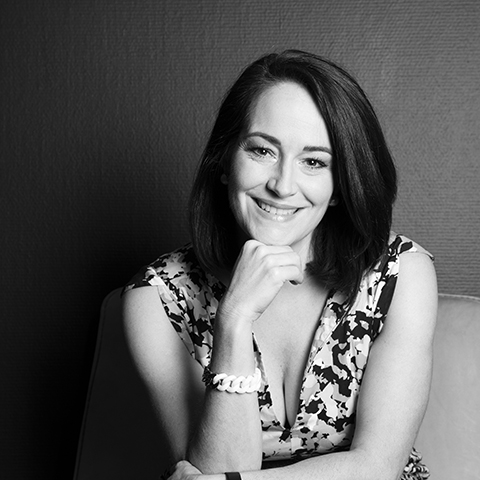
Caroline Edey van Wyk - Brand editor

Caroline Edey van Wyk | Investec Brand Editor

Once dominated by a narrow demographic, South Africa's wine industry is seeing the rise of a new cohort of professionals. Young, black, and female they’re challenging old assumptions and reshaping leadership. In this episode of Wine in Focus Praisy Dlamini CEO of Adama Wines and GM of HER wines, and Kiara Scott head winemaker of Hazendal, reflect on their personal journeys to the top and what they're doing to ensure other women follow. 


Listen to the podcast version

Podcast transcript: scroll to the areas that interest you

LM: Lerato Motshologane, Investec for Business, trade finance specialist and Discover Wine founder
PD: Praisy Dlamini, CEO and winemaker at Adama Wines
KS: Kiara Scott, head wine maker at Hazendal Wine Estate

  • 00:00: Introduction – What women bring to the wine making process

    LM: Welcome to Wine in Focus, an Investec Focus Radio vodcast series to awaken not only your appreciation of South Africa's world class wines, but the dynamic individuals behind the resilient sector. As proud sponsor of the Trophy Wine and Spirit shows, Investec seeks to showcase what our local industry has to offer.

    I'm Lerato Motshologane, a trade finance specialist at Investec Business Banking, founder of Discover Wine and your host. In this fourth episode of the five-part series, we bring you the inspiring stories of two trailblazing, award-winning,  young wine makers. They chose to follow a career in wine making when very few women, let alone women of colour would consider it, and now they're harvesting the rewards. Praisy Dlamini is the CEO and winemaker at Adama Wines, a majority black and women-owned winery in the Cape winelands. Praisy was the first female protégé of the Cape Winemaker's Guild. Today she leads a dynamic team producing award-winning wines under the HER Wine Collection label. In 2025, Praisy received the Growing Inclusivity Award for her transformative leadership in the South African wine industry.

    Kiara Scott is the head wine maker at Hazendal Wine Estate. She, like Praisy, was a protégé of the Cape Winemaker's Guild, and at 26 became South Africa's youngest female head winemaker at Brookdale Estate. Last year she earned the accolade of Diners Club Winemaker of the Year, becoming only the second woman to receive this honour in its 44-year history.

    Welcome, Kiara and Praisy, it is such an honour to have you here at Grande Roche today. I am so excited. I think this is probably my favourite episode just because, you know, I'm a woman and I've got two phenomenal women sitting in front of me who have done amazing things in the industry.

  • 02:27: Breaking barriers – Kiara’s winemaking journey

    LM: Kiara, I wanna start with you. You know, I'm just going to jump straight into it. I always wondered like, you're so young, you're this incredible wine maker. Where did you learn? Did you grow up with wine around you? You know what inspired the wine maker in you?

    KS: So I grew up in Rocklands, Mitchells Plain. So there was, there was alcohol that I saw but no fine wine that I was introduced to, it was more bag-in- box, hard liquor, beer, and that's what I saw. And initially, I, because of my family and the socioeconomic issues in the area that I grew up in, because of alcohol abuse or substance abuse, at large. I found myself, at a young age, with this question, why do you drink something if it has such a negative effect, seemingly, seemingly negative effect, but it was just based off of the environment. So I think it was… I just had this deep question and it somehow led me down the path of winemaking, where I sought to learn to understand. And then I just became enamoured by this industry, vineyards, the people in wine. And here I am now.

    LM: And what did your parents say, you wanna go make wine? I mean, you know, as a black woman, not all parents are happy to hear when we speak about alcohol you know, it, it's seen as a bad thing. So how did you convince them?

    KS: So certainly it was taboo. Right? I think they were perplexed, confused. You know, where does this come from? Why, what, who, how. Right? So I think that that was the response, at first, but I was quite persistent and against their better judgement at the time, I just decided this is what I wanted to do. I was also at the age, you know, I was much younger than what I am now. And, had a different type of, I think, tenacity. It was like, whatever you say to do, that's not what I'm gonna do. Whatever you say to do.

    LM: Yes. And I'm sure they're so proud of you now.

    KS: No, they are, they are extremely proud and happy and supportive. But it's just, I think, it speaks of how change is possible. Not just in the wine industry, but in life. There can be something that, is maybe perceived as a negative at first, and that can develop into something beautiful and positive. 

  • 05:03: From sugarcane to cellar doors – Praisy’s path

    LM: Oh, amazing. Over to you, Praisy, you're a girl from KZN, hey? Farming is not a foreign concept to you because you know, from what I know, you have been exposed to sugarcane farming. So how did you move from sugarcane into wine?

    PD: God knows! Just to echo what's, the question you've asked Kiara, if I can start there, is like, what do your parents think? It's like, couldn't you have done something else or better? And it, people don't think that, obviously as you navigate this also new thing that you've just decided to enter yourself in, it gets lonely if you don't have the support of your family. And because nobody understands, basically, and if you want that support system, in terms of just going, wanting to vent and let it out and just ask for advice, then it's not there. But for me, I think it was… I was not lost. That's the, I think, the first response, because if farming is in your blood, um, it follows you everywhere.

    It's almost like your fate was already laid out for you. You just have to step into it. But it doesn't come without your part. You have to still work hard and you have to also have discipline, and I think, for me to be here, I mean since 2005, it is discipline. And also understanding what you can take on and what you can't.

    But you figure that out along the way, you don't know it then. But, my mom didn't understand what I was doing, but I think she was just happy that I am doing something about my life. And that's what happens with our community... with our parents, back then, they never got to be professional in anything.

    I remember once when we launched the company, Adama Wines, I said, we are actually our ancestors' biggest dreams because it's something they probably, you know, never dreamt of or even think that it exist. And today when you are, you know, heading this company and you are literally the people that were your mentors and are your peers, it's almost like it's insane, but at the same time…

    LM: And it goes back to that saying of, “Girl child, it is possible!”, right?

    PD: Yes, a hundred percent. 

  • 07:09: How to navigate success and accolades at such a young age

    LM: That's so inspiring.

    Back to Kiara… head wine maker at 26. Geez hey, that is incredible, Kiara! But I can imagine being so young, it comes with its challenges. How did you overcome those challenges and what were those challenges that you faced being such a young winemaker, and a female, young winemaker?

    KS: There is a saying that in every land of opportunity, there's always opposition, right? And I think that question is, it's loaded. I can answer it in so many ways, but, there have been challenges and I think being young, in a male dominated industry, there are… there have been moments where, you know, people look at you and go like, what does this girl think she knows. Like, who does this girl think she is, you know? And then it doesn't help that, you know, when you look really young, besides being, you know, just young as well. But I've learned that with grace and respect nothing is impossible. Nothing is impossible! You can win over even the most stubborn, the most stubborn men that's been in the industry for donkey years, as they say. You can win them over. So there's definitely… I think the challenge is that, you know, people sometimes look at you at face value, but then, like I say, with grace and respect, and assertiveness and consistency you can win people over and you can show them, this is why I'm here.

    LM: I love that. I love that grace and respect. I'm gonna take that with me. I'll take it back to the office. 

  • 08:51: First, but not the last – Pioneering protégés

    And, Praisy, you were the first protégé for the Cape Winemaker's Guild. First female protégé! How was that? That must have come with its pressures and you know, there's expectations and I can imagine being the first, not just female, but the first black female…That comes with a lot.

    PD: You know, we were actually talking about it offline and we said we never think about it because you are always like our first, why should we label it as such, because at some point someone has to start.

    But I think, I'm glad you're asking that question 'cause I had to think about it, is that you find something in its rawest form and you actually, when people say you're ‘paving the way’, it's literally that if you imagine, you know, walking into this bush and you dunno which direction you have to take, and then now someone has walked before you, then you are able to navigate, okay, cool, this is how we go.

    Then, obviously you expect that they'll make it better, because that's how it is. And I said, you know, obviously I am involved with the protégés now through the CW, Cape Winemakers Guild Trust. And I say… When I see what they have, and I said, you know what, I wouldn't mind going back, because then I don't have to worry about all these stresses of the business and whatever, whatnot.

    Then I can just go back into being an intern. They have so many opportunities. And it wouldn't have got to the stage if someone did not start. So I think when people talk of first, it's that. Is that you are the one that's forging the way, then others will follow. So it's a huge responsibility.

    It's almost like when you're first born, you know, you know that everything sort of… you're like a co-parent. Everything comes at you. I keep on saying that to my son: I said, well, it is what it is, so suck it up. And it's that, and there's a huge responsibility, but also you don't see it that way when you are going through it. You only see it later on when you're reflecting. And when you also see, wow! how it has changed and evolved, you are like, my goodness, there was, as Kiara said, so many opportunities. It's just a matter of, are you disciplined enough to stay the course in order for you to see what can come up. 

  • 10:56: Praisy’s leadership style

    LM: And I mean now you've forged your way into leadership. So, you are CEO at Adama Wines, and you've got an incredible project, the HER Wine project. What sort of encompasses your leadership style? Are you the strict...

    PD: Yes. Sorry, it's actually not, I don't think it's strict more than when you know what you want. And also again, going back to being the first and forging, then, you know, there's so much that's bestowed upon you… and failure, you look at it like, why, where is failure? And you keep on... that small voice reminds you, and in the background and say, but it's okay to fail because that's how you learn. It's how you grow. But will the society forgive you should you fail? And how would it look like? And that's when I think the imposter syndrome of being female and being black in a space that obviously was not historically yours. And you ask yourself, how would everyone look at it if now I fail, if really I were to make this massive mistake, how... would anyone, will the industry forgive me?

    So, I think that pressure is more than just you just keeping the day going and trying to make it work. But I work with an amazing team. I think if I look at... we just celebrated Mother's Day and I didn't feel that my mom is late because the love from them and their mothers just flustered the room and I was like, wow, this is why I'm doing this.

    LM: Wow. Beautiful. That's very touching. 

  • 12:19: Inclusion starts with action

    In terms of inclusivity obviously that's something that you wanna continue driving and it must be a passion of yours. How do you strategize in keeping it that way in the industry?

    PD: It's keep on doing what you're doing. It's, and I think that's where… when you talk of failing… I said when I joined, we were actually reminiscing, like when I started in Adama Wines in 2019, and it was exactly that, “the project”. And I said to them, you must be kidding me. I'm not going change my life over a project. Because the project, in my sense, it's got a start and a finish date. And I'm like, what am I gonna do with my life when this thing finishes? And what started as really that, the project; six, seven years later, here we are. And we have grown to a point where people don't even comprehend that the company, that they think it's this, but then when you go inside and really navigate what's there, you're like, really? And who does all of this? And I remember saying to my son, he plays rugby, and I said, whenever you give, there's always something that comes back.

    And… but then there's a sacrifice. So throughout all of that, a lot of things have been sacrificed, not only from my side, also from the people that are part of the business. And for me, then, that's why I think there's space for everyone in this industry, but it's not just gonna be given to you. And also, you must not just think that you mustn't do any work for it. You have to be willingly… willing to, to put in as much as you want to get out of it. And if you just sit back and do nothing, obviously nothing is gonna happen. So I do hope that maybe how many years to come when young kids are watching this or they're listening to this and they're like, you know, what if they can do it then, we can also do it, because it's… that's what it is. 

  • 14:08: Promo Trophy Wine Show and where to purchase award winning wines

  • 15:04: Real diversity means representation at the top

    LM: And I always believe we can't speak about inclusivity without bringing in diversity. Kiara, from when you started, how has the industry evolved in terms of diversity?

    KS: I think the wine industry has changed. There's definitely... we are seeing more diversity and inclusivity, but we are seeing it more in wine stewards, we are seeing it more with people that are more client facing on the day to day, but I do feel like we have space... we still need to see more diversity in the—I've been trying to be so diplomatic now.

    LM: So at the top?

    KS: At the top. There we go, I'll just, I'll put it, I'll say it like that. So at the top we still need to see more key decision makers… We need to see more of it… But are we better than where we started off with? Certainly. Certainly. We have grown tremendously, but is there room for improvement? 100%.

    LM: I think, Praisy you can add to this question, especially because you are now at the top…

    PD: Oh goodness. You never think of that when you are actually waking up every day going to work, then you can be just part of the team, you know? One of the key things I think Kiara mentioned is... 'cause when you sit around the table where you can influence a decision, I think the best part of my job is when I add a different angle when a decision needs to be made, because then you say, but have you thought about this? Then it's not a one-sided look, but then you actually look at it from the complex point of view.

    And I think if we were to serve not only South Africa, but also the global community, you have to think of it that way. Because if you travel around the world, I mean, you travel into a country where they don't even speak English and you have to figure out a way to navigate your life around that. So I'm always saying that, guys, we are just like this, we are so small, but then the world is so big, so why are we limiting ourselves into just what we see? And you have to be in a position where you are able to see beyond where you are. And I said to a friend of mine, when I wanted to go away, I said, I just want to go away, I said, you know, sometimes it just takes a step from where you are to next to another position, then your view is different, then you think differently. And I think it's that: the moment I think we, all of us stand together and say, okay, cool, how do we accommodate this diverse space because nobody knows how to. And I think that's where the problem is and nobody can tell you because nobody has been there. So when you talk of “first”, it is that as well, it is the first for this country or this industry, that you are gonna have to shift a bit of a view and then look at it in a different way and just be accommodative.

  • 18:03: Wine by women- Adding the feminine flair

    LM: I've noticed in the wine community—it's a beautiful community—and just the other day I was having a vertical tasting with Elunda (Basson of Steenberg winery) who you both went to school with, and we spoke about women wine makers, and how that influences how the wine comes out. You know? It's such an interesting topic. So how... Do you think there is an influence... by being... by the virtue of being a woman?

    PD: I don't think any of us can speak on behalf of men. So I think let's just be clear about that. But I mean, there are wonderful wine makers out there that we also learn from and we have to give them credit, but I think it's almost like when you cook. I always imagine if I cook or if my partner cooks it always comes out differently. And also how you take care of your kitchen after cooking, it also looks differently.

    LM: I hope your husband's listening.

    PD: I hope he's not! And I would assume that even with wine making what you do, because there's a certain level of nurturing that we women have, I'm not sure if most men do, but as I said, I can't speak on their behalf… But that nurturing point, because obviously we are born nurtures, that's why we are able to take care of our kids. So every single thing that, you know, you touch, that you are responsible for, you take care of. I mean, to the point of just when you look at the chemical analysis already you are like, I want this done. And it's a matter of urgency, which I think that's what we bring. And the flair, and also, you know, how to make things look pretty. I mean, we are able to dress ourselves and look pretty in a different way that most men don't.

    So I think if you look at the holistic view of how we are built and how we are, are as women, there should be something a bit different in how we make wines. To a point that if you make a shiraz, someone will say, but the shiraz is like this, and I always say it's a masculine cultivar but the style can be different depending on how you want it to be perceived. 

  • 19:50: Mentorship and multiplication - Growing the next generation

    LM: And ladies, I consider both of you role models, I mean, Kiara, you are now the head winemaker at Hazendal! I'm sure there's young women looking up to you at Hazendal. Praisy, with you being the CEO of Adama Wines, there's, you know, the young ones are also looking up to you, and both of you are really, really great role models. What type of mentoring exists?

    KS: With me I'm not involved in any direct mentorship programme at the moment. But in my winery and in the vineyard, I always look for the right candidates or people that show that they're willing and upskill from there. I'm working with, actually, with a young woman now, called Nomfundo Qabaza, and she's a student at Elsenburg and she is working with me this year and I'm teaching her about wine making, working with pumps, going to the vineyard, so the whole supply chain basically. And so that's what I'm involved in right now. But just mentorship and paying it forward is so, so important.

    PD: I have love for projects, so anything that needs building, I love it 'cause I love impro... seeing anything improved. I think with... at work, with my colleagues, I mean, at work, they'll ask me, but why are you not getting someone who is already ready? Why do you like someone that you have to teach? And I said, you know, the beauty lies when you look back and you see someone, how they walked in to where they are. And also when you see them leave your space to somewhere, somewhere totally different. In 2019 or 2020, I got an intern, Nichole, who's now part of our team, and she's moved to a different division. She just came in as an admin person. And the things that we did together, I mean, her wine collection was born. She was there. We did it all together and to see her, you know, develop into new product development manager, and I said, my goodness, if I see you back then and to who you are now it brings me joy.

    And we’re doing that as well through bursaries. So with our brand, HER Wine Collection, 2% of our sales goes to bursary students. We started with four back in ‘23, and now we have eight.  And some of them are getting out of the system this year and we keep on taking them in as they come.

    And it's all that, and I said, how do we... when I walked into… Before we were in Wellington, when I walked into there and I see these kids walking around, I said, how do we improve these kids' lives? I mean, I'm a project, product of a bursary, I've got a bursary for me to be here. If I can be this person just because I've got a bursary, I'm sure we can also just do something, just hope, plant that hope that someone wakes up. You don't just look at your parents' circumstances and think this is all there is and you look forward to something so, for us, and it's tough, also, I think we shouldn't make it easy. Mentoring someone is not an easy thing, because you're doing it alongside you also trying to figure out certain things in your life. And it's intentional. You have to be intentional about it. And if you're not then you actually short serving not yourself but also the next person.

    KS: Exactly. It's such a joy to see someone go from, you know, “I don't know, what is that? That's a pump. How, like how does that work?” And then tomorrow they're confident in operating heavy machinery. You know? Or they go, “What is Chardonnay?” and the next moment they teaching somebody else, you know, part of the multiplication, paying it forward. 
  • 23:21: Resilience in real time - What keeps you going?

    LM: Praisy, you recently won the Growing Inclusivity Award, which makes a lot of sense. What continues to drive you? You know, you just spoke about how you love taking on these projects and you keep doing it. You don't get exhausted. What is it that drives you to keep on going in the way that you do?

    PD: If we're being honest and real and raw, trust me, there's times where I literally go into the bathroom, I cry. Cry…Wipe tears, water in your face, go out, continue doing it. To moments where you walk into the warehouse because there's an order got... well it's wrong and the client is like, argh! And you said, who's here? Can I scream? You scream and as you screaming, the tears roll down and you let it, let it be. It's it… that actually makes it so rewarding when, when someone sees you. Because nobody sees what happens behind the scenes.

    Because we don't walk around with cameras where people can see like, you know, this is what you go through every day. To when you are in the US, different time zones, and your son is sick. And you have to be awake in the middle of the night of your time and here now, your son, and you can't do anything. And you're there because you know that you have been trusted with something bigger than you. And you don't know what it is, but you just have to stay the course. So, I don't know if we are crazy or what it is, but for me there's, I think, the thrill of it. That, you know, the end of the day, it's actually something that you have been trusted with and you can't back out.

    Be... I've tried to back out of it. I've tried to exit the industry. Trust me, I left when I was working at Heineken Distell now, or Distell then, Heineken now. I left. I went to something else and it brought me back in. So I said, there must be a reason. And I think when I won the award, without even knowing that someone will think of nominating me to a point that you even get chosen to get it, I was like, wow! So basically what you're doing… someone is actually playing Big Brother and just spotlighting and seeing what you're doing. So it's, it feels good, because then it means that it's not just in vain.

    LM: Ladies, I could sit here all day listening to your wonderful stories and drawing inspiration from both of you. I can guarantee you, I'm gonna leave here so inspired. I wanna take over the world after this. But unfortunately, we've come to an end of this episode.

  • 25:52: Looking ahead - The dream for SA Wine

    I've been doing this thing where I ask this one very pivotal question, and that is: Where would you like to see South Africa's wine industry in the next 10 years? What is the dream?

    KS: The dream to me is, it's really multifaceted. Right? Because of South Africa's history, number one, as a wine industry, where we are now, and I believe where, we are going, so inclusion, diversity, technology, better technology, grape growing, winemaking, looking at African indigenous knowledge incorporated into our winemaking.

    We've been looking at Europe as the teacher for so long, where in Africa—on this continent that is so rich, not just with minerals and gold and all these things, but rich in knowledge—actually seeing that, taking that information, extrapolating it, taking it and using it in our wine making, that would really set us apart in terms of culture, in terms of our terroir, yeah, our people.

    PD: I think I echo some of the sentiments Kiara have said. But me and my old skin, I love heritage, because heritage tells you… or…  a story where you come from and who you are. It sets you apart from the rest and for me, even if obviously times change and times move with AI coming up, I still wish that we can keep, you know, something that really tells our story as South Africans. Because I always say whenever you go, whatever country, you represent the wines of South Africa. There it's not about whoever, it's the wines of South Africa. And I think that is what we need to all agree on. How does it look like. But I think heritage, we need to keep it. It's really who we are.

    LM: Oh ladies, you're such a treat and I'm so sad that this episode is coming to an end. But I do appreciate you both for coming out to Grande Roche here in the beautiful wine region of Paarl. 

  • 28:00: A toast to leadership and legacy

    And before we end it, it is your birthday, it's only fitting that we toast to the beautiful Kiara Scott. Happy birthday! And I think the last toast will be to leaders creating leaders. So cheers to you ladies.

    All: Thank you! Cheers. Thank you. Cheers to you. Cheers to you, and thank you for being a great host. Oh, thank you. 

Award-winning podcasts

Investec Focus Radio SA's recent awards

Content Marketing Awards 2025 logo
Best Content Marketing Programme in Financial Services

Learn more
Feedspot Top African Business Podcast logo
Top Business Podcast in Africa

Learn more
South African Podcast Awards
Best Business Podcast in South Africa

Learn more
arrow-left
arrow-right

Listen to other episodes of Wine in Focus

Previous
Previous

Find out when a new episode drops, subscribe to the Investec Focus newsletter

* indicates required field.
Enter your name here *

This information is required

Minimum characters 1

This is a required field.

Enter your surname here *

This information is required

Minimum characters 1

This is a required field.

Enter your email address here *

This information is required

Minimum characters 1

Please enter a valid email address

Enter other service here

This information is required

Minimum characters 1

YYYY *

This information is required

Minimum characters 1

This is a required field

Please complete all required fields before sending.

Thank you

We look forward to sharing out of the ordinary insights with you

  • Disclaimer

    Focus and its related content is for informational purposes only. The opinions featured on the site are not to be considered as the opinions of Investec and do not constitute financial or other advice. The information presented is subject to completion, revision, verification and amendment.