Close
Sunlight on vines

18 Jul 2025

Wine in Focus | Vinnovation: The future of sustainable wines

In this final episode, we turn our focus to sustainability and innovation in wine making. Host Lerato Motshologane is joined by Rosa Kruger one of SA's most respected viticulturists and the founder of the Old Vine Project. And Johnathan Grieve, the pioneering force behind Avondale Wines- one of South Africa's most forward-thinking biodynamic wine estates. Together they explain the difference between organic, sustainable and biodynamic and why sustainable wine making is no longer a nice to have, but crucial to safeguard the future of SA's wine industry. 


Listen to the podcast version

Transcript: scroll to the areas that interest you

  • LM: Lerato Motshologane, Investec for Business, trade finance specialist and Discover Wine foundeR
  • RK: Rosa Kruger, viticulturist and Old Vine Project founder
  • JG: Johnathan Grieve, Avondale Wine founder
  • 00:00: Introduction – Old vines, innovation and alternatives

    LM: Welcome to Wine in Focus, an Investec Focus Radio vodcast series to awaken not only your appreciation of South Africa's world class wines, but the dynamic individuals behind the resilient sector. As proud sponsors of the Trophy Wine Show and the Trophy Spirit Show, Investec seeks to showcase what our local industry has to offer.

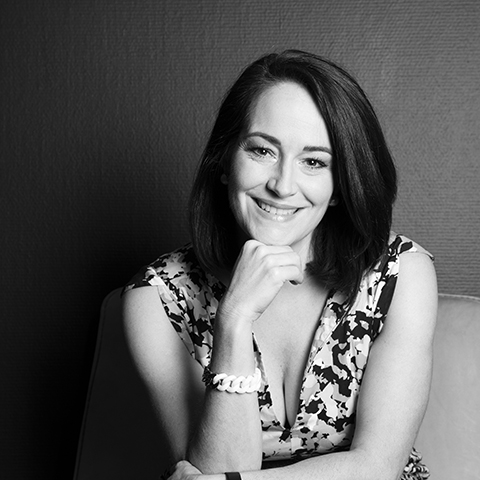
    I am Lerato Motshologane a trade finance specialist at Investec Business Banking and founder of Discover Wine, and of course, your host. We've explored wine as an investment, unpacked what it takes to judge excellence and celebrate the growing diversity and economic importance of the South African wine industry. But now it's time to bring the conversation full circle, back to the source: The land, the soil, the foundation that supports every vine, every bottle, and every story.

    In this episode, we turn our focus to sustainability and innovation in the vineyard where it all begins. For the final episode, I'm thrilled to be joined by two passionate pioneers in viticulture sustainability. Welcome Rosa and Johnathan to Grande Roche in the heart of the Paarl Winelands. Rosa Kruger is one of South Africa's most respected viticulturists and the founder of the Old Vine Project. With a background in law and journalism, she found her true calling in the vineyards, tracking down and reviving the country's oldest vines.

    Rosa became a leading voice in sustainable farming and heritage preservation, championing wines that express authenticity and resilience. Johnathan Grieve is the pioneering force behind Avondale Wines. One of South Africa's most forward-thinking biodynamic wine estates, based right here in Paarl, he developed the terms holistic BioLOGICTM approach to farming, blending science, sustainability, and spirituality. His commitment to regenerative agriculture has made Avondale a benchmark for eco-conscious wine production. 

  • 02:05: From journalism to law and finally wine – Rosa’s path to purpose

    LM: Johnathan and Rosa, before we really get into the sustainable practices in our beautiful wine industry, Rosa, you've got such a deep and rich history. Where did that start? Where did your love for wine come from? How did this all happen?

    RK: Lerato, I come from a farming background. Half my family are lawyers, and the other half are farmers. So I studied law. I first did journalism because I love my language, I love Afrikaans. I'm a real, true Afrikaans person. And I studied journalism in Johannesburg and worked at a newspaper for many years as a copywriter. I loved it, but then I decided to do law. I actually fell pregnant and I had spare time and I studied law part-time. I worked and studied and raised a son at the same time. And I loved law, but I was a useless lawyer to be quite honest. I was not good at it at all, and my family made sure I understood that. And then I was driving home one night in my little car in my little black suit, it was getting dark and my son was sitting on the pavement with swollen eyes, crying because his mother was late once again. And I thought, I don't want that for a child. I don't want to raise a child in the city. Because I was raised on a farm where we were let loose, we were free, and wild. So I decided to go farming and someone gave me the opportunity and I came down, loaded my car with my personal belongings, sold half the stuff, sold my house, and I came down to the Cape. Started on a farm and soon planted vines and the story...

    LM: So you started in wine farming?

    RK: Yes. I love, have always loved wine and I love farming. I think farming is in your blood. Johnathan would attest to that. Farming is in your blood… It's something you love. And I love farming. I love the nature and I love farming. And then people headhunted me and, and I worked for fantastic farms and fantastic brands. I was very lucky in that regard and my teachers, my mentors, were some of the best people in the industry. I think they took pity on me. They looked at me and thought, she's dangerous. She knows nothing. We have to actually help her and they helped me. So that's one of the reasons why I started a school for viticulture, because people helped me. I must now help other people.

    LM: And you're giving it back.

    RK: That's right. 

  • 04:41: Art and agriculture – Johnathan’s alternative evolution

    LM: Amazing story, Rosa. And yourself, Johnathan?

    JG: Well, I sort of came in, I guess in the back door, if you like. I think, firstly, some of my founding, sort of memories when I was a kid was… I grew up in Durbanville and had a large sort of small holding and used to grow vegetables, as like a five or six-year-old and would sell to all my mom's friends. I ended up going off to boarding school and went and studied art. I'm a trained artist, not a  farmer or anything else than that. And I was very fortunate to be able to actually come out. My family bought a farm. My dad always… he grew up on a wine farm or grape farm, and he always wanted to go back and, he ended up buying it when I was in second year at varsity. I sort of stuck out with art for another two years, and then eventually I was like, no, actually I'm wasting my time here. Who am I trying to fool? And halfway through my final year, I actually went to my father and I said, look here, can I come farming? And he said, that's cool, but you need to start at the bottom.

    And that's where I started as a labourer on the farm, learning how to farm chemically that… it was a conventional farm. Very much rundown and really, hands on, getting back in touch with the soil, I guess. And I think because of the weird sort of way that I got in there, I've always looked at things differently. I don't have a, sort of, blinkers on as far as training goes, specifically in viticulture and sort of chemical driven and that really has enabled me to go down the alternative route, if you like. And the more natural route. 

  • 06:20: Beyond a buzzword – What does organic really mean?

    LM: Organic wines – you know, we hear that term a lot. In recent years it's come up, it's been a thing. Is it a fad? Is it real? What does organic mean?

    JG: Organic wines have been around a long time. The organic industry has been around a long time. I remember when we started going organic and that was early 2000s…You told somebody your wine was organic, it was like a swear word. Everybody ran for the door. Nobody wanted to taste it. I think times have changed dramatically. Now, it's really an awesome USP to have, and I think honestly, if you don't have some sort of sustainable story, in wine either now or in the years to come, you're not gonna have a brand. So I think it's hugely important. I think obviously, overall, organic is about not using chemicals, not using industrial chemicals, not using all the, I say, all the ‘cides: all the herbicide, fungicides, all the things that kill offs environments…

    RK: Pesticides...

    JG: Exactly. So all the things that kill off the environment and then really about feeding the living system and getting that side of it in. In South Africa-wise, we've just formed an organic association, which has 12, 13 members at the moment and growing. And the whole idea behind that association was really just to come to the fore and say, you know, let's talk about organic more. And let's really demystify it for consumers. And be the alternative voice to the greenwashing that can be happening at the same time. 

  • 07:52: More than the soil – A people first approach to sustainability

    LM: Rosa, I think Johnathan has described, or rather, you know, interpreted the term organic in wine quite beautifully and quite clearly for us... To jump back to the sustainability piece, you know, is sustainability and wine just environmental or are there other facets of sustainability?

    RK: Before I answer your question, I just want to say thank you to Johnathan for being an absolute leader in this field. And it's difficult, it's not easy to be organic. You have to listen. The margin for error is just so much smaller. Sustainability, it's economic sustainability, environmental sustainability and social sustainability. The environmental sustainability is also not only to have monoculture, but diverse, biodiversity in terms of plants, trees, that there's life and space for everything, not only the humans. I like that. But the humans should also be there. I love the idea of sustainability amongst workers, because where does sustainability start? Where does it start? It starts with the people that work the land. People that have been generations on the land. There's a term that we call generational knowledge. So, it's where farm workers lived on the land for generations and the grandfather talked to the father and the father talked to the son and you know, farm workers that have been on farms for many years see the land as their land. They see the vineyards as their vineyards. It's, for them it's a holistic thing and I like that there's this kind of an ownership. When I talk about vineyards, I talk about my vineyards. I don't own any vineyards, but all the vineyards I've planted over the years are my vineyards. And it’s the same with farm workers. We started… I looked at this for so many years and I see people are not… we don't develop skills in farming. We use anyone to work on farms. Anyone that is without a job, and I didn't like that. So we, we started a school, and I must say very proudly that Michael Fridjhon was the first to support me. He was actually the one that that said to me, when are you starting your school? And I said to him, well, it's difficult. He said, just do it… So we did it. We are now in the third year! We had the school last week—It's a four day school where we teach 40 farm workers to do a little bit, to know a little bit about everything in terms of farming, from GIS satellite studies of the terroir, to pests, organic and chemical farming, et cetera.

    And then we have a pruning school separate from that, but that's part of the Old Vine Project. But it's a lovely school. There's women and men, young and old, black and white and coloured. So there's a bit of everyone. That's lovely. I love it.

    LM: So I think you're highlighting the importance of education for the sustainability of our industry, of the wine industry.

    RK: Education for me is the beginning of everything. It's the beginning of civilization. Education. It's all about education, not only to make... it is also to make better wine. But it's just for people to love what they're doing. If they know what they're doing, they love what they're doing. And once they love what they're doing, they will do a better job. They'll be happy to work in the sun for eight hours a day. I'm not sure if you ever worked in the sun or when it's so cold. People work outside and if they know what they're doing and it's to a certain purpose, and you can develop that skill and make them understand why they're doing it, we will have such a better industry. 

  • 11:49: The Old Vine Project – Unearthing legacy, celebrating soul

    LM:  And congratulations once again on the Old Vine Project. I mean, it's phenomenal and a huge contributor to sustainability in, in the wine industry in South Africa. Can you tell me, you know, how did you think of starting this beautiful project?

    RK: When I started in viticulture, I realised that I know nothing and that I have to learn very fast. And I thought about learning... the best way to learn is to travel. So I went to Europe, and to all over the world. I even went to Russia and to India to see, learn about viticulture. And whenever you go to France or to Germany, you see their emphasis on old vine wines. And when you go there and you go to a farm and you say to a guy, Rosa Kruger from South Africa, I wanna now learn about wine. They say, come, let me show you my old vineyards. And I thought, what is the difference? And then I started tasting the wines overseas and in Argentina and in California, everywhere. And I quickly realised there's something about Old Vines. A depth and an intensity, and a wisdom. It sounds like a romantic word, but it's really true. I came back to South Africa and I thought, but Jan Van Riebeek het hierso wingerde geplant – he planted vines here in 1657, made the first ones… Where are they? And I started looking for them, you know, I started talking to the farm workers and of course they know where the old vines are. So I went to Eben Sadie at the time and to Neil Patterson, he was the winemaker at L'Ormarins. I said to them, I'm standing in this vineyard up the west coast on the top of a mountain in the middle of nowhere. It's 60 or 70 years old. There's some magic here, let's make the wine. And they made the wine. And then it was just because it was like really, honestly, someone asked me this question, and really, it was like, you know, I'm not a woman wearing diamonds. But it's like a diamond in a whole bowl of pieces of glass, and you just spot the diamond and you know this is worth something. And then I spotted the first diamond and we told this story and soon afterwards everybody was making old wines. Lots of wine makers asked me, and international journalists started tasting the wines and then it was just wonderful.

    LM: So does wine produced from old vines taste better than wines produced from newer...?

    RK: I will never use the word better. I'll use the word different. There, and this is not what Rosa says, this is what the University of Stellenbosch has found in various ways, and international studies have now found that there's more texture, complexity, depth and mouth feel. There's not so much upfront aroma or perfume on the wine, but more weight. More depth in old vine wines and that's what they found.

    LM: So, like some soul in the wine?

    RK: Yes, you can... we've tasted at various times you can spot it. And old vine wine. That's why it's so successful. It's just... it was a story that need needed to be told.

    LM: And not only does it produce these delicious and deep wines, but it's added a lot to the sustainability, you know, aspect of wine.

    RK: People started thinking about the longevity of vines because in South Africa, unfortunately, we used to be a bulk wine producing country. Since the previous government, thank God, came to a fall, now people are looking to South Africa for more quality wines. Like Johnathan's wine. And the sustainability in terms of vines: people now don't think about aging of… pulling out a vineyard after 50 years like it used to be. But they think about maybe if we look after the vineyards better, they can grow up to 50 years old. So in terms of that, there's sustainability. If you can grow a vineyard to be still producing decent grapes at 50 years, you don't have to pay all that replacement cost and you can make an exciting wine.

  • 15:58: Listen and learn - Let nature lead the way

    LM: Johnathan I was reading up on your blog recently and it's not just organic wines that are the focus of Avondale, but there's a lot more practices that you guys are busy with to ensure that we are practicing sustainability in the process of wine making. Can you talk to us a little bit more about other things that you're busy with?

    JG: We talked earlier about, you know, organics and not using chemicals and so on, and then we mentioned biodynamics. There was one of the words in your intro about spirituality and I think it's really looking at it... and that's where biodynamics come in.

    So, biodynamics is an alternative way of farming. It was given to us by a guy called Rudolph Steiner. Uh, same guy who brought the Montessori school education system to the fore. He did a series of lectures in the early 1700s, sorry,  1900s, about alternative ways of farming, which has become known as biodynamics. It's ultimately how our ancestors used to farm. It's not a new way of farming. He talked about many different sides of it, about preparations, homeopathy, different constellational influences—so from your planets and your moons—and realizing, without getting too detailed about it, really realizing that you are part of a bigger system, that you're not insular. And I think that's the big thing with chemicals, is that chemicals, you, the farmer or the chemical company knows everything. And I always say to people, you know, Mother Nature's been doing it for millennia, surely she knows it better than what we do. How can we be so arrogant to think that we know better than Mother Nature does? And what we do on Avondale is really about interpreting nature, seeing what is happening on our farm, seeing what the soils are telling... and everything tells a story, you know, if you are willing to listen. We are talking about the old vines, you know, they tell you a story.

    That's why they're so complex and layered and textured, full of personality. Soils are the same. Cover crops are the same. The... your site is the same. And it changes with the seasons, with the environment, what you've done on the farm. And if you are willing to listen and learn that language ... we can start interpretating it and then adapting, not with chemicals, but adapting the natural system to it and start feeding that system. Working with the living aspect of it. And really getting the micro life, the, the bacterias, the earthworms, the Mycorrhizae Fungis, the insects really to do the job, as opposed to chemicals and us, the farmer. Yes, of course we are manipulating things here and there, but that's the real key of it, you know, getting nature to do the job. She knows best, why interrupt that system?

    LM: So is the term minimal intervention? Does that play in your… is it significant to your...

    JG: By default it is. Yes. I think, you know, in the wine industries, there's so many cliches nowadays. Minimal intervention and natural ferments and this thing and that thing, and next thing, some of it are real cliches… for us it is because we want the grape to be the star of the show. You know? The beauty about what we do is grow grapes. And grow grapes in this incredible environment. I mean, we were standing on the stoop earlier, looking over the valley, actually looking at Avondale and saying just, you know, this is the best place in the world. I mean, where else do you have these type of environments? And the beauty about farming is, and wine farming, is that we create this crop, the grapes, and then we can take it and create amazing product that is ageable, that is expressive, that is full of personality, and we can take it across the world and tell our story. And what other product do you have, you know, that capability? And every vintage changes, every, you know, everything is fluid. And that's the big part of farming for me, in any case, you know, and that's what I struggle... when you start talking about minimal intervention and all these sort of cliches.

    And the wine makers are taking a grape in and they – I don't wanna say they couldn't care where it comes from, but maybe they do. But then they manipulate it completely. And when I say manipulate it... commercial yeast and added acids and lots of oak and, and, and, and... And you like, but that's not, you've taken a beautiful product, in theory, and you've just actually manipulated away from it. And what we’re about is really taking the beautiful site, listening to her, creating the grapes out of that and letting nature create the grapes, and then taking the grapes into the cellar and really guiding it through it without manipulating her. Just letting her do it and, and trusting Mother Nature knows best. And taking time. You know, often we talk about making slow wines, and what I mean by that is really giving the nature and the natural system time to do its thing. You know, some of our white wines will take up to a year to finish fermenting, you know? A commercial yeast, if it's a long ferment is two weeks. It's completely different, and with that, you get the authenticity of course.

    LM: And what are the cost implications of this type of wine making? Is it, you know, cost effective? Is it more expensive?

    JG: It can be a bit more expensive, generally speaking, in my opinion, if I compare my production to another top end producer, which is getting the same type of concentrations and the same vineyard practices in, I think our costs are very similar.

    They differ though. So, you know, we are not buying a whole lot of fertilisers and insecticides and sort of spraying all the time and putting that all out there.  But we are probably spending more in labour… And that side of it, and for us, Rosa, you talked about it earlier, but from a sustainability perspective, for me and for our family, as a key part of it, it's that people is a very big part of it. And I think in South Africa we have a huge unemployment. And I think it's very important for us as business owners, and specifically farmers, because that's where we can employ a lot of people. And it's important to actually create that work as opposed to bringing combine harvester in and sort of harvesting with a machine as opposed to by hand, as an example. So I think that is a very big part of what we do as well.
  • 22:10: Farming for the future – Longevity and resilience

    LM: Rosa, returning to the knowledge, or rather the education piece and wine, we have things like climate change, and water is becoming an issue, water shortages. How does the importance of, you know, being educated and farming play a role in navigating this, these difficult times and these challenges?

    RK: The Old Vine Project has influenced our thinking about the future in a big way, because these vineyards have been surviving, some of them, for a hundred years. We have vineyards in South Africa that's 140 years old. That was before the first and the second World War. That was before Nelson Mandela was released, that was before Elvis Presley was jumping around. That is very old. Very, very old. So they have the knowledge. They are truly sustainable. So if we can just learn from Old Vines, to teach us, for the future. That is what we are doing at the moment. So we've been taking lessons from old vineyards to adapt to climate change because we are definitely going into a dryer and a warmer cycle, and we... a lot of... many overseas, academic viticulturists are now looking at old vines to teach us about the future. In South Africa, we've also—I'm very, very proud of that—been taking cuttings of very old vineyards, cleaning them up from all known viruses, propagating new material, and now what some people call, we have the first climate resilient vines in South Africa from our own soils, from our own country. So in that way, the client, the Old Vine Project, has focused our minds on how to farm for the future with knowledge from way back.

    LM: And, you know, as you said, knowledge is power, essentially. Right? Knowledge is power.

    RK: Kennis is mag... And we are very fortunate in that the first Old Vine Project, that formed a category for Old Vines, was started in South Africa 20 years ago. Since then, there's many Old Vine Projects across the world.

    In every wine producing, just about every wine... Even in Bolivia, there's now an Old Vine Project... there's Old Vine... and we all work together. It has formed this wonderful new category, linked to organic or biodynamic farming in a way that we listen to the land. So that we try to be less arrogant, as human beings, but listen to the land.

  • 24:40: Old world, new wisdom – Where does South Africa sit?

    LM: And Rosa, you know, you mentioned that you learned about Old Vines by traveling and going to places like France and learning from the old world. Can we maybe dissect that a little bit? What does old world versus new world, if that term is used, you know, what does that mean?

    JG: I think, you know, the old world in essence is a whole lot of older producers wanting to make their spot more important in the world, but ultimately Europe, France, Italy, Spain, those sort of, as the main sort of old world countries. And then, the new world is America, Chile, Argentina, Australia, New Zealand, South Africa. I do think overall, and when I travel and talk about our wines, I often talk about South Africa being sort of halfway between. And it's twofold: one is that we've got some of your wonderful old age, sorry, old vineyards and the preservation of that, which is incredible. But, more importantly, we've been doing it for quite a long time in South Africa and especially compared to the other new world countries. And then, sort of, things that South Africans are talking and viticulturists are talking more and more about is the fact that we actually grow our vineyards in some of the oldest viticultural soils in the world. Which contributes hugely to our wines and our characters of soils and vineyards that goes with that, which I think is very, very interesting.

    Just out of interest, we produce a wine called Qvevri, which is made in clay pots from Georgia. Why I mention it, is from a historical perspective, that dates back the qvevris—the clay pots—dates back over 8 000 years. And that's the oldest traces of vineyards or wine. And I often joke with my French friends and say, “Look, how does it feel to be a new World wine producer? 'cause that's a little older than France, you know.” So, it's all relative. But I think the old soils, our incredible growing conditions in here, I mean, we were talking earlier about the site that we are in at the moment… but South Africa is just so unique from a growing region. The Cape Floral Kingdom, the oceans nearby these ancient soils and what... I mean, we produce wines out on these sites. It's incredible.

    LM: It sounds like you're saying we're competitive with the old wine countries.

    JG: I think we’re definitely competitive, we have some historical, sort of disadvantages from a price point perspective. Rosa talked about bulk wine and a sort of perception specifically coming out of apartheid, and it's slowly but surely changing. If we'll get back to being a really… getting paid for our quality that we produce, I think, in my opinion, South African wines—our top end wines—are the best price/quality ratio in the world. You don't get better. And I think that is another big awesome USP for South Africa. We'd love to charge a lot more for what we do, but it'll come, slowly but surely. 

  • 27:42: The sustainability dream – Exploring value and vision

     LM: Before we come to an end, I'd like to ask you one final question. What is your hope and dream for our wine industry in South Africa? You know, what is your outlook? What does that look like?

    RK: I would love to keep the farmers on the land and the workers in the fields. For me, that's my absolute dream. Because the wine industry is, internationally, is going through a tough time. We all know that. And to make these wonderful, exceptional wines that show our country… There's no country in the world, Johnathan is right, where you have these dramatic mountains and then you go to Franschhoek where it rains 1.2 meters a year, and then you go to Hemel en Aarde... We have these unique wines that show our landscape. I think—and I may be arrogant in saying that—but I do think South Africa has the ability to show wines from their place on the earth better than anyone else. And I would like to have more wines like this. More wines that show exactly the place where the vines are planted.

    JG: Obviously for me it's very much about the organic biodynamic and that sustainable side of it. We mentioned earlier that, you know, the market's dictating it, and people are more interested about, you know, what they're putting in their bodies, where it's coming from, the authenticity that goes with that. And I think that's incredibly important overall for any brand. But more importantly for all humans, you know, we need to look after our environment. We need to look after our lands and our… where we farm. And at the same time, Rosa mentioned about the sustainability of your different legs, but people are very much part of that.

    And with that, I also think that we need to, we have to sell up. We have to premier... get better prices for our wines. For the effort that you put in. You know? ...and the whole industry globally is going that way from a perspective of people are drinking less, but they want to drink better. Uh, and I think that's very important. 

  • 29:54: A toast – Growing and glowing together

    LM: Well, I'd like to propose a toast in our closing. Here's to keeping South Africa's wine industry growing and glowing. Thank you so much. Cheers.

    All: Cheers!

    LM: Thanks for listening to this special series dedicated to the art and impact of wine from Investec Focus Radio.

    This was my debut as a podcast/vodcast host, and I've so enjoyed it. You can also find all the episodes of this series at investec.com/wineinfocus or wherever you get your podcasts. If you enjoyed this series, please rate it, leave a comment, and forward it to your friends and colleagues. And don't forget to follow our channel.

Award-winning podcasts

Investec Focus Radio SA's recent awards

Content Marketing Awards 2025 logo
Best Content Marketing Programme in Financial Services

Learn more
Feedspot Top African Business Podcast logo
Top Business Podcast in Africa

Learn more
South African Podcast Awards
Best Business Podcast in South Africa

Learn more
arrow-left
arrow-right

Listen to other episodes of Wine in Focus

Previous
Previous

Find out when a new episode drops, subscribe to the Investec Focus newsletter

* indicates required field.
Enter your name here *

This information is required

Minimum characters 1

This is a required field.

Enter your surname here *

This information is required

Minimum characters 1

This is a required field.

Enter your email address here *

This information is required

Minimum characters 1

Please enter a valid email address

Enter other service here

This information is required

Minimum characters 1

YYYY *

This information is required

Minimum characters 1

This is a required field

Please complete all required fields before sending.

Thank you

We look forward to sharing out of the ordinary insights with you

  • Disclaimer

    Focus and its related content is for informational purposes only. The opinions featured on the site are not to be considered as the opinions of Investec and do not constitute financial or other advice. The information presented is subject to completion, revision, verification and amendment.