Close
Cellar filled with wine

05 Jun 2026

Wine as an asset: what collectors look for

In this episode of Wine in Focus, Palesa Mapheelle, our new host for the series, is joined by local wine authority, Michael Fridjhon and international wine judge Heidi Mäkinen. Together, they explain the rigorous judging process of the Investec Trophy Wine Show, what they look for in a winning wine, how to navigate judges’ disagreements and the importance of wine competitions to the local wine industry. 

Listen to the podcast version

Transcript: scroll to the areas that interest you

  • PM: Palesa Mapheelle, Wine in Focus host
  • MF: Michael Fridjhon, Trophy Wine Show chair and Wine Wizard chair
  • HM: Heidi Mäkinen, international wine judge and Master of Wine


  • 00:00: Introduction

    PM: Welcome to season two of Wine in Focus, an Investec Focus Radio podcast series designed to elevate your appreciation of South Africa's world-class wines. As proud sponsor of Investec Trophy Wine & Spirits Shows, Investec is dedicated to showcasing the quality, potential, and global competitiveness of our local wine industry.

  • 00:38: Recognising the storms in Western Cape winelands

    This vodcast was recorded just days after devastating storms hit the Cape Winelands.

    As rebuilding efforts continue, a reminder to our listeners that supporting South African viticulture and the people behind it matters more now than ever.

    Behind every bottle is an industry built on resilience.

  • 01:00 Introduction of guests

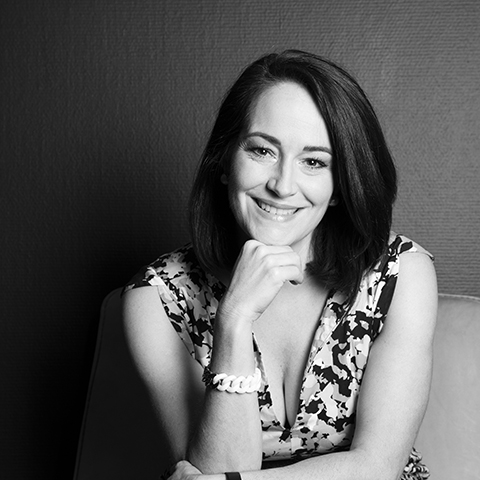
    PM: I'm your new host, Palesa Mapheelle, a marketer at Investec and co-founder of Wine-ish, a marketing and experiences platform for all South Africans. In this episode, we're stepping inside the judging room. We'll unpack why a competition like the Investec Trophy Wine Show matters, how wines are assessed, and what judges are really looking for when they award a trophy.

    Joining me today is Michael Fridjhon, chair of the Investec Trophy Wine Show and one of South Africa's most respected wine authorities. Michael has been instrumental in shaping the show into one of the most rigorous and respected wine competitions globally. Also joining us today is Heidi Mäkinen, Master of Wine and international judge.

    Heidi brings a global perspective to the judging panel with deep expertise across international wine markets and standards. Let's get into it.

    Welcome to you both and thank you very much for joining us on season two of Wine in Focus. 

  • 01:47: Role of wine competitions to the wine industry

    PM: In the last season of Wine in Focus, you spoke about the importance of competitions and the need for them to be more rigorous, more international, and more aligned to global standards.

    Why is a competition like the Investec Trophy Wine Show so important for the South African wine industry?

    MF: The reality is a competition sets standards for everybody. It says, "This is what our judges are looking at. This is what..." in a competition which has international judges, "this is what they are looking at."

    And it says to the producers, if you want to play in the kind of edge, the cutting edge, whatever you wanna call it, where the universe of commerce and the universe of survival come together, you need to pay attention to what is being said in this space. And 15 or 20 years ago, that wasn't crucial.

    You could say, "Well, I've got a really good market in England or America or Sweden," or wherever you were selling, "and it doesn't matter that there are judges who say my wines are too thin, too mean, too clunky, too juicy, too whatever it is, 'cause I have that market." Now, around the world, wine sales are contracting at a most dramatic rate.

    So, actually, if you want to survive in a place where volumes are falling, where criticism is unbelievably rigorous, you need to be listening. You need to know. You need to be able to defend your place in the universe.

  • 03:23: Does the Investec Trophy Wine Show meet international standards?

    PM: And Heidi, coming in from an international perspective , how does the Trophy Wine Show compare to other competitions internationally, and what makes it stand out?

    HM: So it's my second time in this competition, and I think what I find here it's that it really is quite relevant to enter here. And often in wine competitions around the world, you tend to get only, like, the entry-level wines, and then I'm not sure there's enough relevance when only those wines are being rated.

    However, I find that here a lot of producers take this very seriously. I mean, you obviously take this very seriously. All the judges are really good calibre, and I do find that there's much more diversity also in the wine ranges, so it's not just certain price brackets, but it's actually quite, you know, both the high-end and the entry-level wines that enter the same tables.

    Obviously, we are tasting everything blind, only numbered glasses in front of us, so you don't know what's in there, but you do get to pick those really good ones there, and hopefully they are also the ones that then are successful in the market. But it is very diverse competition, and I think it's very relevant.

  • 04:26: Shaping consumer perceptions

    PM: There's often a debate about wine competitions and how much they matter in the wine market. From your perspective, what role do they play in shaping both consumer perception and industry standards?

    MF: So that's a really key question because we're saying, on the one hand, that the winemakers make the wines they think best represent their cellar, their property, their wines.

    And consumers who are interested in that but really want to know what will they drink are saying, "The style I want to drink is A, B, or C." So in that competition, if you can bring the two closer, if you can communicate what it is that the fruit gives you and what it is that the consumers want to consume, you narrow that gap between, "I can make this. You better learn to like it," and, "I want to drink this. Help me to get there."

    That spectrum was very wide 25 years ago. That spectrum is much narrower now, and more and more producers are ready to listen to the feedback from consumers, and more and more consumers are connecting to the producers, understanding what it is - the terroir, the place of the vineyard - is giving the producer and trying to make the two marry each other.

  • 05:43: The mechanics of a competition

    PM: So let's shift and get into the mechanics of it all. Michael, staying with you, can you walk us through what actually happens in the judging room? How are the panels structured, and how do you ensure consistency and fairness?

    MF: So a panel is a living thing. It is dynamic. It has very strong personalities, as it should have.

    There's no place for soft edges. People are fighting for territory every moment of the day, and the wine is fighting to be seen. So you land up with 50 or a 100 wines in front of you for the day in a class or a series of classes, and you make your choices. And then only when you've finished deciding whether it's a non-medal, a medal, and if it's a medal, whether it's a bronze or a silver or a gold.

    Once you've done that, you still have to defend your position to all the other people on the panel. There are three main panelists and an associate judge. The associate judge is there to learn, but is allowed to express an opinion, doesn't have voting rights. You then argue. You finally dust it down, and you are either completely agreed, in which case I come in as panel chairman, and there's no job for me.

    They say, "We've given it a gold, given it a silver, we've given it a no medal." There's no discussion because the panel is the primary point of filtration. It's like, don't have a dog and bark yourself. That simple. But there are always wines where there is somebody who gave it a gold, somebody who gave it a bronze, somebody who gave it a no medal but gave it a silver.

    Every one of those has to be unpacked, discussed. The people who gave it nothing go back and say, "You know what? I missed it." The whole point about a collegial, engaged judging process is that no one is tied down to an initial score. You score, you come back, you discuss. So we often have panelists who say, "You know what? I missed it. You gave it a gold, I gave it a nothing, but actually, I think it's a really fine wine."

    And all I say every time is it's only one person on a panel that has to save a wine, and it's also one person on a panel who can condemn it. Three people can say, "This is splendid." One person says, "It's volatile, it's dirty, it's got bacteria," whatever it is.

    At that point, everyone goes back, gives it a second look. And the role of the chairman is often, dare I say, diplomacy. It's making sure that everyone is heard, but the end result best reflects the overall impression, the overall centre of gravity of the panel itself

    PM: Great. Certainly sounds like a rigorous process.

  • 09:09: The judges' chemistry

    Heidi, from your experience as a judge, how important is the chemistry and dynamic of the judges on a competition?

    HM: Oh, extremely important. I mean, we don't want egos in that tasting room. We do want opinions, we do want firm opinions, but we also need to be able to have a constructive conversation.

    I mean, if we're tasting 100 wines per day, often you miss something, and then other people will make you look back to that wine, and then, you know, we find those jewels retasting, and also retasting after we've done individually the full flight.

    We've seen that the wines change in the glass. This wine is not gonna show the same now than it's gonna show in 10, 15 minutes.

    So it's also a really good point for us to go back to those wines and see how they evolved, if we first initially saw something there and then later on we didn't find it anymore, you know, that allows us to also change our opinions.

    But I do think that constructive discussion is very, very important, and that's why, I mean, I think the way Michael has built the panelists here, the groups, I think they are really working well together and quite dynamic.

  • 10:07: What is a flight of wines?

    PM: Heidi, you mentioned a flight of wines. Can we unpack what that means for our audience?

    HM: Yeah, sure. So a flight of wines is basically a set of wines that have some kind of similarity to them. So for example, you know, we have a white and a red here. So we would have a flight, so a range of white wines, maybe they are all sauvignon blancs or sauvignon blanc sémillon blends, and that might be anything between 10 to, I don't know, 35 wines.

    So, it's basically like a group of wines that you compare with each other, and that's what we call a flight.

  • 10:34: Finding consensus between judges

    PM: Nice. I hear that today got very interesting and that these things happen, robust conversations, agreements, disagreements. How does everybody work through that, and how do you bring the judges back to what they're there to do?

    MF: I think it's a really key question. Before I designed the methodology for the show more than 25 years ago, I'd done a lot of judging in Australia, which was different from South Africa, where everything was arithmetical. Judges signed off on their scores. You weren't allowed to talk to each other. The scores were put into a computer, and the computer spat out a result, and you arrived at the results and thought, "Well, how did we give that wine that result?"

    And I thought, "That can't be the way forward." You have to discuss. It has to be collegial. It has to be, what is the result we can defend? So how do you balance the two of those? And when I looked back on the history of judging in Australia, there were famous fights where people stalked off, nearly beat each other up, never told anybody, never spoke to people again their entire lives, and they're, they're famous people in the history of that industry, and I thought, "That can't be the way forward."

    The way forward is that you can have a robust discussion of the kind that families often have, and yet can still be families. So you start off by saying the perimetre, the space is familial, and within that space you can be robust knowing that the, it's a very loose use of the word love. Love will hold together whatever violence takes place in that space.

    And so that's very important, is that no one needs to say, "I don't like this, but I'm frightened to say I don't like this." I want you to be able to say, "I think it's appalling. Three people in the room are wrong, but I am right." And then it's up to me as the chairman to, to manage the equivalent of, dare I say, politicians in a room, but I have to do it, and that's my risk.

    I take it. But by the same token, which is really important that the protagonist is the wine. It's not any one judge, and it's not the show chairman. So as long as we're being honest about our engagement with the wine, it's possible, it's probable, we will find a way forward. And yes, we did have several robust discussions on a particular panel.

    It was a panel infused with very strong personalities, very good judging skills, so there's no question about what was being discerned. It's about the prominence you give to certain elements over and above other elements, and then the threshold. What is a bronze? What is a silver? What is a gold? And we should be able to have really hard, difficult fights, and kiss and make up, and go down and have a glass of wine.

    And we had that today on a level I probably haven't seen for 10 or 15 years. And I like that because, A, the result is better, and B, in every one of those results, there's a message for the producers in that class which says, "If you follow what has been rewarded and what has been held back, there is a pathway out of the maze in which the industry now finds itself."

  • 13:47: Ensuring judge neutrality

    PM: And how do you guard against commercial interest influencing the judging process?

    MF: You pay attention. You have, if you like, a declaration of interest. We certainly do not ever have a judge on a panel whose score will favour his own wine. So to the extent that it happens, say, at a trophy judging, that a judge who is a pretty competent winemaker, who's entered a wine, is a professional wine judge, and now that wine is up for a trophy judging, that score is discounted straight away.

    We have to do that. That's because the show has its own integrity. And even if he's right, we can't be held accountable for the fact that he voted for a wine that happens to be his. So that part is very easy.

    The much harder part is if your preference aesthetically is for a style of wine in which you are commercially engaged, you like refined, delicate, spicy wines, your portfolio is made up of that style of wine. You don't like big, robust, potentially rustic wines. They don't fit your aesthetic. How do we manage that?

    That's why we have a panel, we have a panel dynamic. You have a vote on that panel, and you have a panel chairman, and you have a show chair. And we all come together so that in the end, the final result from that panel is consensual.


  • 15:14: The importance of blind tasting

    PM: So Heidi, just to get back to basics, what is a blind tasting, and are all wine shows judged as a blind tasting?

    HM: Yeah. So obviously blind tasting means that you don't know what's in the glass. Of course, you can see the colour, you can see, okay, this is a very, you know, deep, almost opaque, ruby-coloured red wine, but that's pretty much all you know because everything is about appearance and nose and the palate.

    And I think it's very important to taste blind because we are there to really  put our own prejudice aside and really just focus on what's in the glass and what is that quality.

    You never come to something at neutral. You always have an opinion about something. So I think blind tasting really puts us to focus rigorously into our senses and our appreciation of the wine in the glass.

    But then also it's a really good way to see is there that inherent quality in that wine or not? And, of course, giving advice also for people buying those wines.

    It's our name that's behind that wine, and if we say wine something gets 95 points and deserves a gold medal, then people have to be able to trust us, and those opinions have to be coming from tasting those wines blind without any prejudice.

    MF: Firstly, glasses are numbered. The numbering is simply to enable us in a class for example, Cabernet, Pinotage, Shiraz, which sample bottle were we tasting. So, the judge knows the category: Cabernet, Chardonnay, Shiraz, whatever it is. You know that.

    You can ask the panel chairman the age, and in a blended class on detail you could find out if it's Cabernet and Merlot. That's all you can know.

    When it comes down to the real discussion at the end, as show chairman, I do have what I call a crib sheet. But all that tells me is important analytic data. So if Heidi, as a panelist says, "I think this wine is very alcoholic, too hot, and too sweet," I can say, "Actually, it's not. It's under 14%, and the sugar is 1 or 1.2."

    I can confirm or oppose an opinion. It still doesn't tell me anything about the origin of the wine. When you taste sighted, the opposite of a blind tasting, you're not really tasting the wine, you're tasting the brand.

    The message that the producer has brought to the market in one year, five years, or 50 years is the dominant message. "This is a great wine because I have a great reputation", and the pressure on the judge to say a wine with a great reputation is rubbish is much harder.

    And therefore, in a sense, the market of sighted judging is in fact recycling the old marketing message.


  • 18:00: What makes a winning wine?

    PM: When you're tasting wines in a competition setting, what key things are you looking for?

    HM: It's not about your personal preferences, whether you like the variety or anything like that. It's all about the quality in the glass. So for me, quality would be purity. Does the wine, smell and taste as it should? Are all the aromas and flavours - are they well-defined? Is everything in harmony together?

    So, the structural components, the fruit. Is there good balance in the wine? Are things integrated well? But then also it's not just about that purity or balance, but it's also, like, is there, like, that kind of extra oomph? Is there something more? Is there, you know, complexity? Is the wine layered?

    How long does it taste? Does it disappear straight away, or does it linger on the palate? So there's a lot of things that are telling us about the quality.

    Obviously, when we have these flights, so these range of wines, we do know certain parameters. So we would know that, for example, the grape variety or maybe the vintage. So then you could think about also, okay is this wine typical? Does it show typicity to that, what it's meant to represent?

    Age worthiness is another thing that could be definitely wine's quality. So, it's all these things. It's not so much about, you know, your personal preference, but actually the inherent quality of that wine.

    PM: Okay. And if you could give us a quick example with the flight in front of us. What would you say?

    HM: Well, I mean, here I have a glass of white wine. It's marked number 73, so this is basically how the wines come in front of us. They are just numbered glasses. That's all we know. So you would first smell it and see whether the aromas are clean, pure, are they showing one-dimensional fruits or, like, very diverse array of aromas?

    Is it well-defined? What kind of character you get out from there? Is it just the fruit? Is it winemaking? You know, is there any development? Is the wine youthful? You know, those kind of things. And then, of course, you would then taste it and feel it in your mouth. We do spit everything out because it's a lot of wines during the day!

    And then you start thinking, okay, how does the wine feel in my mouth? For me, mouthfeel is, like, most important thing about wine. It's not so much about what it tastes like, but how it tastes. The texture is very important. And then you start thinking, okay, how long do those aromas and feelings last?

    And then you taste a couple of times, and then you come up with the score that you think the wine deserves.


  • 20:20: Fom bulk to beautiful: SA wine industry's transformation

    PM: One of the aims of the show was to bring local judging standards closer to what the international market expects. Have you seen that shift happening over time?

    MF: Absolutely. So, the show is 25 years old. Prior to that, we had this kind of message which was that South Africa makes the best South African wines in the world. And it worked very well as long as you were prepared to live in constricted space and imagine there wasn't another market.

    And in 25 years, we've brought a huge number of international judges here. They're all people of influence, as in they are firstly chosen because they are judges. Their judging has to be immaculate. There's no room for a weaker panel.

    But then there are people who are writers, who are influencers, who are sommeliers, who are wine buyers, and they come in and they see the transformation which has taken place over 25 years. And we've gone from an industry which really was a bulk wine producer selling cheap two pound ninety-nine bottles in the UK market, to a country which is regarded by many of the certainly the most influential international critics as the most exciting wine industry in the world, where there are producers who are going out, finding old vineyards that were forgotten about, bringing in the fruit, not because the vines are old, but because the fruit is interesting, and structuring wines that are not dependent on oak or sugar or any of the easy tricks which worked 25 or 30 years ago.

    In the post '94 era, I used to blend wine for the biggest exporter in the South African market, it was a perfectly cynical exercise. Mask the tannins, lift the ripeness, make the wines showy, sell them cheap. We've gone from a completely cynical approach to getting wine onto the shelf of a supermarket into a country which is recognised as at the very cutting edge of fine, nuanced, individualistic wine that is not easily categorised as Bordeaux or Burgundy or Rhône or Europe or Old World or New World, but wine that has more personality per centilitre of fluid than any other product available in the market.

    PM: Certainly incredible to hear how that evolution has taken place and the diversity. Thank you for that. Heidi, you've been a judge at the Trophy Wine Show in 2017. How would you say South African wines have evolved in quality and style? Are they meeting global benchmarks, would you say?

    HM: I think I must agree what Michael was just describing, how this industry here has gone forward a lot, and obviously that journey is still continuing.

    But I think there's a lot, kind of in a good way, there's a lot less winemaking these days 'cause I think people are starting to believe in the vineyard, in the vineyard quality, in the old vine material that this country has, and you can really taste that in the glass. 

  • 23:13 The Investec Trophy wine show “guarantee”

    PM: Michael, what does winning at the Investec Trophy Wine Show actually mean for winemakers and producers? I think this is the question that most people are after.

    MF: Consumers have come to trust the panelists, they've come to trust the process, they've come to trust the methodology which is used to narrow the selection. And so it's very important for me when I come in as chairman of the show, we're looking for golds, we're looking for silvers, my inclination is always to push wines back a bit.

    I do not want an underwhelming wine to get onto the platform. So there's a kind of a guarantee that says anything that gets 95, which is a gold or more, is a wine you can absolutely trust. It has no defects and it has real personality, real charm, real succulence, real approachability. So that message I think is crucial.

    People buy wine for enjoyment. There are geeky, nerdy wine drinkers, they put the stuff in their cellars. They think in five years' time it's going to be split. That's not what we're here for. We're not commercial. We don't sell wine. But we are making wine that you can enjoy drinking. If there's no future in drinking wine, there's no future in the wine industry, that simple, right?

  • 24:33: The moment our guests fell in love with wine and the conclusion

    PM: Speaking of personality, here is our final question to you both. This is a question I love to ask all my guests, and it's when did you fall in love with wine? What would you say that moment is?

    HM: I mean, I just grew to love it. I worked in restaurants, and my first interest was service of other people. I really wanted to be really good at that and be able to answer all the questions my customers might ask me, and that put me on the journey to learn all about food and wine that we were serving.

    And then just learning and reading about wine, I just realised that there's a whole world out there that I need to get to know. And that's how I just went very deep in.

    PM: Love it. And for you, Michael?

    MF: I have to say it was Pinot Noir. Pinot Noir is that kind of love-hate grape. You either get one that you get, or you think, "What's all the excitement around Pinot Noir?"

    And this was a fabulous Pinot Noir. It was served under quite emotional circumstances in our family. And I remember reading all about it before I opened the bottle, and it spoke about the aromatics, the spice, the nuance, the fragrance. I kept thinking, "This is wine." I was, I don't know, what? 20, 23? And I had fallen in love with wine, but I didn't have a sense of being seduced. I had a sense of this is a direction, not a destination.

    And I had a glass of this wine, and it was everything the note said. It had spice. It had aroma. It had fragrance. It was haunting. It was evocative. And I thought, "This is no longer grape juice”. It is a thing that is moved one or two levels above that.

    It's not life or death, but it is the difference between living out an ordinary life and committing yourself to a life which is lifted above the ordinary. And wine did that for me. I'm sure art, music, science, all the things people choose because they love their careers. And they're all equal. I can't say wine beats nuclear physics. But I can say for me it does.

    PM: Yeah. Amazing. Well, we certainly hear that wine is a memory, so thank you for indulging us and bringing us into your worlds. And thank you for being on this episode of Wine in Focus.

    MF & HM: Thank you.


Award-winning podcasts

Investec Focus Radio SA's recent awards

Content Marketing Awards 2025 logo
Best Content Marketing Programme in Financial Services

Learn more
Feedspot Top African Business Podcast logo
Top Business Podcast in Africa

Learn more
South African Podcast Awards
Best Business Podcast in South Africa

Learn more
arrow-left
arrow-right

Listen to other episodes of Wine in Focus

Previous
Previous

Find out when a new episode drops, subscribe to the Investec Focus newsletter

* indicates required field.
Enter your name here *

This information is required

Minimum characters 1

This is a required field.

Enter your surname here *

This information is required

Minimum characters 1

This is a required field.

Enter your email address here *

This information is required

Minimum characters 1

Please enter a valid email address

Enter other service here

This information is required

Minimum characters 1

YYYY *

This information is required

Minimum characters 1

This is a required field

Please complete all required fields before sending.

Thank you

We look forward to sharing out of the ordinary insights with you

  • Disclaimer

    Focus and its related content is for informational purposes only. The opinions featured on the site are not to be considered as the opinions of Investec and do not constitute financial or other advice. The information presented is subject to completion, revision, verification and amendment.