

Get Focus insights straight to your inbox
Talk amongst global bank executives at this year’s IMF Annual General Meeting was of a K-shaped recovery from the Covid-19 pandemic. “We've been through all letters of the alphabet is this a V-shaped recovery, a W, an L. What we spoke about last week was potentially a K, where stronger sectors are just getting stronger and stronger and then others just weaker,” says Ruth Leas, Investec Bank UK CEO.
Leas, along with Investec Bank SA CEO, Richard Wainwright and other executives, attended various virtual meetings with global banks during the conference and together they shared their insights with Focus.
Every year, for the past 30 years, Investec executives have used the IMF Annual General Meeting as a platform to connect with global international banks who attend this event. It’s an opportunity to gain insight into what is happening globally in the banking industry as well as get a holistic outlook at the global economic landscape.
One of the key insights the Investec team gleaned from these meetings was about the impact of a K-shaped recovery, which could really exacerbate the great divide between rich and the poor, globally. “It will become a major human problem as we move forward in time in terms of where the impact of this crisis is ultimately being felt from the human perspective,” Leas says.
And nowhere would it be more keenly felt than in South Africa, says Wainwright: “The K-shape recovery for South Africa is a very real concern for us when we look at the macro position of South Africa. You’re seeing the more affluent parts of South Africa starting to look for opportunity, so you'll see that top part of the K there, but yet we know that we're heading towards three million unemployed people [from Covid alone] so that is just the absolute worst case scenario for us as South Africans.”
The solution, he says, is for corporates, and banks in particular, to work with government to drive the inclusive growth agenda; something Wainwright is passionate about in his role as CEO of the Banking Association of South Africa (BASA).

All global banks are in the same boat
A common theme that emerged from all the meetings the Investec team attended is that all banks around the world are facing the same challenge: plenty liquidity and nowhere to deploy it.
“Banks around the world right now are all experiencing the same set of facts: huge amounts of liquidity and the credit losses not coming through. So the IFRS 9 [International Financial Reporting Standard] provisions that banks have put through have been conservative. Banks are well capitalised, even the European banks, but there's massive contraction in the economy so very little growth,” says Wainwright.
Leas adds: “A big problem or issue that everyone is dealing with right now is very weak demand for credit so each and every bank reported that they are very asset hungry. Their revolving credit facilities were all drawn, then liquidity became more and more abundant.”
Meanwhile corporate clients are playing it safe, she says. “Corporates seem to have been looking to shore up their balance sheets, even pay back debt that they might have issued as early as March, and just putting themselves into a resilient state for anything that may come really from a second wave so to speak.”
The stimulus “steroid”
Another focus of the meetings was the sheer size and pace of governments’ stimulus packages and how these would impact global growth in the future.
“One of the bank's pointed out to us that the size of the QE, Quantitative Easing, compared to the global financial crisis in '08/'09. The QE this time around has been two and a half times the size of that QE, which is just absolutely ginormous and that's the reason for the huge amount of liquidity that we’re seeing. How we get off that steroid is going to be interesting over the coming years,” says Wainwright.
“I remember waiting back in '07/'08/'09 – we would wait weeks to see what the outcome of the deliberations of various governments would be – whereas this time they’ve been really bold, fast and asset prices are dizzy, but with interest rates this low, there’s a real disconnect between Main Street and Wall Street. It doesn't look like interest rates are going up anytime soon. If anything, we're going negative.

Negative interest rates
The threat of negative interest rates in some developed economies, including the UK, looms large. Leas says that “Dear CEO” letters have been sent out to UK banks asking about their preparedness for negative interest rates. “A number of questions have gone out to the banks to assess whether they're in shape to be able to cope with negative rates. This means that the central bank is at least thinking about this albeit not yet ready to pull the trigger on it.”
This is not the case in South Africa, says Wainwright, where the SARB has not had the fiscal space to administer large amounts of QE life support. “We've done a little bit. You've seen the Reserve Bank supporting the bond market and we've seen the President's stimulus package, but we don't have a lot of room.”
“I can't see them increasing interest rates because I don't think there's inflation, not domestically or internationally, so lower rates. I don't think we get down to where the UK are at negative, our repo rate is 3.5 so we’ll probably stay there for quite some time until we start seeing investment in the real economy.”
Unlike the developed economies, South Africa’s government does not have the same eye-watering sums to parachute in and fire up the economy to create demand in this “real economy” Wainwright speaks of. “Liquidity is strong in South Africa because of the lack of credit demand and the flight to safety, so to speak, from an investor's point of view; but we're not getting the stimulus.”
With this lack of funds, how does the country stimulate the economy? According to Wainwright, the solution lies in three key areas: “We've got to be led by business confidence and infrastructure spend and we've got [to fight] corruption which we seem to be on the front foot with right now which may hopefully bring improved business confidence.”
US elections could impact financial markets
While previous US elections might not have significantly moved markets, Wainwright believes that the extreme polarisation of the left and right could have a short-term impact this time around: “My view on American elections is that the no matter who wins overall, the impact on the economy is actually not that severe.
"In this case, I have a different view because I think you've had this polarisation. You've got Biden who is more left than centre and clearly Trump is more right than centre. So, you do have quite a big swing. So, I actually think this election could impact what happens in the financial markets and then longer term maybe in the real economies, though less so.”
About the author
Ingrid Booth
Lead digital content producer
Ingrid Booth is a consumer magazine journalist who made the successful transition to corporate PR and back into digital publishing. As part of Investec's Brand Centre digital content team, her role entails coordinating and producing multi-media content from across the Group for Investec's publishing platform, Focus.
About the author
Patrick Lawlor
Editor
Patrick writes and edits content for Investec Wealth & Investment, and Corporate and Institutional Banking, including editing the Daily View, Monthly View, and One Magazine - an online publication for Investec's Wealth clients. Patrick was a financial journalist for many years for publications such as Financial Mail, Finweek, and Business Report. He holds a BA and a PDM (Bus.Admin.) both from Wits University.
About the author
Caroline Edey-van Wyk
Brand Editor
Colloquially known as Investec’s “storyteller,” Caroline curates and produces all the content that underpins Investec's Out of the Ordinary brand promise. She works across the business but specialises in the areas of Sustainability, CSI, Sponsorships and HR. Caroline holds a Bachelor of Journalism degree in Political Science and Broadcasting - cum laude. Before she joined Investec she was a broadcast journalist at Sky News and eNCA.
About the author

Pedro van Gaalen
Content creator, editor and freelance writer
Pedro is an experienced communicator across print and digital media platforms based in Johannesburg. He attained a communications degree from RAU (now UJ), and began his PR and marketing career in 2000 in the motoring sector. He has built a career as a communications consultant and freelance writer, offering his experience, varied expertise and diverse background to various PR agencies, corporate clients and research houses.
About the author
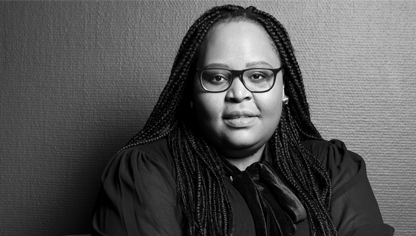
Lenyaro Sello
Content Marketing Specialist
Lenyaro is a key member of Investec's Global Content team, based in Johannesburg, who focuses on relevant and topical issues for internal and external audiences including clients. She is a well-travelled multi-skilled multimedia journalist who previously held roles within eNews Channel Africa (eNCA) and Eyewitness News (EWN). Lenyaro holds a BA Hons in Journalism degree and a Masters degree in Strategic Marketing, both from Wits University.
About the author
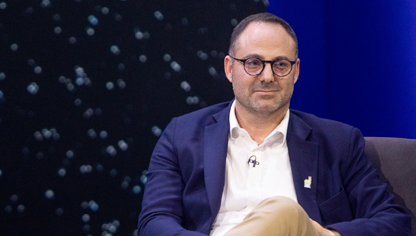
Marc Kahn
Global head of people and organisation development, Investec
Marc is responsible for the people value chain of Investec worldwide. Specifically his areas work to facilitate the way the company's culture supports and drives its people and their businesses toward extraordinary performance. Marc is a psychologist (HPCSA & PBA), a chartered business coach (WABC), a certified master coach (IMCSA) and a seasoned management consultant. Marc is a Visiting Professor of People, Organisation and Strategy at Middlesex University, and the author of the book: Coaching on the Axis: Working with Complexity in Business and Executive Coaching (2014) Routledge: London.
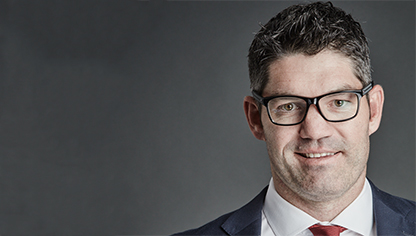
Ewan Naude
Investment manager
Ewan is a Wealth manager for high net worth individuals. He completed his accounting articles post-university and then moved on to a global mining company where he was a coal trader for three years. His interest has always been in financial markets and, specifically, investments which ultimately led him to Investec all those years ago.
About the author

Marnus Broodryk
Entrepreneur
Serial entrepreneur Marnus Broodryk is a Shark Tank SA investor, founder and CEO of The Beancounter. and founder of sme.africa. He is also the host of the popular Investec-sponsored Making SMEs Matter podcast series, and is the author of the best-selling book 90 Rules for Entrepreneurs. Marnus is dedicated to helping SMEs start up and grow in a volatile environment.
About the author
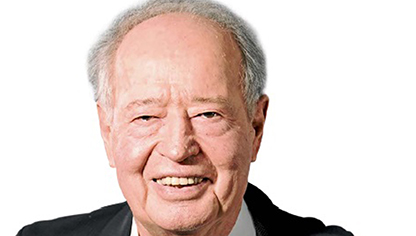
Prof. Brian Kantor
Economist
Brian Kantor is a member of Investec's Global Investment Strategy Group. He was Head of Strategy at Investec Securities SA 2001-2008 and until recently, Head of Investment Strategy at Investec Wealth & Investment South Africa. Brian is Professor Emeritus of Economics at the University of Cape Town. He holds a B.Com and a B.A. (Hons), both from UCT.
About the author
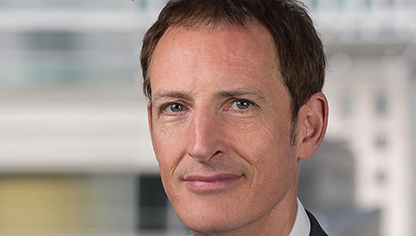
John Wyn-Evans
Investment strategist
John is Head of Investment Strategy for Investec Wealth & Investment UK, is a member of the Global Investment Strategy Group, and is Chair of the Investec & Investment UK Asset Allocation Committee. John graduated from Exeter University in Modern Languages in 1984. He spent 27 years as an institutional stockbroker with Merrill Lynch and Lehman Brothers, before moving to investment management in 2011 and joining Investec in 2013. John is an Everton FC supporter.
About the author
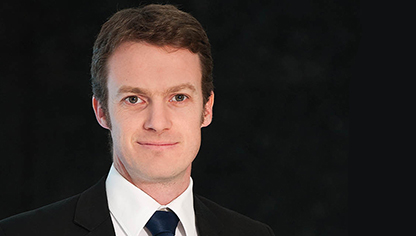
Chris Holdsworth
Investment strategist
Chris holds an MSc (Statistics) and is a CFA. He joined Investec in 2007 as a quantitative analyst for the institutional equities team. He started covering strategy from the beginning of 2013 and headed up the research team from 2017. At the beginning of 2019, he moved to the Wealth and Investment (SA) Team as Chief Investment Strategist. He is also a member of the Global Investment Strategy Group and Chair of the Global Sector View Group.
About the Author
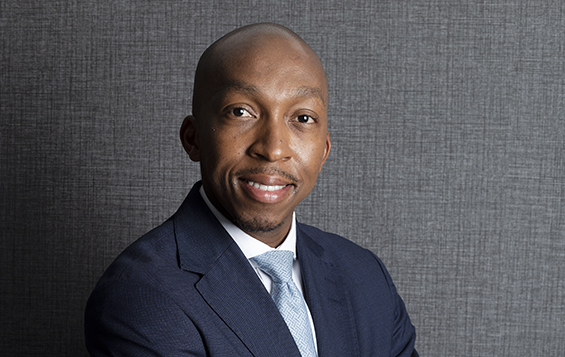
Head of Sales: Investec For Business
Itumeleng Merafe
Currently the Head of Sales for Investec For Business, Itumeleng started his career as a retail treasury consultant at Investec, servicing individuals and small corporates. He joined the Treasury Structuring team in 2011 as a consultant and was appointed as head of the team in 2015. Itumeleng holds a BCom in Economics and Investment management, has completed the Finance Executive Development Programme at Cass Business School, holds an ACI dealing certificate, and a Masters in the management of finance and investments.
About the author
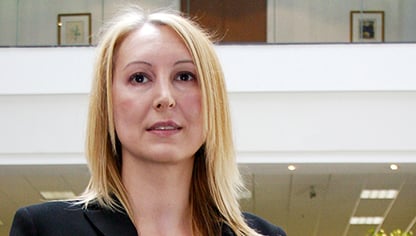
Annabel Bishop
Chief Economist of Investec Ltd
Annabel holds an MCom Cum Laude (Economics and econometrics) and has worked in the macroeconomic, risk, financial market and econometric fields, among others, for around 25 years. Working in the economic field at Investec, Annabel heads up a team, which focusses on the macroeconomic, financial market and global impact on the domestic environment. She authors a wide range of in-house and external articles published both abroad and in South Africa.
About the author
Philip Shaw
Chief Economist, UK
Philip graduated with an Economics degree from Bath University and a master’s in Econometrics from the University of Manchester. He is a regular commentator on the economy and financial markets in the press and on TV. Philip joined Investec in London in 1997 and heads up the Economics team there.
About the author
Angela Rettenbacher
Digital content specialist
Angela read for a Bachelor of Journalism degree at Rhodes University in Grahamstown in the early nineties, followed by a two-year stint at the SABC. Soon after, she went backpacking for 10 years! Prior to joining Investec's content team, Angela spent nine years as an Output Editor on the newsdesk at eNCA, both in TV news and Online. Before that, she spent eight years in the corporate sphere, in the Investment Banking and other divisions of Goldman Sachs both in London and Johannesburg.
About the author
David Gracey
Head of Foreign Exchange and Fixed Income Trading
David has more than 30 years of trading experience in South African financial markets. He heads up the FX and FI trading desk, trading in both asset classes, and makes markets to clients in products associated with these asset classes. David also manages the risk associated with this function.
About the author
Karen Meyer
Digital content writer
Karen has degrees in BA Communications and Honours in Journalism. She's responsible for writing and editing all the communication for Investec Private Banking. She has extensive experience in corporate communication and has worked in marketing for some of the country’s biggest brands.
About the author
Houston Muzamhindo
Data Scientist, Investec Private Bank
I am a Data Scientist within the Analytics Consulting Team in Investec Private Bank where my team focuses on building the machine learning and artificial intelligence capability in the bank, coming up with use cases and implementing them. I founded an edutech startup when I was doing my undergraduate studies and it currently has just over 17,000 students registered, mostly from South Africa.
About the author
Kevin Hogan
Head of Fraud Risk
Kevin holds a degree in financial risk management. By profession, he is a credit analyst. He says he fell into the whole 'fraud thing' by accident, and the rest is history. Kevin now manages fraud risk for Investec Bank Ltd and contributes to content insights on Investec Focus.
About the author
Sean O'Toole
Art journalist
Sean is a Cape Town-based journalist and editor. He's also a contributor to Investec Focus content for the Investec Cape Town Art Fair. He holds separate degrees in English literature, law, and creative writing.
About the author
Chris Becker
Blockchain technologies lead
Chris commercialises decentralised blockchain technologies and digital assets for the benefit of Investec Private Banking clients. In his previous role, he was an economist and strategist conducting research for large corporates, asset managers and hedge funds for a decade before entering blockchain technologies full time in 2017.
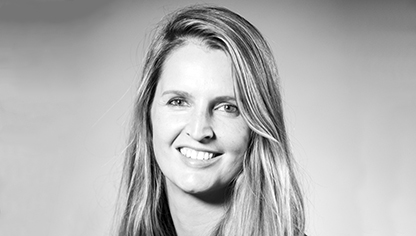
Kate Stannard
Investment manager
Kate holds a Business Science degree – her clients are Financial Advisers who use Investec's Investment Services. Keeping abreast of market conditions and being able to communicate relevant information is an important component of her role. Kate is also a qualified level 1 Kundalini Yoga teacher.
About the author
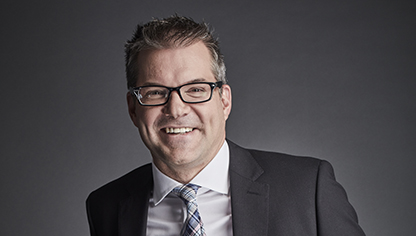
Patrick Duggan
Wealth manager: Investec Wealth & Investment
Patrick is a senior private client wealth manager with Investec Wealth & Investment, specialising in providing holistic investment planning advice to some of South Africa’s high net worth and ultra-high net worth individuals, families and their associated entities.
About the author
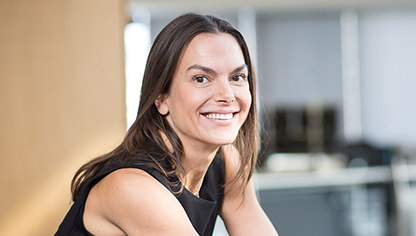
Alexandra Nortier
Joint-head Wealth Management at Investec
Alexandra is joint head of National Wealth Management, a business unit of Investec Wealth & Investment. Her requires expertise in all aspects of the investment markets, both locally and offshore, as a client needs guidance and education in all spheres of investing. She completed a Bachelor of business science with Honours in finance from the University of Cape Town., and is also a Chartered Financial Analyst (CFA).
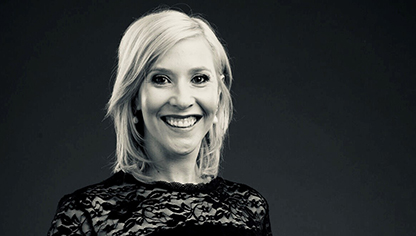
Rene van Zyl
Joint-head, Investec Tax & Fiduciary
Rene completed her law degree at the University of Stellenbosch and is an Admitted Attorney of the High Court of South Africa. After completing her articles in Cape Town, she joined a multinational offshore trust company, gaining extensive experience in global estate planning and structuring for high net worth individuals, while obtaining her H-dip Tax through Thomas Jefferson School of Law in San Diego, California. Rene was responsible for local and offshore products and solutions at FNB Fiduciary before joining Investec Wealth and Investment as a Tax & Fiduciary specialist in July 2017. Rene has been instrumental in building the Tax and Fiduciary offering for Investec during the last two years, and she was the first founding member of the team. She was also the representative for Digital Assets in South Africa for STEP. She was rated in the Chambers HNW 2019 for professional advisors. Every year they carry out thousands of in-depth interviews with clients in order to assess the reputations and expertise of business lawyers worldwide. The qualities they look for (and which determine rankings) include technical legal ability, professional conduct, client service, commercial awareness/astuteness, diligence, commitment, and other qualities most valued by the client.
Elizabeth Fick
Joint-head, Investec Tax & Fiduciary
Lizzie is an admitted attorney, currently busy with her Masters in Taxation. She specialises in tax and cross-border planning and structuring. Lizzie has vast experience in the drafting of local and offshore wills, estate and succession planning, trust and company law, local and offshore trust and company administration, exchange control regulations, tax law and opinions, as well as cross-border structuring and planning. Before joining Investec, Lizzie worked as an associate at a global law firm specialising in tax and cross-border planning, and as a Client Relationship Manager in trust and fiduciary services.
Browse further in